09Apr/25

The Women Forest Guardians: KWT Brayan Urip

by Sidiq harjanto

The esteemed women of Sawahan return from the forest in search of gadung tubers.

On February 25, 2025, the women’s informal group “Brayan Urip” in Sawahan, Mendolo Village, transitioned into an official Women Farmers Group (KWT). Led by Sri Windriyah, with 16 members currently, the group aims to promote sustainable agricultural practices, solidarity, creativity, and local wisdom preservation.
Key Objectives & Activities:

Sustainable Food Ecosystem: The group focuses on local and organic food traditions, emphasizing how responsible food choices impact ecological balance. They process locally sourced wild plants and tubers like gadung (Dioscorea hispida), which grows in nearby forests. This initiative combines sustainable farming, biodiversity conservation, and economic empowerment for women, while also protecting the forest habitat.

Education & Community Involvement: KWT Brayan Urip actively educates the younger generation about biodiversity and conservation. Their efforts include collaborations with local organizations to hold discussions on environmental issues, aiming to ensure that cultural and ecological traditions remain rooted in the community.

The article highlights a wonderful example of community-driven conservation and empowerment, translated from original blogpost https://swaraowa.blogspot.com/2025/03/para-perempuan-penjaga-hutan-kwt-brayan.html


19Mar/25

“Protection of fish, birds, and primates in Sawahan Hamlet: A new milestone in wildlife conservation efforts in Mendolo Village.”

by Imam Taufiqurrahman, translated from blogpost.

local fishes Tombo, family caprinidae in wisnu river, Sawahan

A significant breakthrough in wildlife conservation efforts in Sawahan Hamlet, Mendolo Village, Indonesia. On March 15, 2025, a community meeting led to new agreements for the protection of fish, birds, and primates in the region. This initiative originated from the concerns of the youth group Paguyuban Petani Muda (PPM), supported by the SwaraOwa Foundation, aiming to address the disappearance of local wildlife due to overexploitation and hunting.

The conservation efforts include long-standing practices like prohibiting fishing in certain river areas and expanding them to include the protection of bird and primate species. The community has also agreed to protect natural primate food sources by banning tree cutting and discouraging direct feeding to prevent behavioral changes in wildlife.

Dukuh Sawahan residents’ meeting attended by all residents, March 15, 2025

These measures align with the conservation of the critically endangered  Javan blue-banded kingfisher, whose survival depends on maintaining forested river habitats and Javan gibbon conservation program in the landscape.  Overall, this initiative demonstrates the power of community-driven conservation to protect biodiversity for future generations.

Several notable conservation practices initiated by the community in Sawahan Hamlet:

  1. Fish Conservation:
    • Prohibition of fishing or any form of fish harvesting in specific river sections, particularly Kedung Kali Bengang in Kali Wisnu, which serves as a fish breeding ground.
    • Introduction of local fish species through community efforts since 2012 to restore the fish population.
    • Prohibition on harmful practices like electrocution (nyentér) and poisoning for fish capture.
    • New agreements to prevent the release of non-native fish species into the ecosystem.
  2. Bird and Primate Protection:
    • Community-wide ban on hunting or capturing birds and primates, extending the protection to all individuals, both locals and outsiders.
    • A tailored approach to problematic species like long-tailed macaques and sparrows, focusing on humane deterrent methods rather than harm.
  3. Forest and Habitat Preservation:
    • Ban on cutting or damaging natural primate food source trees to sustain their habitat.
    • Avoidance of direct feeding of primates to prevent dependency or behavioral shifts.

These efforts reflect a grassroots, community-led approach to biodiversity conservation, combining traditional practices with modern ecological awareness. Implementing this agreement should be assisted, to implement co-existence between wildlife and humans, moreover they can be beneficial relationships.

09Mar/25

A Dance of Spirits : Sacred Farewell in Mentawai Traditions

by Arif Setiawan

a sikerei, mentawai shaman, spiritual leader, healer and mediator between physical and spiritual world

Located in Malinggai Uma, South of Siberut,  the traditional stilt house measuring 25 meters x 12 meters appeared crowded. The extended Tateburuk clan gathered at Uma, with around 200 families present. Including small children, there were likely over 400 people. This Punen Eeruk was considered a large ceremony because it did not conclude in a single day. The significant involvement of tribe members and their sacrifices included approximately 13 pigs and 200 chickens. The women were also very busy in the kitchen, cooking taro and sago in bamboo, preparing meals for everyone present.

sacrificial pig for Punen eeruk traditional ceremony

Sikereis prays for sacrifice animals

This Punen eeruk aimed to “pacify” the spirits of the deceased. The belief in spirits or souls within every object remains deeply ingrained in the Mentawai community, especially in Siberut. The Arat Sabulungan belief holds that nearly every place and object, every animal, every plant, and every natural phenomenon possesses awareness and feelings and can communicate directly with humans. This Punen can also be described as a farewell party for the spirits of the deceased, marking the end of the mourning period. It is the final celebration as an eternal farewell between the spirits and their families, accompanying and praying for the safety and happiness of those left behind, ensuring they are free from all difficulties and dangers. This relationship is relatively complex but can be understood, and there are those who can assist in communicating with these non-material entities, namely the “Sikerei.” They can all communicate through the intermediaries of dance, song, sacrificed animals, or ceremonies.

peforming gibbon dance during Punen Eeruk, in Uma (long house) a sacred farwell in Mentawai tradition

Through dances accompanied by the beating of drums, the ringing of bells, and the stomping of feet on wooden floors, a harmonization of movements and sounds full of magical and emotional nuances is created. The bilou dance, uliat bilou, becomes both entertainment and a communication medium, telling stories of several Bilou joyfully playing in the forest. The sikeerei’s voice also emerges softly, imitating the call of the bilou on a bright morning.

the meat of the sacrificed animal is divided equally among all members of the tribe

Efforts to preserve natural knowledge, enrich culture and its content, especially in Mentawai, become a challenge of their own. This identity might only be a mere romanticism, with the unique nature and culture only beautiful in reports and writings while extinction continues to occur on a micro scale. The messages implied in this ceremony should be a reflection continuously conveyed to the current generation that the history of nature heavily depends on humans. We can harm, damage, or eradicate our natural culture, but we are also endowed with intellect, energy, and perfect communication abilities to manage nature wisely.

26Feb/25

**Performing Arts for Gibbon Conservation**

By Arif Setiawan

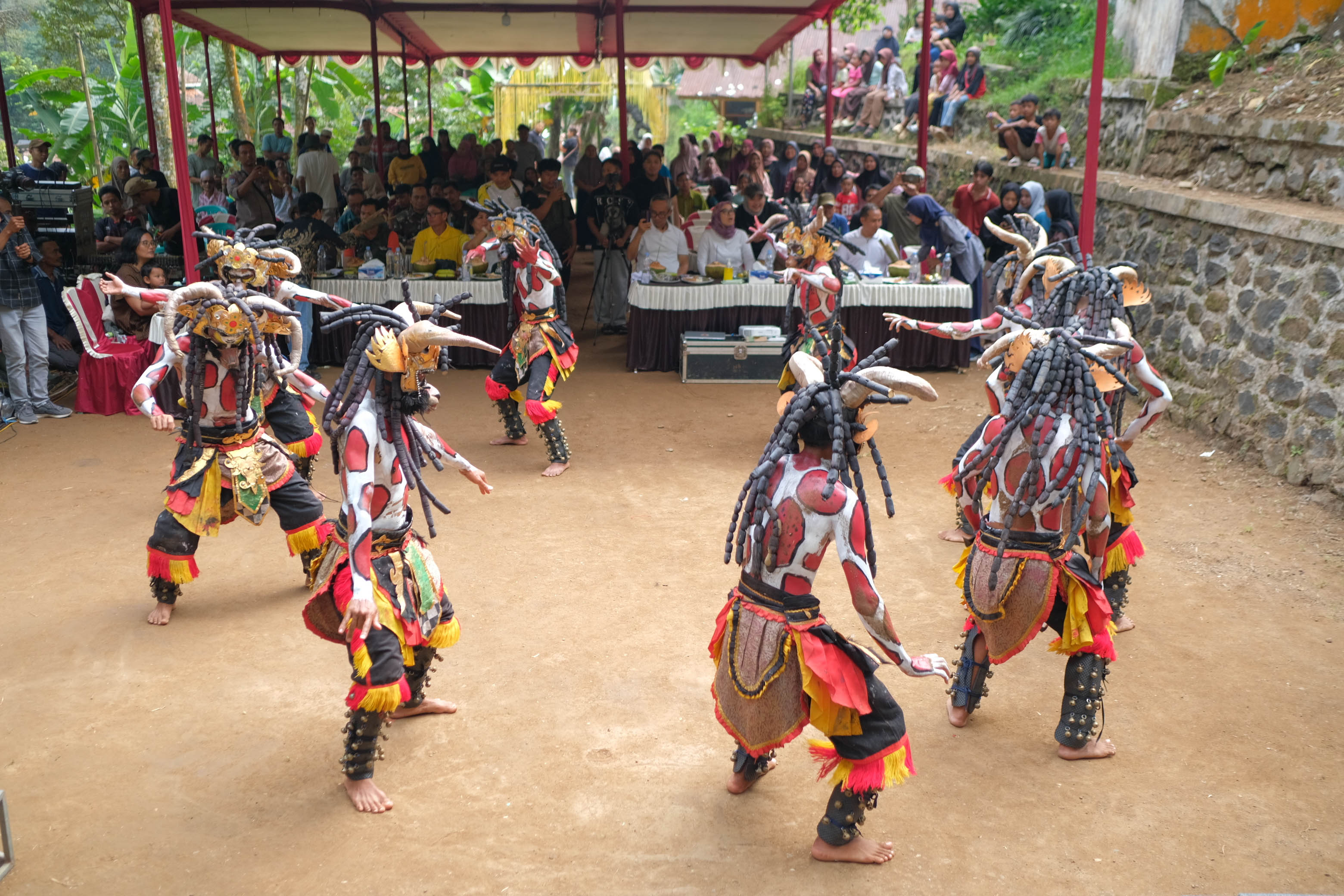
Gibbon and Jingkrak sundhang dance perform

This piece highlights how traditional practices in Javanese culture align with environmental sustainability, from using bamboo containers and leaf wraps to batik patterns inspired by nature. Traditional Javanese houses reflect the philosophy of nature in their construction. The richness of Javanese performing arts is an invaluable cultural asset, with traditional dances like Javanese dance incorporating messages about life, ecological, and social critiques.

Swaraowa initiated the use of art and culture to convey messages of nature conservation through the gibbon puppet show in 2021. Collaboration with artists like Ki Sujono (javanese cultural artist) has resulted in performances that combine science observations with performing arts. The first gibbon puppet show was held in Tlogopakis Village, Petungkriyonon (watch here), followed by a second performance at the World Gibbon Day event in 2024.

gibbon puppet show with gamelan instrument

In January 2025, Swaraowa collaborated again with the Saujana art studio to create a dance performance titled “Jingkrak Sundhang x Owa jawa ,” depicting the condition of animals’ habitats that are damaged. The performance also involved the community of Mendolo village in the preparation process, fostering creativity and unity while enhancing cognitive skills among participants.

Through performing arts, conservation messages can be effectively communicated, raising awareness about the importance of ecosystem preservation and encouraging communities to contribute to cultural and environmental preservation efforts. Through swaraOwa culture and conservation program, we open the opportunity to work together to increase the number of performances of this conservation art, anywhere, especially for Indonesian gibbon species and local culture.

12Dec/24

Siberut Wildlife Watch: preserving nature , cuture and sustainable economy

by Arif Setiawan

Bokkoi ( Macaca Siberu)

Siripok bilou, means “friends of the gibbons “ in Siberut language was  swaraOwa initiated in 2016 in as a movement to promote primate watching eco-tourism , has provided experience for the Siberut team, because since then it has also received attention from local and foreign visitors who are interested in seeing Siberut’s endemic primates directly (Gibbons, siberut langur, Siberut Macaque, and Simakobu , critically endangered pigtailed langur), or other animals through observation and adventure activities.

From September October to November 2024 guests come and go to the observation location in Toloulago, South West of Siberut. The Siripok Bilou team led by Ismael, Vincent and Franky organizes each visit.  The guests who come vary according to their respective interests.  These guests usually get information from previous guests, and through Swaraowa’s website and social media. Mammal watching is still the main reference for these guests for observation visits in Mentawai, especially Siberut.

Batek-Asian Water Monitor ( Varanus salvator)

Green Broadbill (Caliptomena viridis)

Asian Fairy- Blue Bird ( Irena puella)

Joja Siberut langur ( Presbytis siberu)

Siberut flysing Squirrel ( Petynomis lugens)

Sipora flying squirrel ( Hylopetes sipora)

The trip reports they write on the website are very useful for marketing as well as biodiversity reports, because they usually write about list of species that they encounter, their locations and visuals or photo or video documentation.

Our field work in 30 August to 4 September, 2024,  we did Tololago wildlife watch  and recorded numerous wildlife such as Siberut macaque, Siberut langur, Siberut flying squirrel, Greed broad bill, Asian Fairy-Blue bird, asian water monitor, the gibbon,  and many more. These new collection upated visual documentary list of Mentawaian wildlife. through this fieldwork we also improving skill of guiding and develop further plan to conserve Tololago forest area.

One of the very popular trip reports is the one written by Mark Spence in 2018, https://www.mammalwatching.com/2019/10/17/new-trip-report-siberut-mentawai-islands/ .He initially got the information through SwaraOwa’s social media, and we helped him prepare the itinerary and technical details of his visit. The Siripok Bilou team arranged the technical aspects of the visit including logistics, local transport and accommodation.

Visits vary in duration, depending on the ship’s schedule, it can be 3 days and two nights, 4 days and 5 nights or 6 days and 7 nights.

Last September the Siripok Bilou team also had guests who initially read Mark Spence’s trip report and then contacted SwaraOwa via email, the target of their visit was mammal species. We actually already have a list of mammals in Toloulago, but the photos or visual documentation is not yet complete. Just based on local names and identification of previous reports, species of rats and squirrels  it doesn’t seem like there are many recent reports from Siberut. I met Ian Thomson and Paul Carter from Canada and England in Padang before going to Siberut, and explained their expectations for their visit to Siberut.

During their 6 days and 7 nights in Toloulago, accompanied by Ismael, Vinsen and Franky, they said in their email that they had great success findings small mammals in Siberut. You can read their trip report here : https://www.pacapix.com/indonesia-siberut/.

Ian Thomson made his own trip report about his trip and can be read here: https://www.mammalwatching.com/community-post/indonesia-siberut-sumatra-and-java-september-2024/

These trip  reports are very meaningful for us to continue to advocate for nature protection in Mentawai, even though it is not yet a tourism priority, special interest tourism like this has potential that is worthy of development. The threat of deforestation and hunting which is home to Siberut’s wildlife still continues. Visits like this have also had a positive impact on residents around the forest especially in Toloulago, lodging businesses, local guides,  and providing meals for guests. Mentawai traditional culture and daily practice will be appreciated by the people from outside.

There are still many things that need to be improved for the management of special interest tourism in Mentawai. Siripok Bilou, which operates independently, needs to receive continued support. A very meaningful form of support is participating in promoting and visiting Siberut directly, by visiting forest activities with guests. who want to see native Mentawai animals, has also influenced residents not to destroy the forest.  Please contact us [email protected] for your wildlife watching adventure to Siberut.

10Dec/24

Asian Primate Symposium 2024, swaraOwa Attendance and North Sumatera Primate Wathching adventure.

By Arif Setiawan

APS 2024 participants

The largest primate enthusiast meeting in Asia was held in Medan on 24-27 November 2024. The 9th  Asian Primate Symposium had the theme “Living harmony with Primates” and the event hosts and organizers were OIC, YEL, USU, FORINA and KIARA.  Panut Hadisiswoyo, chairman of the event at the opening of the Asian primate symposium, reported that almost 300 participants from 20 countries attended and 54% of them were participants from Indonesia, showing the huge potential of our primatologists and their role in primate conservation globally. The event is held every 2 years, this time taking place at the University of North Sumatra, Medan.

There are many benefits to attending a symposium like this, including:

  1. To access specific knowledge, because through the symposium participants get a direct opportunity to find out research results, knowledge ideas on specific topics.
  2. In-dept discussion, in the symposium we will meet directly with the PI (principal investigator), program manager or conservation project leader, so we can ask questions or exchange opinions directly.
  3. Building networks, after we present or other participants present there is an opportunity to interact directly, introduce our projects or conservation activities.
  4. Collaborate: A smaller number of symposium participants can create a better collaborative atmosphere and build closer relationships. Possibility of collaborating with other institutions, or even meeting with donors.
  5. Time commitment as a professional conservation worker, the timeline from registration for abstract collection to presentation, will train us to appreciate time. We are very busy with our activities or programs, but we must also be able to make time to share experiences with others.

swaraowa delegates

SwaraOwa delegated 4 oral presentation titles at the 2024 Asian Primate Symposium :

  1. Preliminary survey: Biodiversity Monitoring by Local Community in Mendolo Village, Lebakbarang District, Pekalongan Regency, by Kurnia Ahmaddin, presented at the symposium on the topic “Community empowerment”, talk about community involvement activities around gibbon habitat for monitoring primates and biodiversity, which aims to increase citizens’ appreciation of biodiversity.
  2. Community conservation for Javan Gibbon through beekeeping program, by Sidiq Harjanto in the symposium topic “community empowerment”, presenting bee cultivation activities to support Javan Gibbon conservation activities.
  3. Siripok Bilou: Mentawai gibbon, culture and natural value, by Arif Setiawan presented in the symposium topic Cultural value of Asian Primates, presenting primate conservation activities in the Mentawai Islands, the result of collaboration with local institutions, Malinggai Uma Mentawai.
  4. Triangulation for Javan Gibbon Density: The Effectiveness of Human Observers vs. Passive Recording, by Nur Aoliya, on the topic Behavior, Spatial, Vocalization, the presentation was delivered by Arif Setiawan because Aoliya could not attend due to illness, is the result of preliminary research on the use of passive recording devices for monitoring gibbons compared to human hearing methods.

MSP alumi at APS 2024

We have great moments  because in this symposium we meet participants that they were joint in annual sokokembang gibbon field course known as  MSP alumni. Its make us proud that we have positive impact in Indonesia primate conservation.

Gibbon Coffee Confrence, Owa coffee and Myanmar gibbon coffee at APS 2024

At this event, Swaowa also displayed a booth, which contained conservation products from our  activities. This event was also part of conservation promotion and fundraising through the sale of souvenirs and merchandise and of course OWA COFFEE presented as an ambassador for Javan Gibbon conservation. What’s interesting about this product exhibition is that it sometimes results in warm discussions apart from in the presentation room, nice atmosphere, with a cup of coffee chatting with other participants feels more intimate, and what’s fun is that at the Kopi Owa booth the products we brought from Jogja have sold out, leaving only 3 Just pack coffee which we then give to other participants who haven’t gotten it yet.

Primate Watching Bukit Lawang

Hylobates lar at Bukit lawang

Presbytis thomasi

Orangutan

After the closing of the symposium, 9 of us from 4 countries chose our own field trip rather than joining a big trip which would visit Oranguntan Heaven. We rented 2 cars, that afternoon went straight to Bukit Lawang, one of the legendary tourist spots for seeing Sumatran orangutans (Pongo abelli) in the wild. The journey was approximately 3 hours from Medan City and there was heavy rain and our car had two tires flats at onc due to hits unseen road hole, making us arrive at the ecolodge in Bukit Lawang at exactly midnight. After getting to our respective rooms and meeting with our guide for tomorrow morning we rested.

At 5.30 I was awakened by the call of the Kedih (Presbytis thomasi), a leaf-eating langur endemic to North Sumatra. His topknot and hair color and style are amazing unique, like a rock star monkey. There were approximately 12 individuals observed around the inn, and they appeared to have habituated with visitors to Bukit Lawang. Also at the same time as the appearance of this kedih was a group of long-tailed monkeys, there were around 15 individuals, and were on the roofs of the accommodation houses, but were not very aggressive when looking at humans passing around them.

After breakfast at 8 am, we started trekking to the hill, accompanied by two guides, the guide was very fluent in English, and explained a little history of Bukit Lawang, which is part of the Leuser National Park, and used to be an orangutan rehabilitation site which was built in 1973. and in 2003 there was a major flood on the Bahorok River, destroying all facilities and causing loss of life. Just a few meters from the accommodation on the hill, we met Tomas’ group again, there were around 8 individuals. Then we continued trekking and saw again from a distance 2 individuals of Sumatran Langur (Trachypithecus cristatus), very different from the Kedih in their hair style, which was thick around the face and towards the face and had no crest. A few meters from the entrance gate to Gunung Leuser National Park, we saw  a white handed gibbon (Hylobates lar) and it turned out he was playing with Kedih.  The color is light brown and there is white around his face. A few moments later a great call was heard, from its mother, only one great call, and it seemed like they were avoiding the tourists who were chasing them to see.

Several guides who came down towards us said there were orangutans in shelter two, and we rushed over, and it turned out that when we arrived there were actually 2 individual orangutans (mother and child) and what was even more surprising was that underneath there were dozens of people looking at them, taking photos with cameras, cellphones, and many are just observing. The distance is quite close, approximately 2-5 meters, even though there is no direct interaction, but it seems too close. There are also around 15 guides accompanying these guests, mostly hanging out with fellow guides. It seems that the job of accompanying guests to see orangutans is very popular here.  For information, the price of this observation trip is IDR 200,000 for domestic tourists and IDR 700,000 for foreign tourists, accommodation IDR 450,000, breakfast is available. After we were satisfied with seeing the orangutans, we went down and then checked out of the accommodation considering that our journey would be very long to Lake Toba.

Siamang Sibanganding

Siamang ( Symphalangus syndactylus) at Sibanganding

Macaca nemestrina

At Lake Toba, Parapat, we visited the Sibanganding Monkey Park. What was surprising in this monkey park was that the primates (Longtailed macaque, Pigtailed macaque and  Siamang)  were very tame, meaning they often interacted with humans, especially visitors and apparently were fed by the guards there. There are around 30 individuals of Beruk – Pigtailed macaque (Macaca nemestrina) around this stall and this location is a wildlife tourist attraction but it is quite risky, because it is too intensive and can cause changes in behavior, although this is not friendly to primates , this tourism has at least kept wild animals alive in the nature. There is a family of siamang  (1 juvenile,adult male and adult female ), which was seen in Sibaganding. Conservation assistance and education for managers should be increased by related parties and primate observers in North Sumatra or anyone who cares, so that conservation education can be passed on to visitors who wander through or stop at the Sibanganding monkey park.  The location is very close to Lake Toba tourism, has the potential for tourists already available, and is very interesting if it is also linked to the geological historical tourism of the Toba supervolcano crater, at least making it an option and providing information and alternative tourism to see the wild Siamang of  North Sumatera.

North Sumatera Culinary adventure

Our trip covered approximately 1734 km overland through cities in North Sumatra Province to West Sumatra Province, around Sipirok, South Tapanuli. We were able to see the location of the Tapanuli dam from a distance and the surrounding forests which are the habitat of the Tapanuli Orangutan (Pongo tapanuliensis). Not lucky enough not to be able to see it due to the weather for a short time. We had to continue our journey to rest in Bukit Tinggi, and the next day continue our journey to Padang. We notice and tried local culinary of north Sumatera, and it was super amazing experience, Dadieh, Arsik, Naniura taste that never found in our daily life in Java.  We had time to rest in the Lembah Anai , and heard a loud call from Ungko (Hylobates agilis) , and this was the end of the APS 2024 trip. See you again next two years APS that will be in Malaysia.

09Dec/24

Gibbon Camp 2024

by : Nurlita Uswatun Khasanah  and Dinka Aulia Nurul Ikhsan

camp site Welo Asri

Every October 24 is celebrated as World Gibbon Day. This is a reminder of the importance of the existence of this speceis. Its ecological role as a seed disperser in the forest is so important that this animal really needs to be preserved. The Javan gibbon as a primate endemic to Java also has social value as a global identity. Therefore, KP3 Primata collaborated with SwaraOwa every year to organize this Gibbon Camp event as part of the commemoration of World Gibbon Day.

The purpose of this event is 1) to campaign to voice and also disseminate conservation awareness to the public and especially to KP3 Primate members related to Gibbon Conservation. 2) Inform the general public about the existence status of gibbons and their natural habitat.

On 1-3 November 2024, at Welo Asri, 15  participants gathered at the Welo Asri camping ground area, Kayupuring village, Petungkriyono District. The event was opened by the chairman of the WeloAsri pokdarwis, Mas Muhammad Kuswoto, and an introduction to the discussion and introduction to Gibbon conservation in Petungkriyono from Swaraowa by Mas Wawan.

Gibbon camp participants

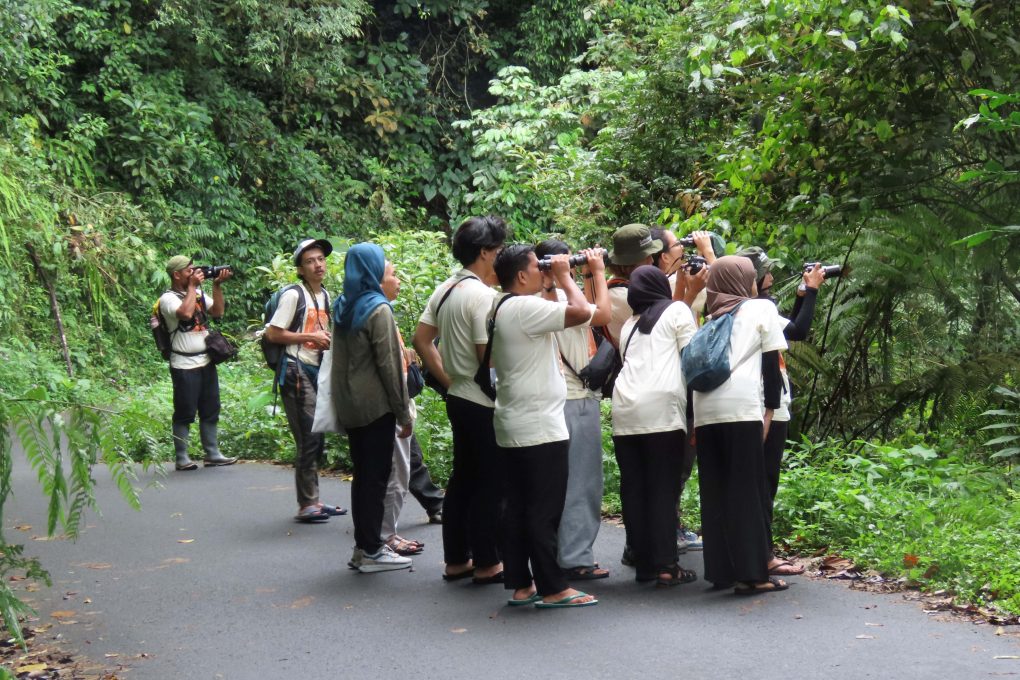
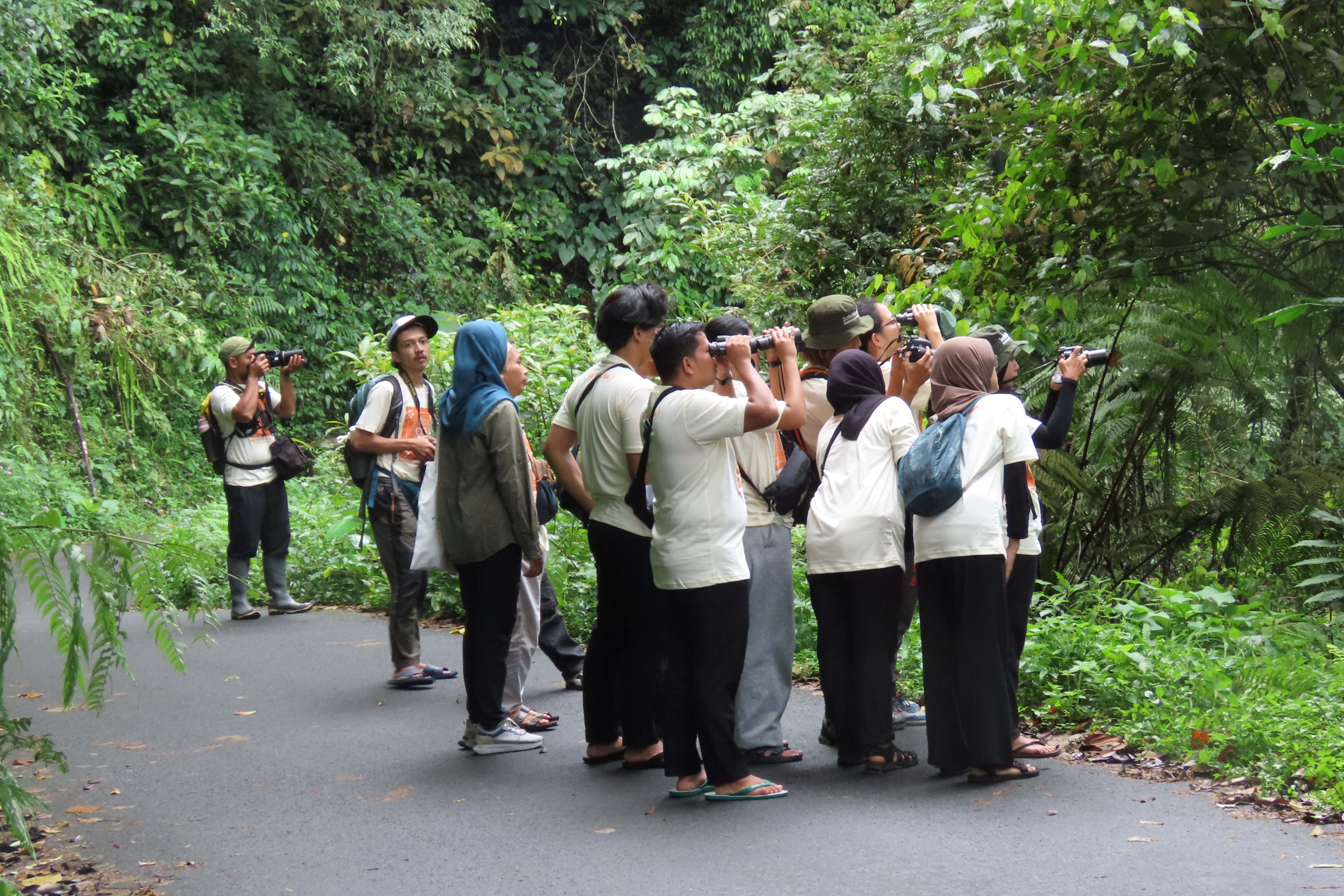
On November 2, observations were made by walking approximately 2-3 km from Sokokembang to Kroyakan along main forest road, divided into three groups, each group consisting of at least 5 people with a guide from SwaraOwa. Starting from 6.30 to 9.30 we saw 4 individuals of Rekkerjaan (Presbytis fredericae), 14 individuals of Javan Langur (Trachypithecus auratus), and 4 individuals of Long-tailed Monkeys (Macaca fascicularis). In the afternoon and evening due to rainy days observation activities were stopped.

Javan gibbon at Welo Asri

a pair of Javan gibbon

Javan langur with baby

Javan surili (Presbytis fredericae)

gbbon watching

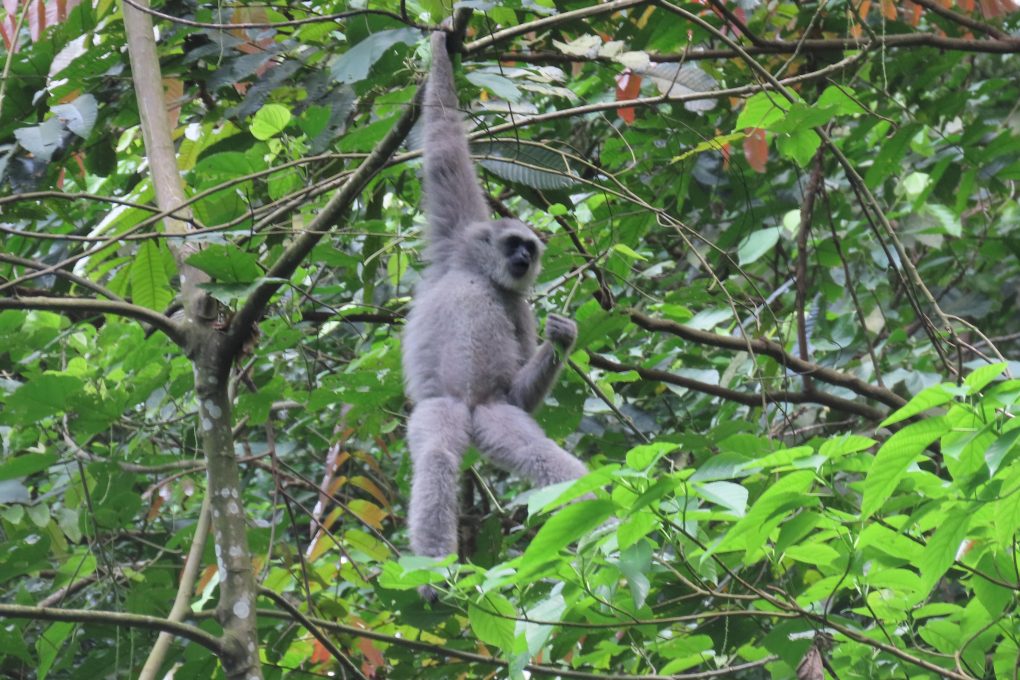
On November 3, observations were made around Welo Asri, and we were very lucky to be able to see Javan Gibbons. We observed 3 groups of gibbons from around Welo Asri, with a total of 9 individuals. Recorded the highest number of individual gibbons observed in approximately 2 hours, in one location.

The complete report on Gibbon Camp activities can be read here, thank you to SwaraOwa and all parties involved. See you at the next Gibbon camp. (translated from original article in bahasa here)

08Dec/24

The 11th Sokokembang Gibbon Field Course (MSP2024)

by : Arif Setiawan

MSP 2024 all participants

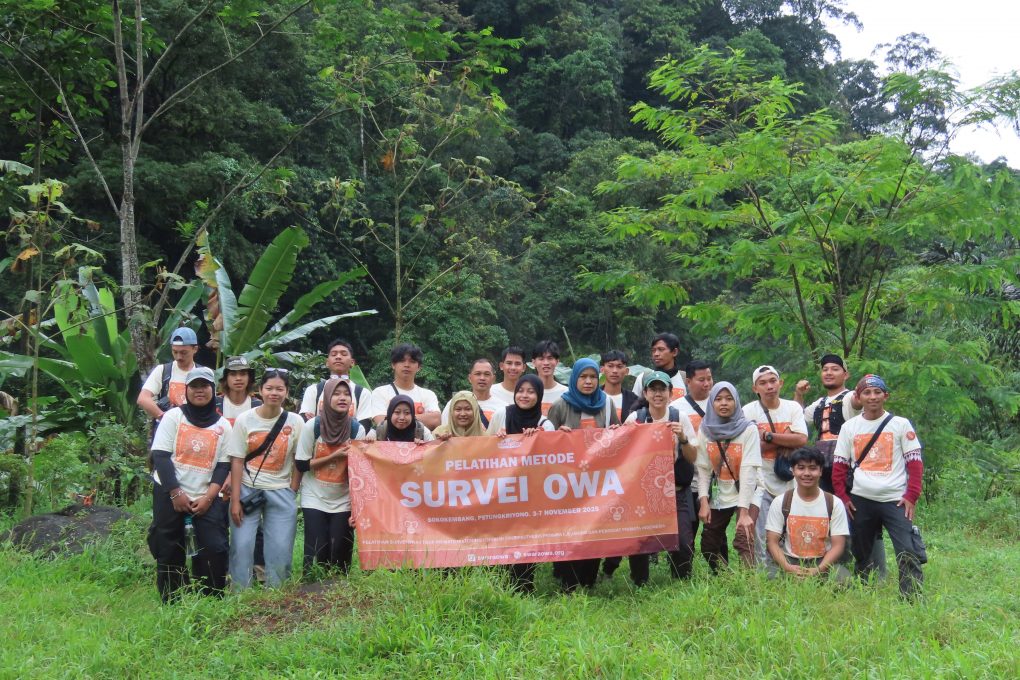
On October 23 2024, the Sokokembang gibbon field course  was started, located in the heart of Gibbon Habitat, of  Sokokembang Forest, Petungkriyono, Kab. Pekalongan, Central Java. This course  recognized as   Pelatihan Metode Survey Primata (MSP) nationally is an annual activity organized by Swaraowa in collaboration with the Primate Study Group at Gadjah Mada University, and this year was the 11th field course, since 2013. Goal of this course is to regenerate gibbon researchers ,  conservation enthusiast in Indonesia by introducing basic methods for gibbon population survey and build conservation networking among of them.

Sokokembang gibbon field course this year started by participants selection, was conducted two months before the date, and we received 42 applications from all over Indonesia gibbon region origin : Java, Sumatera and Kalimantan, represent universities, NGOs, and youth community. We have to select from these applications for about 15 to 20 participants berdasarkan their background and motivation letter. All participants selected are covered, transport and accommodation from their home origin to Sokokembang.

We have to thanks this year to Fortwayne Children’s Zoo, Chances For Nature, Ostrava Zoo, and Arcus Foundation and Owa coffee for all support, that make event happened. We have selected 19 participants representing Indonesia gibbon habitat  and active students from Kalimantan, Java and Sumatera.  (University of Palangkaraya, University of National, Bogor Agricultural University, Sebelas maret university, Gadjah Mada University, Brawijawa University, Kuningan University, Jakarta Islamic University, University of Sriwijawa South Soumatera, Raden Fatah Islamic University South Sumatera, Araniry Islamic University Aceh, Hutan Adat Wehea East Kalimantan, and Mentawai Community, Mendolo Youth, a youth farmer community in Pekalongan, Central Java )

field practice

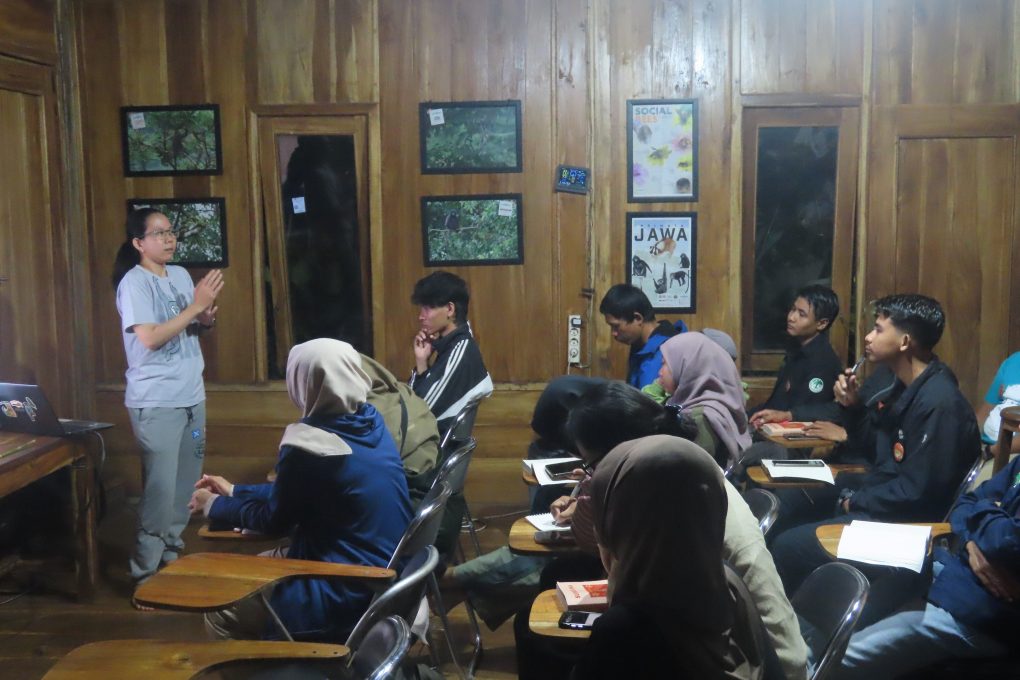
The event is also part of the International gibbon day that celebrated globally  in 24th October, dan The opening of this training was on the evening of October 24, by the committee team and introduction of each participant, distribution of training kits and division of teams for the following day. On 25 October morning at 7 am, participants were in class and received the first material from the resource person, namely Dr. Salmah Widyastuti, introducing vocal count- triangulation a basic method for gibbon survey based on their vocalization and general information about Javan gibbon population and distribution in landscape Dieng especially Pekalongan and Banjarnegara regency. Following this class, Aoliya and Adin from Swaraowa give a talk and introduction on bioacoustics use for gibbon monitoring. Aoliya talk about how we collect data using passive voice recorder and basic analysis for their calls and Adin give a talk about technical set up for passive voice recorders using SM4 bioaccoustic devices.

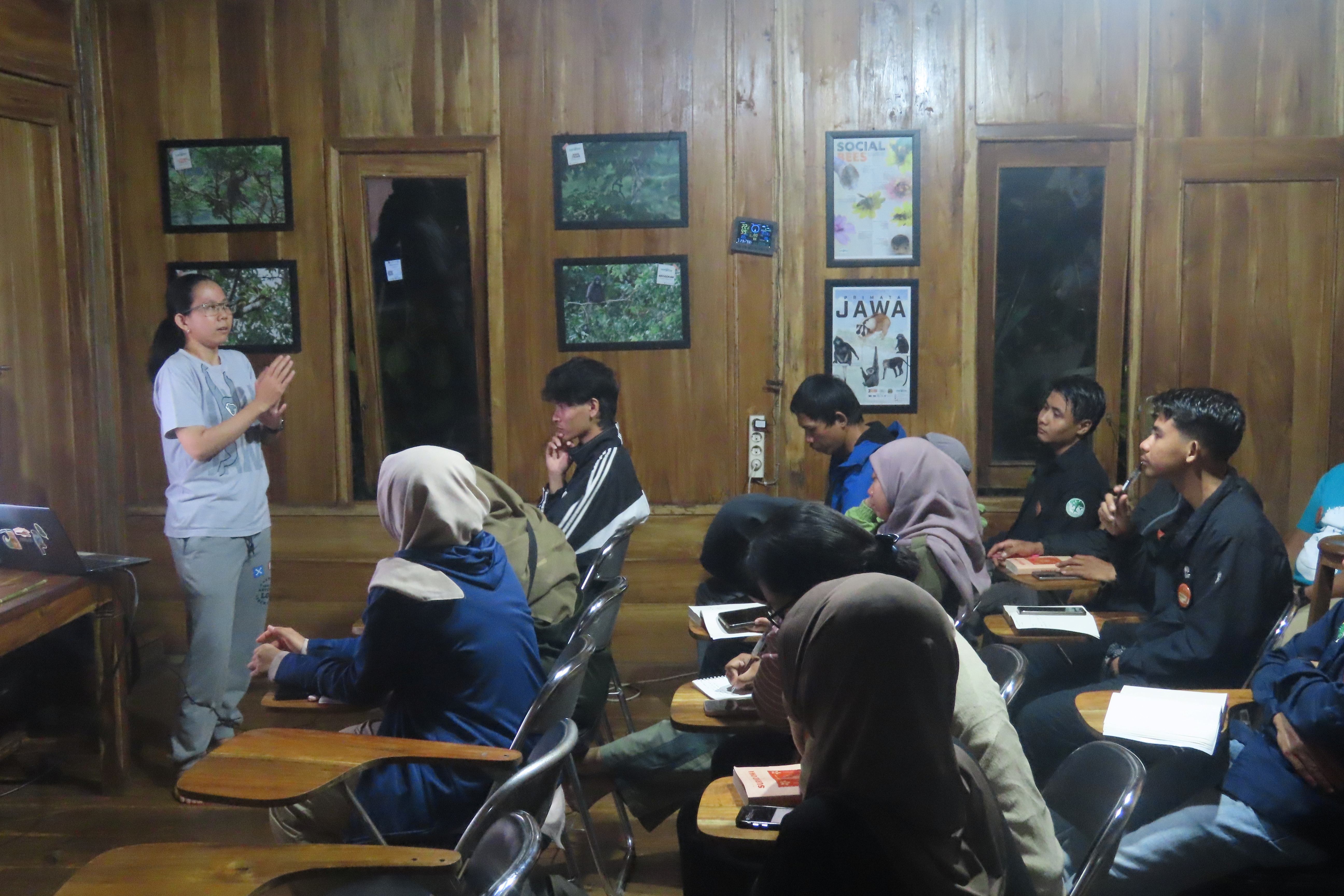
Class room activities, presentation talk by Sinan PRCF

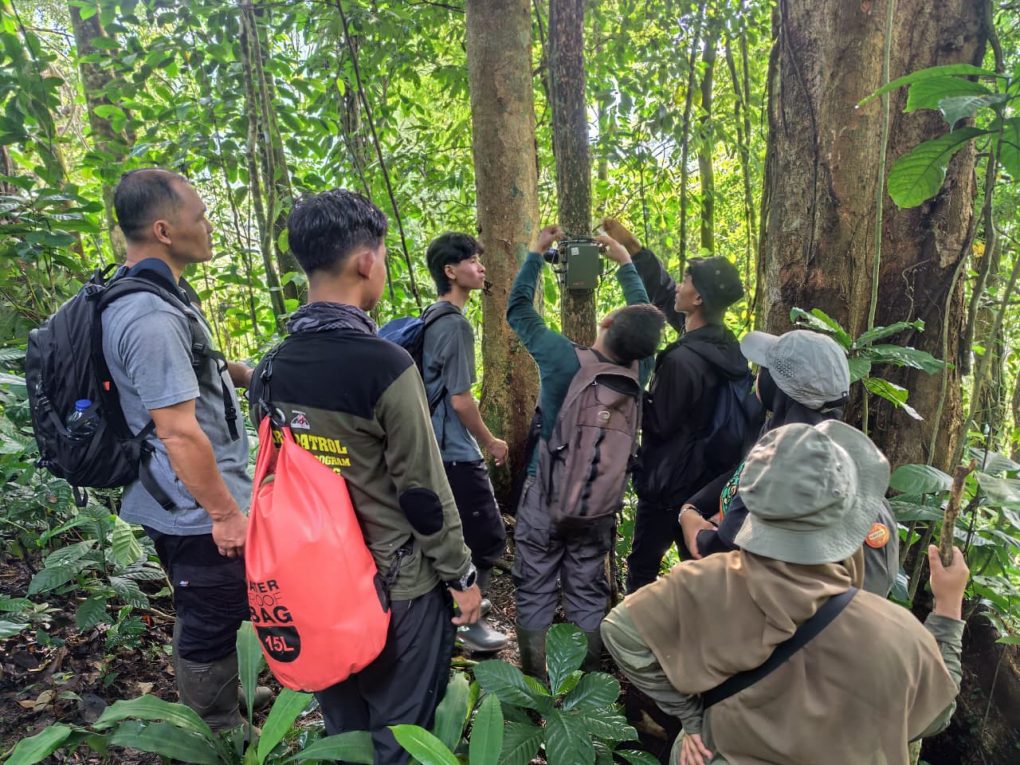
On October 25 participants started 06.30 collecting data in the field, at 3 listening post that have been established for gibbon monitoring, divided in to three groups and collecting. In this day participants practicing by real situation how to recognize gibbons vocalization, measuring the distance and record their compass bearing for call directions. Started at 6.00 and finished at 10.00 am. Every listening post have 4-5 participants to keep record gibbon vocalization, and 1 experienced swaraowa’s team researcher. While  collecting direct vocal data count, in each listening post SM4 recorder was installed. Base on previous guideline in the class, all  recorders started to call at 06.00 to 10.00 am.
Dr. Salmah Widyastuti course tutor, class room activities

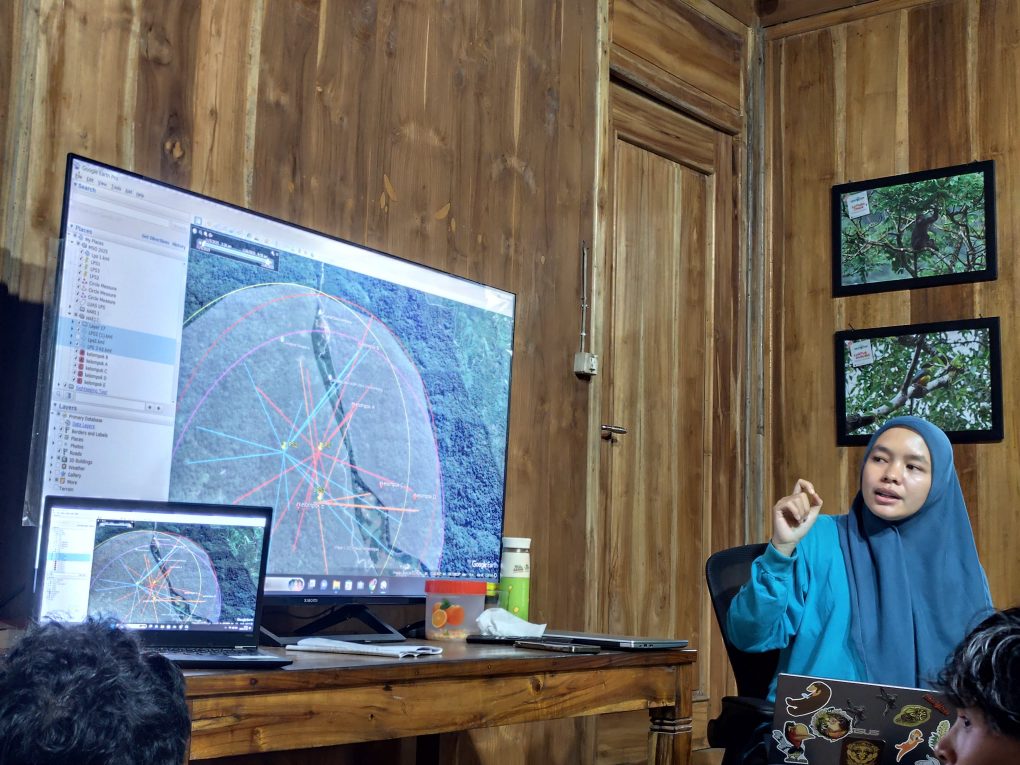
Afternoon activities, started with how Data Analysis conducted based on series of observation, lead by Salmah Widyastuti, guided all participats conducted mapping and population density analysis using classic methos ( Brockelman and Ali, 1993)  and advanced methods ( Vu and Rawson, 2016) . Followed by Aoliya who assist all participants how to anaylise biouacoustic data that collected from passive voice recorder. At evening invited guest lecturer Sinan Serhadli  gibbon conservationist from PRCF Bangladesh gibbon conservation project, give a talk on current gibbon conservation program of Hoolock gibbon ( Hoolock hoolock) in Bangladesh. This talk give different perspectives and insight on current situation of gibbon conservation outside of Indonesia. Before the talk Arif Setiawan founder and director of Swaraowa was presenting history of MSP gibbon field course and swarowa’s conservation project activities.

Nur Aoliya course tutor, introducting bioacoustic devices for gibbon

26 October all participants did the same activities and finished at afternoon, back to the class and doing data analysis both from listening post listening and bioacoustics devices. Discussion and evaluation during two days practice conducted actively involving swaraOwa team and among participants, and followed report write up and writing presentation of their result.

fild practice in the forest

Javan Gibbon, observed during the course

27 October all participants invited to do primate watching in Sokokembang route, using local pickup vehicle, this regular route for monitoring and primate watching. And all participants records all primates in Sokokembang, Javan gibbon, Javan surili, Javan langur and Macaca fascicularis. After these activities all participants back to class and do result presentation and closing ceremonies.

doplak ride for primate watching

We are on behalf of swaraOwa and Primate study group, Gadjah Mada University  thanks to all of all of local organization who support activities the 11th Sokokembang MSP, Perhutani KPH, Kayupuring villages govt and our annual donors Fortwayne Children’s Zoo, Chances For Nature, Ostrava Zoo, and Arcus Foundation and Owa coffee who provide support for all participants, activities for this event. See you again next year the 12th Sokokembang gibbon field course- MSP 2025.

29Oct/24

Agro-forest Mendolo Village, Habitat of the critically endangered Javan Slow Loris

Javan slow loris ( Nycticebus javanicus) .Photo by M Yoga Saputra

Let me introduce myself, Muhammad Yoga Saputra, I am a student of the Forest Management study program at Sebelas Maret University, Surakarta. Through the 2024 SwaraOwa scholarship program, with my colleague Ratna Dwi Setyowati and we got the opportunity to research for a thesis on the Javanese slow loris (Nycticebus javanicus). The Javan slow loris is one of seven species of slow lorises that live and are distributed in Indonesia. Based on the International Union of Conservation of Nature Resources (IUCN) Red List 2021, the Javan slow loris is included in the critically endangered category and is also included in Appendix 1 by Conservation on International Trade in Endangered Species of Wild Fauna and Flora (CITES).

We observed the population, distribution and habitat of the Javan slow loris in Mendolo Forest, Lebakbarang, Pekalongan. Mendolo Forest is located in 4 hamlets, namely Sawahan, Mendolo Kulon, Mendolo Wetan, and Krandegan. Field observations were carried out in the second-fourth week of September 2024. We were accompanied by the Mendolo Village Young Farmers Association (PPM) who always accompanied us in collecting data. During our observations, we found 8 individuals of Javan slow loris in the Mendolo Forest. In the four hamlets in Mendolo Village, only Mendolo Wetan Hamlet did not find the Javan slow loris species. Our observations start at 19.30 – 24.00. We took night observations because the Javan slow loris is a nocturnal animal and when exposed to a flashlight, the eyes of the Javan slow loris emit eye rays which makes it easier to find the Javan loris’s whereabouts compared to daytime observations. We used the line transect method, where the transects were placed in areas where the Javan slow loris was believed to be present.

an individu of Javan Slow loris spotted in Mendolo agro-forest habitat. Photo by M Yoga Saputra

During night observation, we found several species in the Mendolo Forest such as the Sunda pangolin (Manis javanica), Rekrekran- Javan surili (Presbytis fredericae), Wild Boar (Sus scrofa), Black Banded Barbet (Megalaima javensis), Sunda scops Owl ( Otus angelinae), and Sunda flying lemur (Galeopterus variegatus). Apart from that, during daytime observations we also found various species such as the Javan gibbon (Hylobates moloch), Serpent  eagle (Spilornis cheela), black eagle (Ictinaetus malaiensis), banded kingfisher  (Lacedo pulchella) and Javan langur (Trachypithecus auratus).

The Javan slow loris is a semi-solitary animal. This can be seen in our observations where almost all individuals of the Javan slow loris were found alone. However, one of the Javan slow lorises was found with its infant. Observing at night requires precision and patience because sometimes we misidentify when there are eyes light on the tree that there is a Javan slow loris.  However, when you look closely the glow from the eyes can come from civets, squirrels,  or from Sunda flying lemurs. Apart from taking population and distribution data, we also took habitat data for the Javan slow loris in the Mendolo Forest.

Habitat data collection was carried out during the day by creating several plots to identify the habitat of the Javan slow loris in the Mendolo Forest. The habitat of the Javan slow loris in the Mendolo Forest is generally found in stands of coffee  and durian trees. Apart from that, the Javan slow loris can be found on jackfruit trees and trees containing sap, because the Javanese slow loris’ favorite food is the sap produced from twigs, stems, flowers or leaves. As in coffee stands, we saw that young coffee leaf twigs were often eaten by the Javan slow loris

12Oct/24

Camera trap competition: biodiversity inventory of Mendolo Village

by : Kurnia Ahmaddin

givingaway goat for the cameratrap competion winner

The mountainous forests of Pekalongan are one of the remaining biodiversity pockets on the island of Java. However, changes in landuse and forest fragmentation still threaten the sustainability of the animals that live in them (Setiawan et al, 2012). The latest survey regarding forest fragmentation in this area shows the potential for reducing the structure of the main forest blocks into smaller parts (Widyastuti et al, 2023). To reduce the rate of habitat destruction, education and monitoring of wildlife at the community level around forest blocks is needed (Horwich & Lyon, 2007).

We are collaborating with PPM Mendolo, as one of the local communities in this area, taking the initiative to invite Mendolo village residents to recognize and monitor wild animals in their  village. Furthermore, we package these two goals in the form of a biodiversity competition to encourage residents around the forest to document and recognize wildlife. This competition was attended by community representatives from each hamlet in Mendolo Village to install camera traps. Competition activities will be held from 8 August to 18 September 2024 with a total of 25 installation days. At the end of the series of competition events, we gave away goat as an appreciation for participation to all participants.

Longtailed macaque

As a first step in expanding awareness of wildlife to the wider community, this activity received quite a lot of enthusiasm from the community. Within a period of 25 days, 16 camera trap points were recorded which were installed independently by 11 people from representatives from all hamlets. We have provided participants at the start of the competition with how to install and use camera traps and the ‘kobotoolbox’ application for recording spatial information. We calculate points based on daily points obtained from animal pictures. Meanwhile, the value of the animals obtained is that we rank the types of animals based on the level of difficulty of encountering the animals. The more difficult the animal encounter, the greater the points earned.

muntjak deer

Mouse deer

The results of obtaining images of wild animals caught by camera traps were also interesting, they were able to record Rekrekan (Presbytis fredericae), Long-tailed monkey (Macaca fascicularis), Muncak deer (Muntiacus muntjak), Wild boar (Sus scrofa), Mouse deer (Tragulus kanchil), Javan porcupine (Hystrix javanica), Javanese Garangan (Urva javanica), 2 species of treeshrew, 1 species of squirrel and 1 species of rat. The hamlets that have the right to win 1st place are Sawahan and Mendolo Kulon hamlets because the points obtained by both hamlets are the same. Meanwhile, the 2nd place winner was Mendolo Kulon hamlet and Kradegan was the 3rd place winner. In appreciation for the 1st winner, we gave 1 goat to each hamlet. We also gave 2 pairs of cockerels to Mendolo Kulon hamlet and 6 pairs of free-range chickens to Kradegan hamlet.

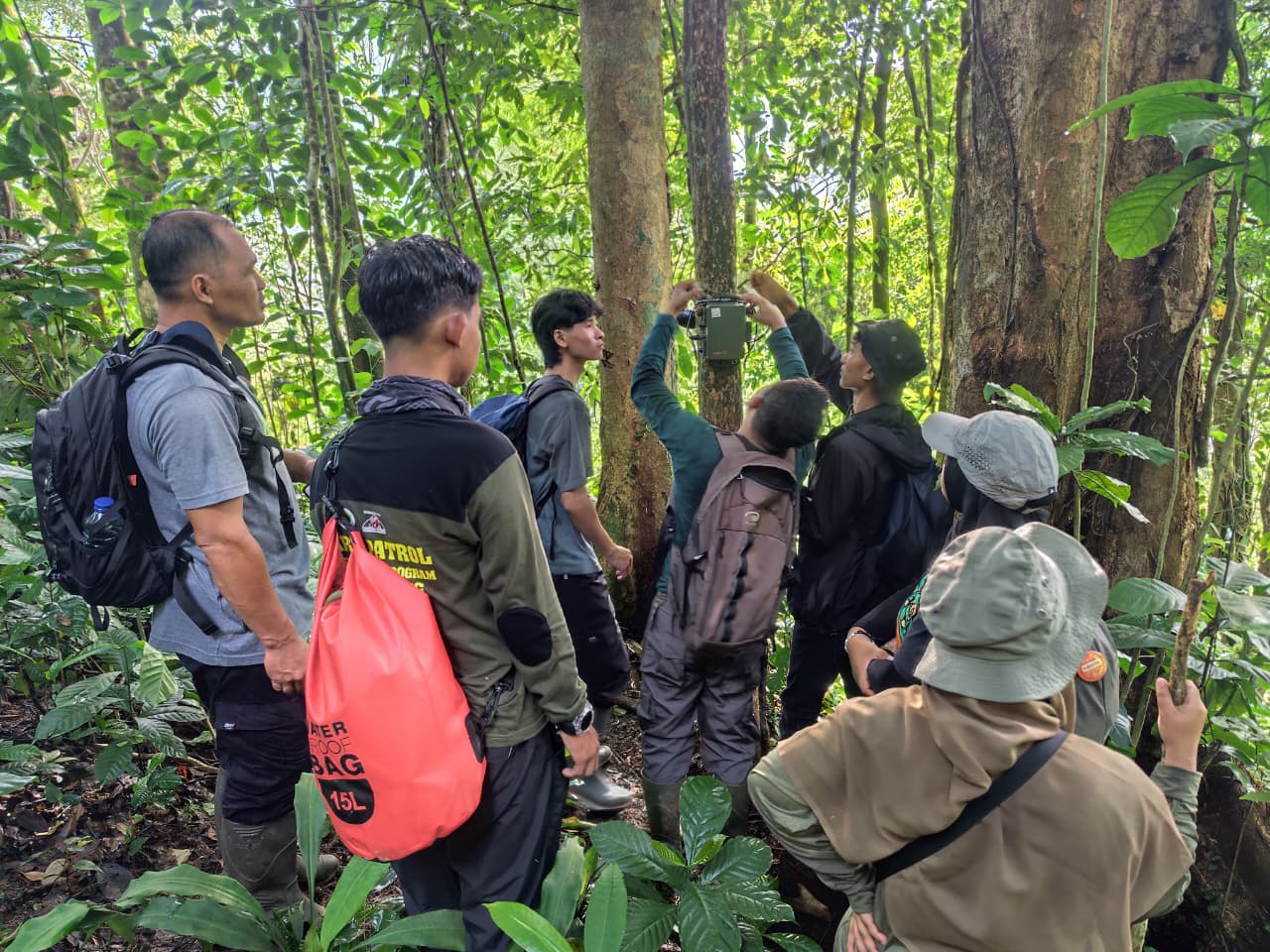
villagers seting up camera trap

camera trap unit

Closing the competition event, we evaluated the camera installation and looked at the resulting images together at the Mendolo village office. The event was opened by the chairman of PPM Mendolo as the organizer’s representative, followed by remarks by Mr. Kaliri as the head of Mendolo Village. In closing, we had a short discussion about the function of wild animals in nature and continued with the distribution of competition prizes. This series of events can be held well with initiatives from the local community and support from the village government. From this small step, we have great hopes that Mendolo village will become one of the wildlife friendly villages in Indonesia, by recognizing the biodiversity around the village, taking inventory means a step protecting the village’s own assets.

Literature cited

Setiawan, A., Nugroho, T. S., Wibisono, Y., Ikawati, V., & Sugardjito, J. (2012). Population density and distribution of javan gibbon (Hylobates moloch) in Central Java, Indonesia. Biodiversitas, 13(1), 23–27.https://doi.org/10.13057/biodiv/d130105

Widyastuti, Salmah., Farajallah, Dyah P., Lilik, B. P., Iskandar, Entang. 2023. The Javan Gibbon (Hylobates moloch) Habitat Changes and Fragmentation in the Dieng Mountains, Indonesia. Jurnal Manajemen Hutan Tropika, 29(2), 150-160, August 2023

Horwich, Robert H and Lyon, Jonathan. 2007. Community conservation: practitioners’ answer to critics. FFI: Oryx, 41(3), 376–385