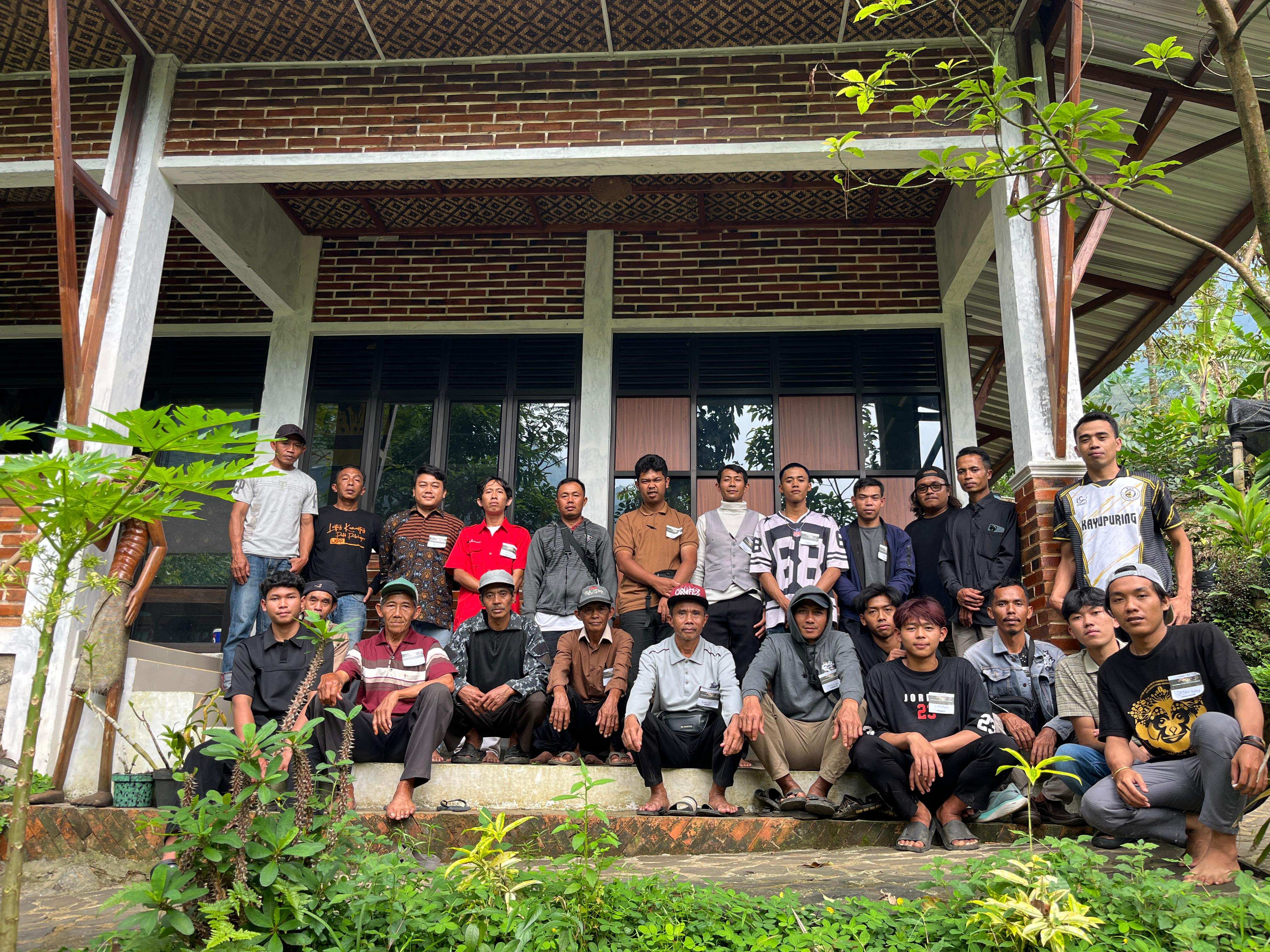
participants post-harvest training owa coffee
By : Sidiq Harjanto, Vika Bayu Iriyanto Putro, dan Muhammad Kuswoto
The conservation narrative of Owa Coffee products is not enough to be the sole driving force in penetrating the global market. Coffee produced from the Javan gibbon’s habitat must still meet the market’s primary demands: quality and flavor. This awareness needs to be internalized by all elements of the supply chain—including at the local level.
Often—if not always—farmers and communities in coffee-producing areas lack an adequate perspective on market preferences, especially those based on global consensus, such as the Specialty Coffee Association (SCA). Yet, the standards developed by the SCA serve as a global reference for assessing coffee quality, from flavor and aroma to brew consistency. To compete in the competitive global market, coffee produced must adhere to these standards, acting as a “universal language”.
Although Owa Coffee has been producing coffee since 2012, the social dynamics of coffee farmers in its production areas have also changed. We also aim to expand our production area by involving new farmers who are unfamiliar with the coffee process. On May 14, 2026, we held another workshop and training as a continuation of similar activities from the previous month. This time, the focus was on post-harvest. This second meeting was part of a capacity building program for coffee farmers and processors in villages within the Javan gibbon habitat in the Petungkriyono landscape, supported and funded by the Air Asia Foundation through the “Gibbon Coffee: Guardian of the Gibbon” program. Twenty-one farmers participated enthusiastically.
Translating Coffee Quality Standards.
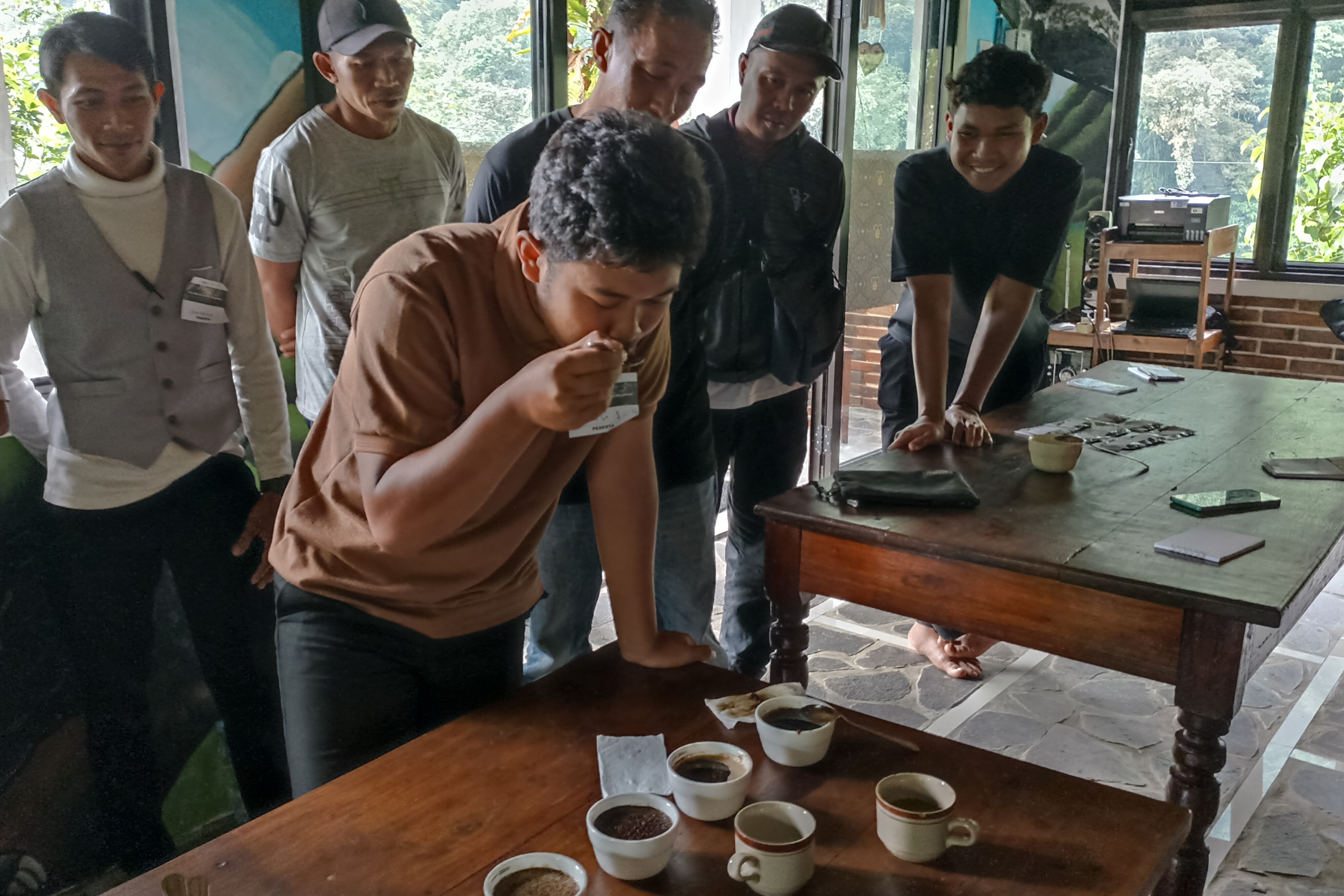
introducing coffee taste
The flavor of a cup of coffee is shaped by complexity: where the plant is grown, how the beans are processed, and how they are served. The post-harvest process—how coffee beans are processed until they become green beans ready for roasting—is often underestimated, yet this aspect determines the final quality. This workshop and training aimed to increase this understanding at the farmer and processor levels. Edi Dwi Atmaja from Katamata Coffee led the first session with an introduction to the basics of coffee taste testing.
“Post-harvest processing can contribute 60% to a coffee’s flavor,” Edi said, opening the session. This is a significant figure, and if errors occur in the process, both the quality of the beans and the flavor can decrease drastically. Post-harvest develops flavor through bean fermentation, protection from foreign substances, and controlled drying. Post-harvest also ensures the consistency of the resulting coffee beans. With controlled processing, the quality of the coffee beans produced each harvest season remains stable and does not undergo significant changes.
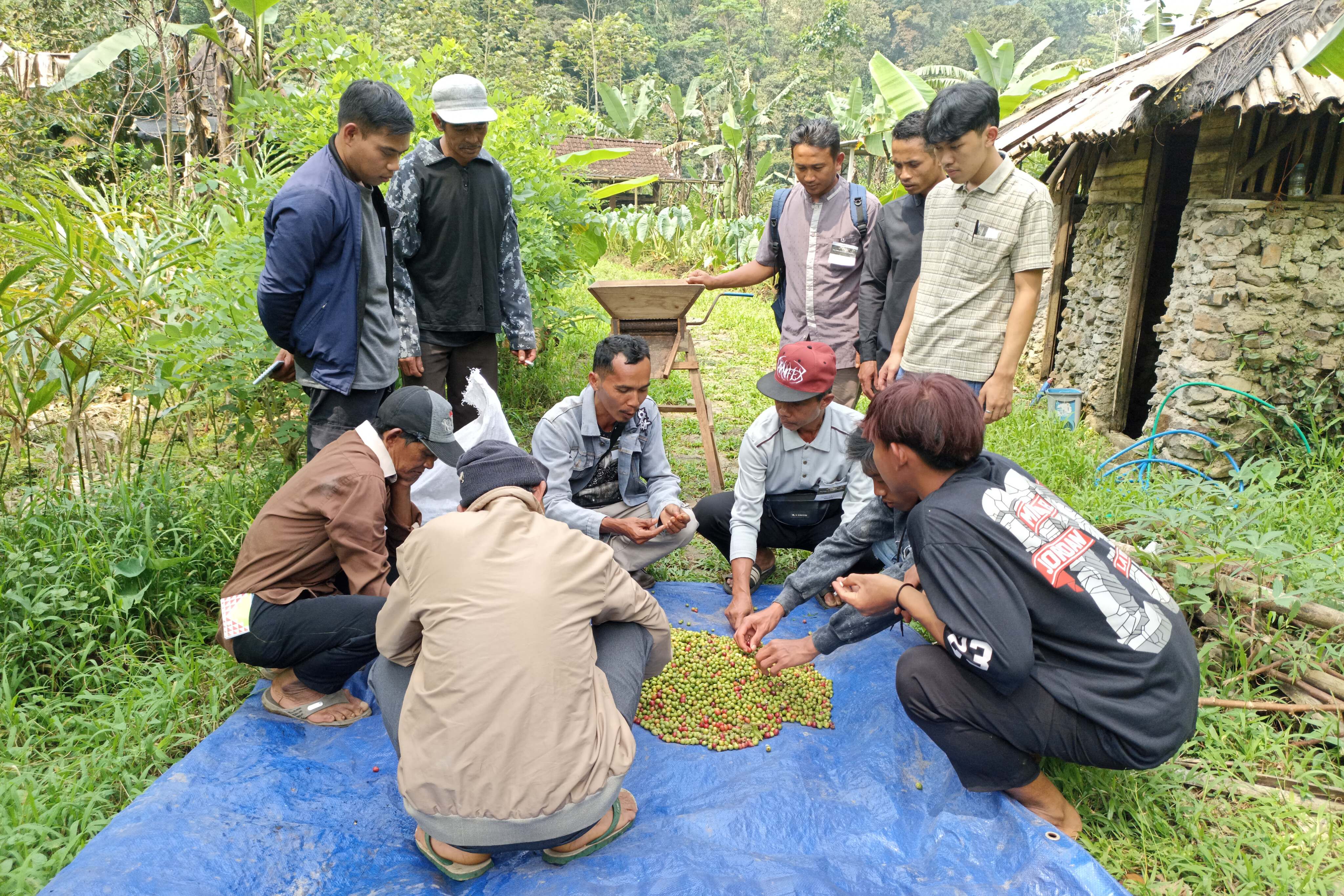
introducing basic knowledge of coffee processing
The second session featured Bambang Riyanto, a farmer and coffee processor from Silurah Village, Wonotunggal District, Batang Regency. His diligence in exploring the post-harvest process has led him to win several coffee competitions. He explained that post-harvest requires precision and consistency. Farmers are typically busy during the harvest season, making it difficult to control quality. This can be a challenge, but it also opens up opportunities: developing coffee processing as a specialized profession, or further developing an organized system at the farmer level. The younger generation can play a significant role in this.
Based on the presentations by two speakers, the discussion session revealed several practices that needed improvement: coffee cherries were harvested before they were fully ripe, coffee cherries were rotted to facilitate peeling, drying on the road—sometimes without a mat—and the lack of bean sorting. The effects were clearly reflected in the resulting coffee. Unripe cherries produce quakers, or pale beans, when roasted. Rotting cherries produce an unpleasant aroma, while drying on the road increases the likelihood of foreign objects like gravel entering.
Furthermore, the farmers were invited to participate in hands-on practice. Almost all participants experienced coffee cupping for the first time. They gained a new understanding that different post-harvest methods can produce very different characters and flavors. Conversely, careless post-harvest processing can lead to defects in the coffee, making the resulting product uncompetitive.
There are six variables for assessing coffee taste: aroma, body, flavor, acidity, sweetness, and aftertaste. Each variable provided a new experience for the participants. Some found flavors similar to fruits, nuts, or chocolate. In everyday life, farmers generally consume coffee with sugar, so they are amazed when they find a natural sweetness in coffee brewed without sugar.
Flavor defects are a crucial issue for farmers and processors to understand. Through taste testing or coffee cupping, they gain firsthand experience of how coffee cherries harvested before they ripen can produce a flat flavor. Coffee dried on the road can smell like asphalt, or have an earthy flavor. This is where flavor can be likened to an honest communication between the elements of the coffee supply chain: from farmers, processors, roasters, and consumers.
After understanding the importance of flavor and the consequences of defects caused by improper processing, participants then practiced several post-harvest methods commonly used in specialty coffee processing. Three methods were introduced: full washed, natural, and honey. Each method has its own advantages and disadvantages.
The natural method involves drying the whole coffee cherries after harvest. This method is relatively simple and suitable for areas with limited water access. The honey method retains some of the mucilage or pulp of the coffee beans during drying, producing a sweeter and more complex flavor sensation. The drawback of both methods is that the drying process is longer and carries a high risk of failure if not properly controlled.
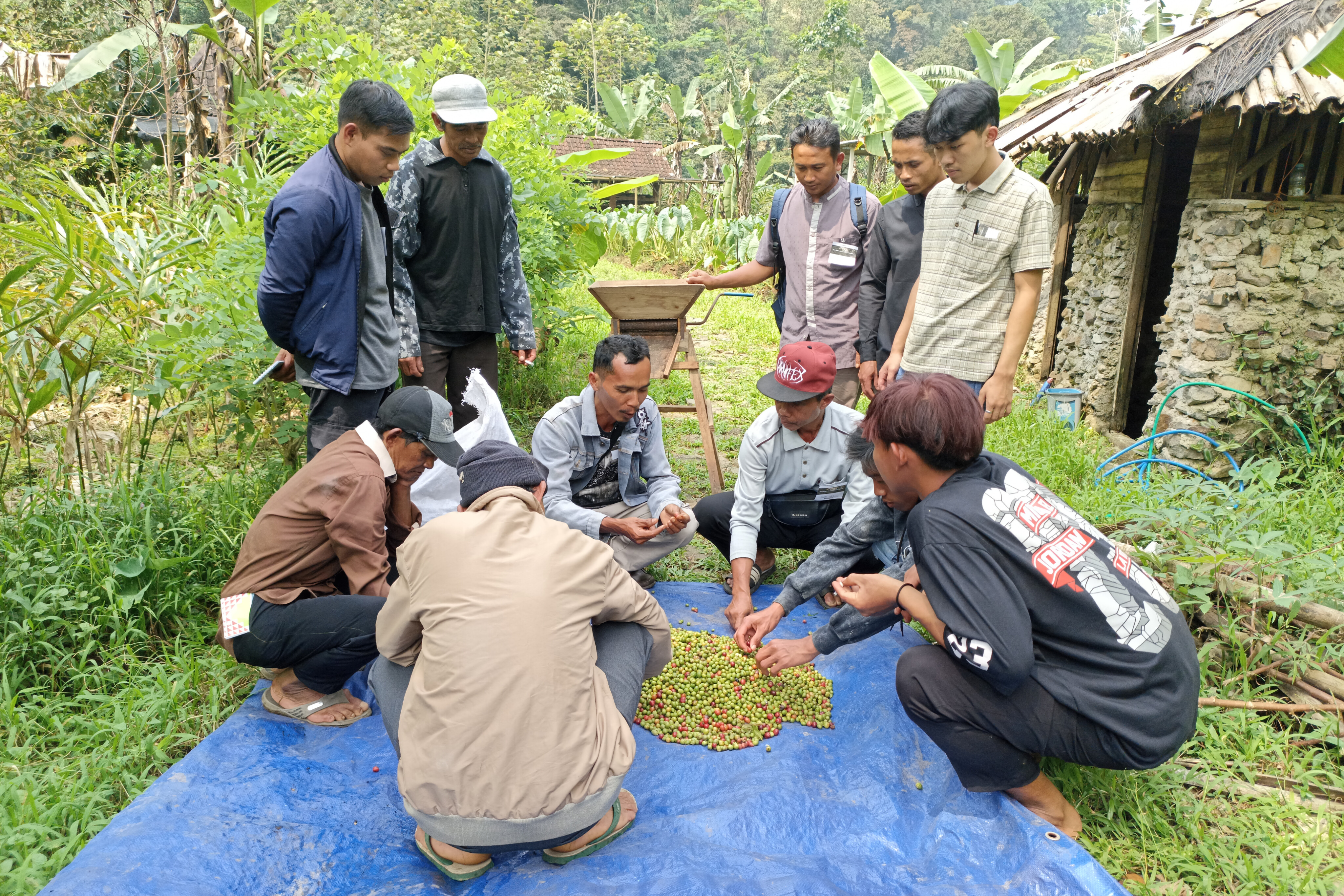
introducing fermentation process of coffee
Meanwhile, the full washed method involves thoroughly washing the mucilage or pulp of the fruit. Consequently, this process requires more water, but it produces a cleaner and more consistent flavor profile. Furthermore, drying is faster, allowing for greater production capacity.
From Understanding to Practice.
We used an assessment instrument to measure participants’ understanding during the two workshops and training sessions—through pre- and post-tests. The average participant score increased from 51 to 83. This figure provides a positive indicator of significant improvement in understanding, from the principles of shade-grown coffee to the importance of post-harvest management. However, these achievements will be insignificant without corresponding changes in practice. Therefore, ongoing mentoring will be provided.
In response to the need for supporting infrastructure for post-harvest processing, a drying dome unit was built in one village at the start of this harvest season. The drying dome serves as strategic infrastructure to address the challenges of improving drying methods: ensuring freedom from exposure to foreign materials, adapting to unpredictable weather, and ensuring practicality. To date, we have supported five coffee drying units in villages within the Javan gibbon’s habitat, with another unit planned for the near future.
This program will also facilitate the acquisition of supporting equipment such as pulpers (fruit peelers), hullers (bean breakers), and graders (sorters) for processors to increase their production capacity. Despite the introduction of mechanical equipment, the shaded coffee scheme developed by SwaraOwa, in collaboration with farmers and processors, is committed to maintaining traditional, labor-intensive roles, such as the role of women in sorting the fruit and beans.
Post-harvest understanding and skills are no longer merely technical matters, but rather a form of respect for every coffee bean produced from shaded gardens. Consistent quality is a promise to consumers and a guarantee of economic sustainability for forest-protecting farmers. Understanding processing standards is crucial to ensure Petungkriyono coffee is not only known as “gibbon-saving coffee,” but also a product that speaks the language of quality in the global market.
—
this article translated from originally article published in : https://swaraowa.blogspot.com/2026/05/workshop-dan-pelatihan-pasca-panen-kopi.html