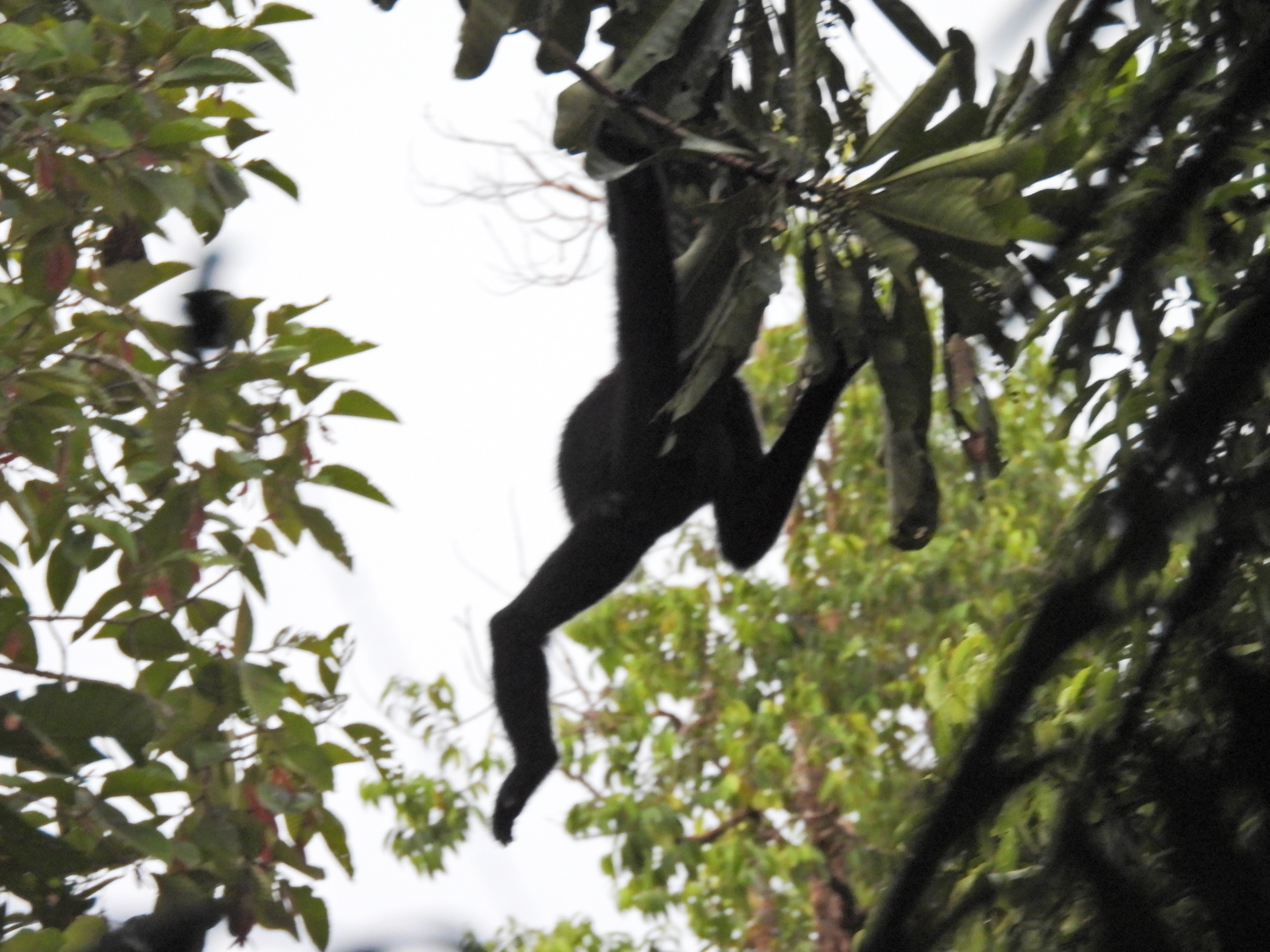
Kloss’s gibbon -Bilou feed on Tumu fruit
By. Aloysius Yoyok
In April and May 2026, following swaraOwa’s Mentawai gibbon conservation program, a survey took place in the Siberut National Park (BTNS), specifically focusing on the bilou (Kloss’s gibbon). This initiative was designed to gather critical population data while providing hands-on training ( improving capacity) to five local community members and two BTNS staff members in the vocalization point count method.
The project began with close coordination with the BTNS office in Sikabaluan to secure the necessary Simaksi (conservation area entry permit). On April 5, 2026, the team gathered to discuss methodology and divide into three specialized groups. Team 1 was assigned to Bekemen, an area known for its high population density of bilou, making it an ideal classroom for new surveyors.
The journey to Bekemen involved traveling by pompong (motorized canoes) up the Sikabaluan River. Along the way, the team was treated to a rare sight: a group of bokkoi (Siberut macaques) foraging near a riverbank -swidden, a scene seldom witnessed in other parts of the island.
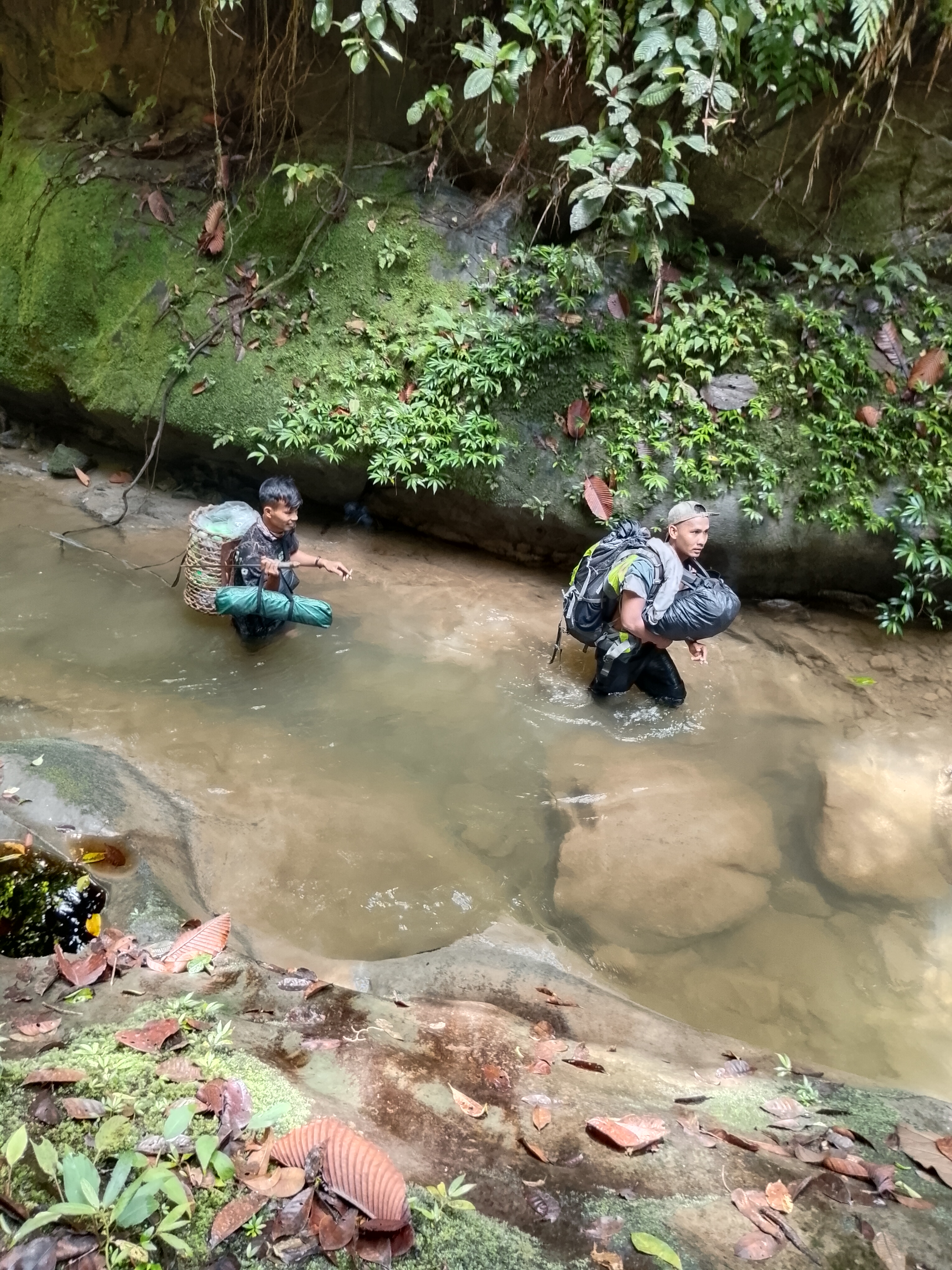
team walkin through the river
Bekemen
The survey days in Bekemen were marked by early starts at 04:30 AM to catch the primates’ morning calls. The forest of Bekemen proved to be a vibrant habitat, offering several notable sightings:
• Vocalizations: On the first day alone, the team recorded 9 bilou “great calls” and 2 alarm calls.
• Unique Biodiversity: Observations included a family of bilou feeding on tumu (Buchanania arborescens) fruits and a close encounter with the “sulabei”—a rare golden-colored variant of the simakobu (pig-tailed langur).
• Rare Sightings: The team also spotted a Mentawai civet and an adult male bilou looking for a sleeping tree right across from their basecamp.
The expedition was not without its challenges; heavy rains led to a sudden flood in the Bekemen River, nearly sweeping away the team’s boats and engines.
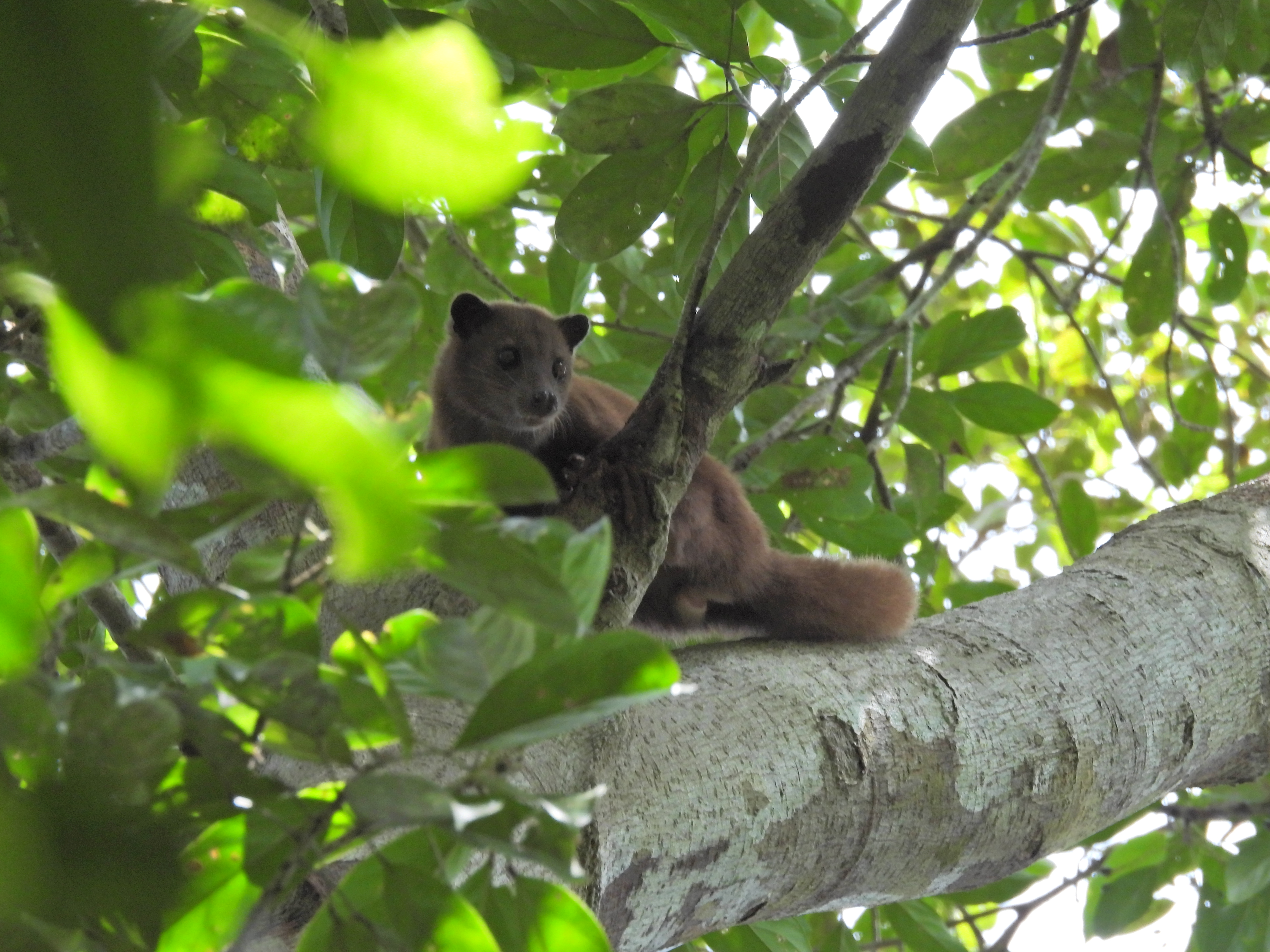
Mentawai palm civet ( Paradoxurus lignicolor))
Lakomonga
The second phase of the survey moved to Lakomonga, an area approximately 5 km from the national park boundary that features high-quality forest connected to Bekemen. The team stayed at a traditional pondok owned by Tou Laiteng Siribatek, whose family practices traditional agriculture and livestock farming in the area.
Despite steep terrain and bouts of rainy weather that initially quieted the primates, the Lakomonga survey concluded with great success. By the final day, the team recorded 8 different great calls and 5 morning calls from bilou groups, confirming the area’s importance as a primary habitat. The team also noted the presence of joja (Siberut langur) and witnessed a white-and-brown wild boar near the pondok.
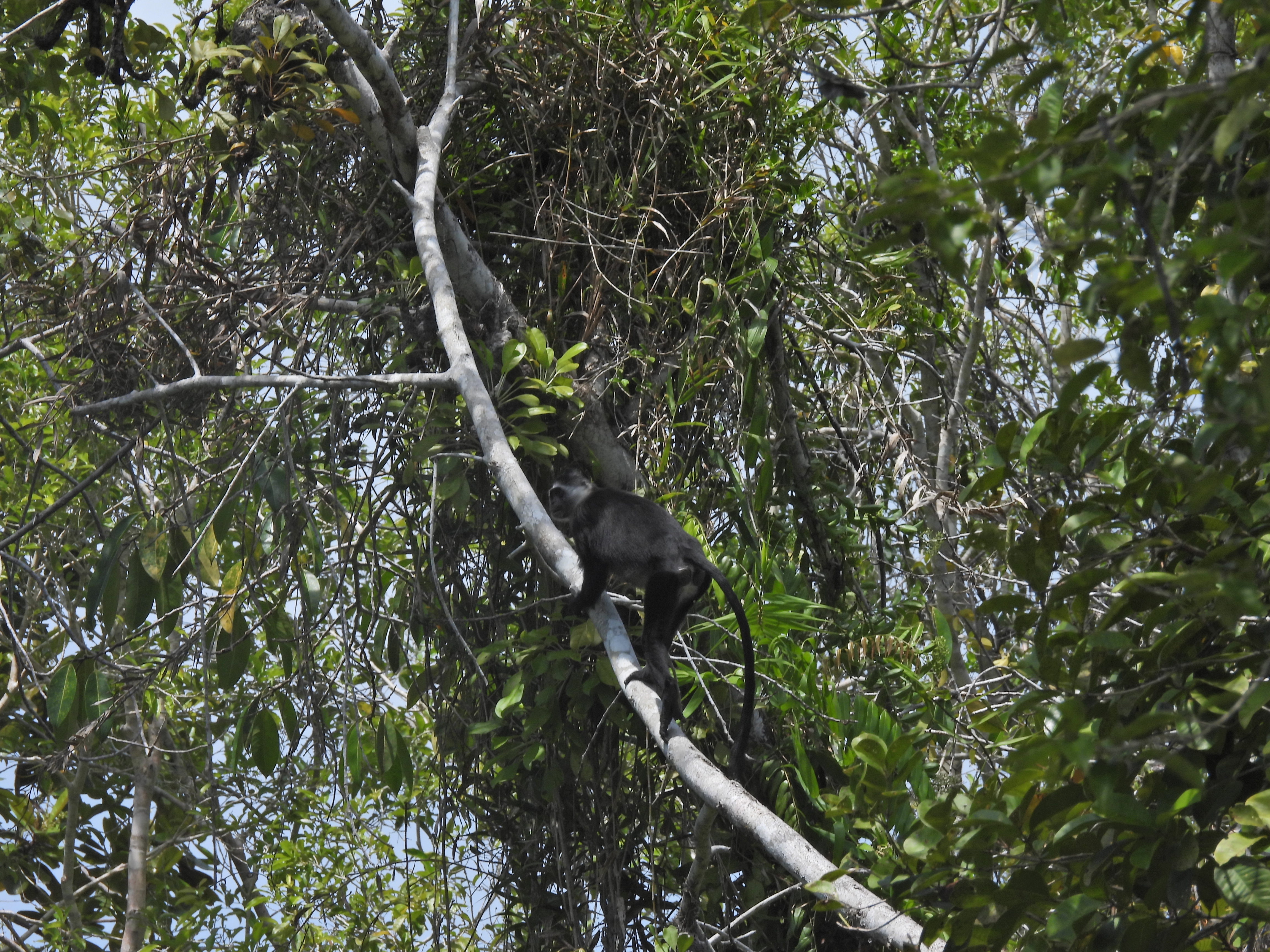
Siberut langur ( Presbytis siberu)
The findings from both Bekemen and Lakomonga highlight the exceptional biodiversity of North Siberut. Importantly, we noted that the primates in these northern river-fed forests are less wary of humans compared to those in South Siberut, indicating lower hunting pressure and a more stable environment for these endemic species. From this survey we will compile to estimate population of Mentawai Kloss’s gibbons in siberut national park, and we will continue to survey other locations in siberut national Park. This survey and training program not only provided vital data but also empowered local communities to become active stewards of Siberut’s unique natural heritage.
This narrative report, translated from original article : https://swaraowa.blogspot.com/2026/05/survey-populasi-bilou-hylobates-klossii.html