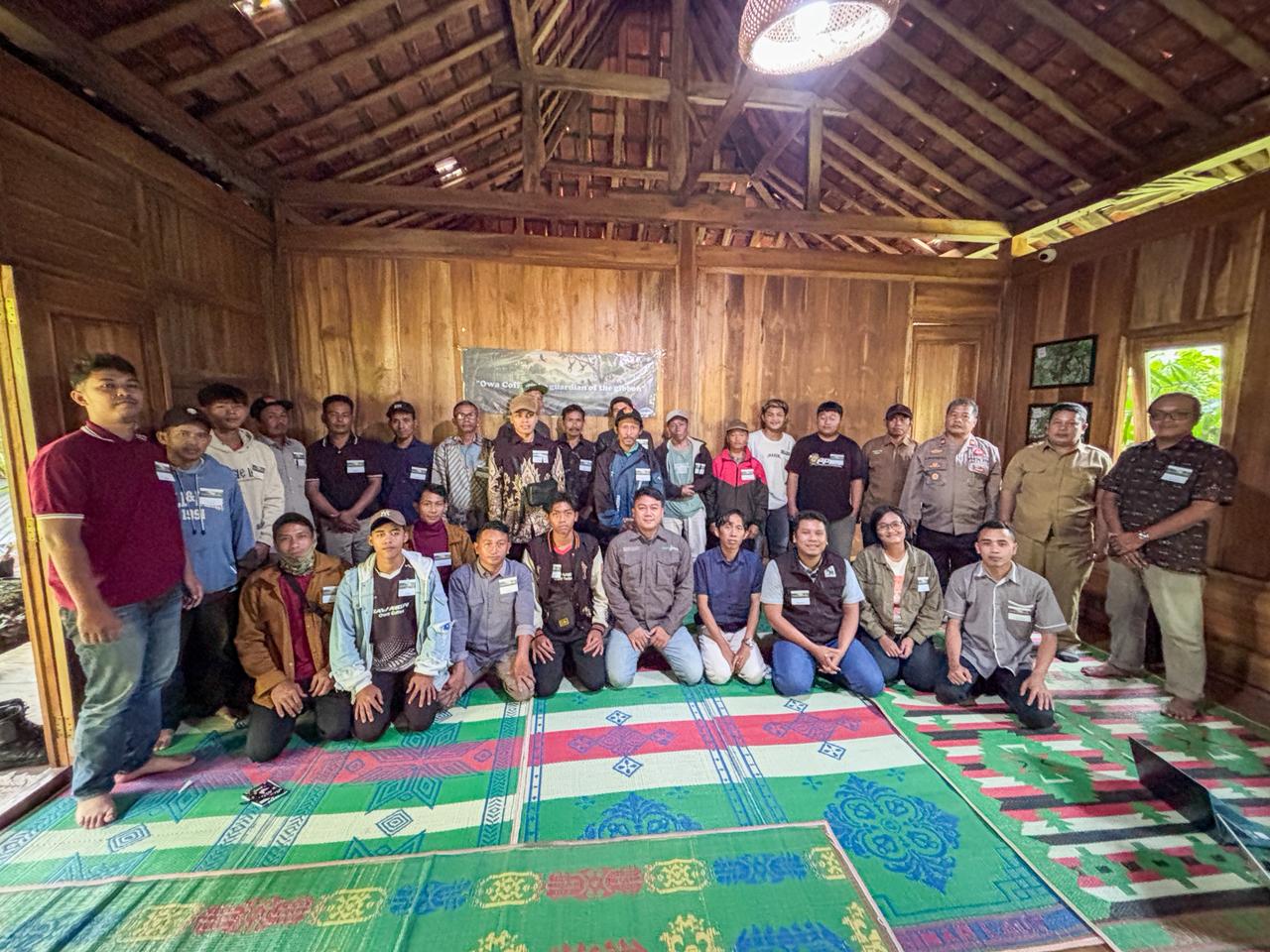
group photo of the workshop participants
by Sidiq Harjanto, Vika Bayu Iriyanto, & Muhammad Kuswoto
In Petungkriyono, coffee is more than just a commodity. It grows under the shade of forest trees—sharing space with wildlife, including the Javan Gibbon. In Petung’s homes, coffee is served, discussed, and positioned as a bond of togetherness across generations. Based on this reality, Javan Gibbon conservation in Petungkriyono seeks to integrate habitat management, economic strengthening, and socio-cultural revitalization. Coffee serves as a strategic entry point and leverage for this grand vision.
On Tuesday, April 21, 2026, a “Shaded Coffee” Workshop and Training was held for selected coffee farmers from ten locations spread across villages within the core and buffer zones of the Javan gibbon habitat. Taking place in Sokokembang Hamlet, Kayupuring Village, we invited 25 farmers from the Petungkriyono, Talun, and Doro Districts. With support and funding from the Air Asia Foundation , this workshop and training are part of the year-long “ Owa Coffee: Guardian of the Gibbon ” social enterprise program.
A total of 24 participants attended the entire day’s events (one participant was unable to attend). The participants were farmers of various ages. They have intense interactions with wildlife, which in their daily practice includes utilizing forest resources while also facing the challenges of conflict with wildlife on agricultural land. The workshop aimed to strengthen their role as key actors in managing the contact zone between human activities and wildlife through harmonious cultivation practices.
The opening ceremony was attended by the Kayupuring Village Head, the Petungkriyono Police Chief, and representatives from the Perum Perhutani BKPH Doro. All parties, as stakeholders in the management of the Petungkriyono forest area, welcomed the program. In his remarks, Arif Setiawan (Director of SwaraOwa) explained the background of the program, which is a continuation of the community economic development scheme through the Coffee and Primate Conservation program, which was initiated in 2013.
Shaded coffee in a multidimensional paradigm
The implementation of this activity is to facilitate coffee farmers in gaining theoretical mastery and empirical experience regarding the potential of coffee as a strategic annual plantation commodity to be developed. The shade -grown coffee agroforestry concept that was initiated emphasizes the symbiotic aspect between coffee cultivation and wildlife habitat conservation, particularly the Javan gibbon ( Hylobates moloch ).
Ecologically, coffee plants require vegetation cover for optimal protection for their growth. Conversely, the Javan gibbon, as an arboreal primate species , requires canopy continuity to support its mobility and daily activities. In addition to the Javan gibbon, this complex vegetation structure also provides essential microhabitats for other biodiversity, including the Javan langur ( Trachypithecus auratus ), the rekrekan ( Presbytis fredericae ), and various avifauna (bird) species .
In the first session, material and a question-and-answer session were provided on the concept of shaded coffee through agroforestry, landscape and coffee market potential, wildlife-friendly coffee management, and the potential for food resources in shaded coffee plantations. The SwaraOwa team presented the Shaded Coffee concept for Javan Gibbon conservation in Petungkriyono. In this concept, coffee plantation management no longer relies solely on linear logic such as intensification to increase yields, but rather a multidimensional approach. Shaded coffee requires practices of protecting vegetation cover ( coverage ), a diversity of native tree species, organic farming, a commitment to wildlife protection, and guaranteed participation space for women.
Edi Dwi Atmaja of Katamata Coffee outlined the Indonesian coffee market, which is still dominated by conventional coffee. However, in recent years, a niche market that appreciates coffee with special schemes—including shade-grown coffee for conservation—has continued to grow. Based on his ten years of experience in the roastery and coffee shop business, he sees a growing market opportunity. Shaded coffee is building a special segment, with the potential for additional economic value from consumer appreciation for good practices. In its development, in addition to ensuring best practices on the farm and a responsible supply chain as absolute requirements, building a compelling narrative to engage the market is a strategy that needs to be continuously developed going forward.
In Kemuning Village, Bejen District, Temanggung Regency, a conservation coffee program is run by the Javan Wildlife Institute (JAWI). Denis Albihad, director of JAWI, explained the program implemented in Kemuning with the community groups they assist. Coffee cultivation is carried out organically, protecting forest trees, and integrated with the Javan Slow Loris ( Nycticebus javanicus ) conservation program. The farmers in the group benefit not only from the coffee harvest but also from the economic benefits of growing ecotourism activities.
Shaded coffee allows for added value from the food potential of various wild species: herbs, shrubs, and various forest mushrooms that populate the understory . In her presentation, Amelia Nugrahaningrum showcased the full potential of local foods in Petungkriyono. Some are still commonly used today, while others are becoming less well-known. Through the Genau Indonesia organization, Amel and her husband are trying to contribute to preserving this food potential through an experience -based tourism scheme in Tlogopakis Village.
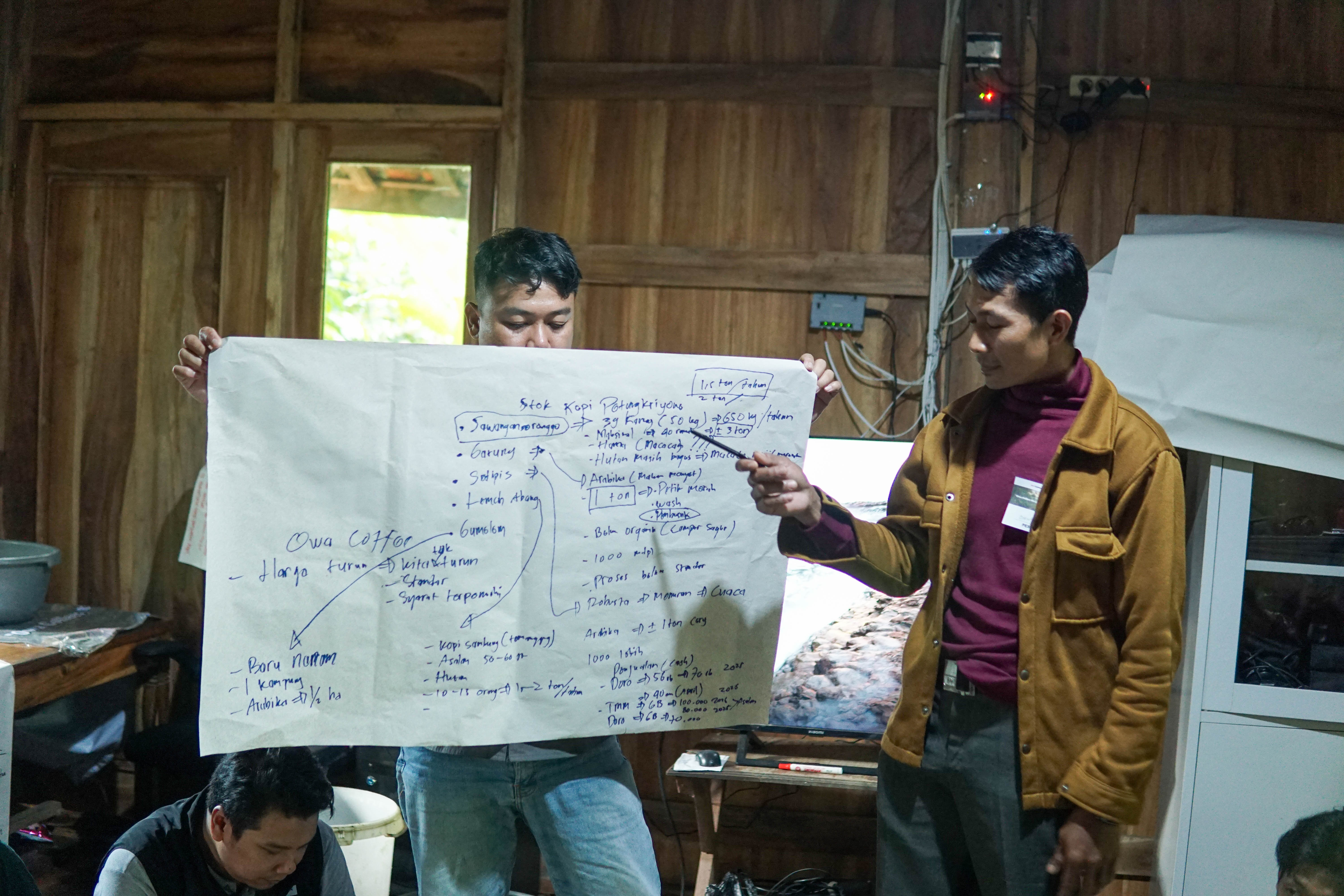
Participants explain current practices regarding coffee in their villages
Sharpening the implementation of shade-grown coffee practices
In the second session, through a focus group discussion (FGD), it became clear that coffee—and its cultivation—is a focal point for various aspects of community life. Many interests intersect, requiring careful and cautious approach. At the very least, we examined the issue from ecological, economic, and sociocultural perspectives.
Coffee is a key commodity, alongside various agroforestry crops such as spices, durian, petai, sugar palm, and tubers. However, farmers tend to view coffee as their primary source of income, thus neglecting to optimize other commodities. However, growing various commodity crops alongside native species on a single managed plot of land not only provides economic benefits but also creates a microecosystem that maintains the resilience of the agroforestry system itself. Complexly vegetated gardens automatically enable feedback loops in pest control, pollination, and protection from extreme drought.
The majority of participants complained about interactions with wildlife, which often lead to conflicts on agricultural land. For example, the presence of long-tailed macaques ( Macaca fascicularis ) is considered an agricultural pest by farmers. This also occurs in many parts of Indonesia, and to date, there is no consensus on how to resolve this problem. The focus group discussions (FGDs ) have created an opportunity: citizen science , involving farmers in collecting field data. The availability of data on populations, behavior, and the presence of natural enemies—predators—can provide valuable information for resolving this problem in the future.
Hope for a sustainable agricultural system remains. Participants shared their experiences. Many positive stories arose. Mr. Sawal from Lemahabang Village shared his habit of growing chilies and tubers in his garden. He plants them for harvest and consumption. The economic benefits don’t come directly, but rather through substitution: saving cash by investing in labor—growing his own daily food.
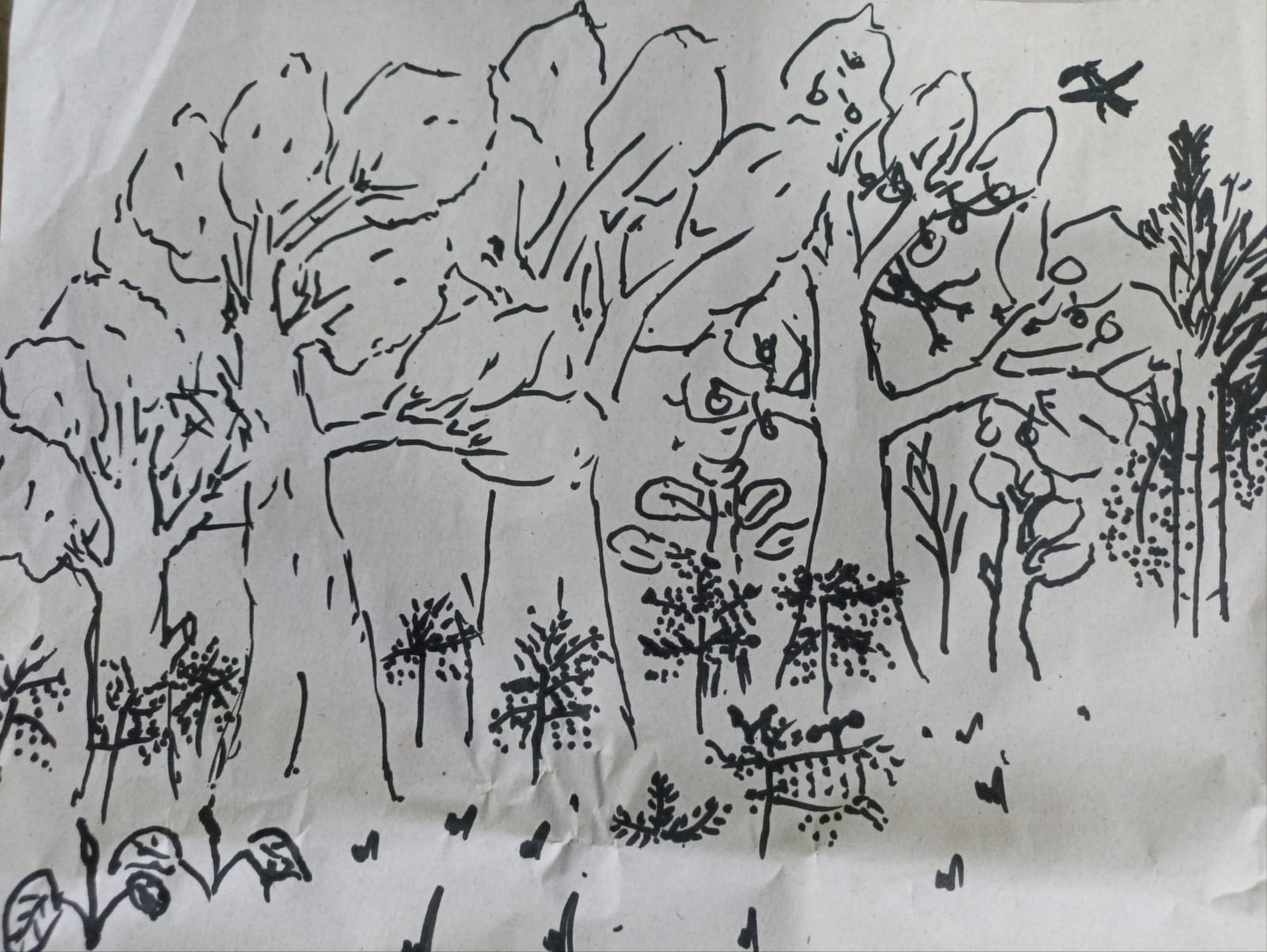
an ilustration of shaded coffee by participants
Rudi, a young farmer from Sawangan Ronggo, illustrated on a flipchart how his hamlet’s coffee plantations still accommodate various forest tree species, including the bendo, kayu babi, gintung, sentul , and sugar palm. Sawangan Ronggo boasts abundant sugar palm, which supports the economy through its palm sugar production. His sketch shows cardamom plants filling the understory. This spice provides an additional source of income, harvested every two months.
There have also been proposals to integrate beekeeping into coffee plantations. Integrating bees into plantations can bring numerous benefits. Economically, beekeeping can provide additional income through honey harvesting. Furthermore, bees are efficient pollinators for both coffee plants and wild tree species in general. Consequently, organic practices are essential to protect bees from chemical exposure. SwaraOwa has been piloting local beekeeping since 2017 in Mendolo Village, Lebakbarang District.
This workshop and training marked the beginning of our long-term collaboration. In May, coinciding with the start of the coffee harvest season, we will meet again for a similar activity with a more practical theme: coffee post-harvest processing. Through a holistic shaded coffee scheme—based on our deep insight and proven skills—we strive to achieve harmony between the interests of environmental sustainability and the well-being of communities.
In closing, in accordance with the theme of this workshop, “Owa coffee: guardian of the gibbons” can be interpreted as “Owa Coffee: Guardian of the forest and gibbons”, the meaning is not just branding, but rather emphasizing that:
1. This coffee production involves farmers as the main actors. They are not only coffee producers, but also part of the conservation movement.
2. Farmers play a dual role: producing quality coffee while protecting the forest, which serves as a gibbon habitat. This way, every cup of coffee they produce carries the message that this coffee comes from a sustainable forest.
3. Symbolic meaning: coffee becomes a medium that connects consumers with the struggle of farmers to protect gibbons and forests.
(translated from original article published in : https://swaraowa.blogspot.com/2026/04/workshop-dan-pelatihan-kopi-naungan.html)
That’s a really fascinating approach – it’s wonderful to see how coffee production can benefit both the economy and wildlife conservation simultaneously.