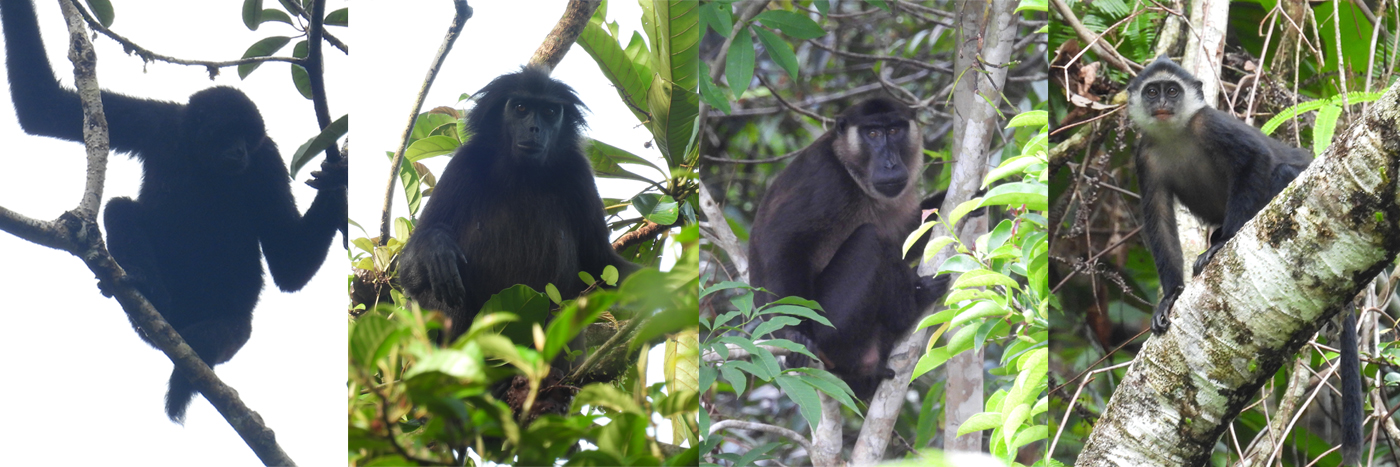
All four Siberut primates seen in our exploration. Fom left to right: bilou, simakobu, bokoi, and joja.
written by : Imam Taufiqurrahman
With a ‘clean sweep’ of all four Siberut primates, my 11 days journey with Heru Fitriyadi to Siberut Island, Mentawai Islands, West Sumatra, is so astonishing. Joja the Siberut Langur and simakobu Pig-tailed Langur, seen in Southwest Siberut. In South Siberut, we saw bilou Kloss’s Gibbon. While in North Siberut, all four of them, include bokoi or Siberut Macaque, the hardest one.
To complete, a group of Long-tailed Macaque and five other mammals sum up to total of at least 9 mammal species in our list: Spinner Dolphin, Siberut Flying Squirrel, Mentawai Squirrel, Intermediate Roundleaf Bat and some difficult taxa: rats.
For birds, of course, 72 species we saw is so overwhelming. Three of them became my lifer: Ruddy Kingfisher, Storm’s Stork and the Critically Endangered Silvery Wood Pigeon. I don’t know how many lifers Heru has.This journey was actually a combination of duty, cultural experience, and wildlife watching—with a big of luck by some coincidental situations. From 10th-20th February 2026, we spent 2 days in Southwest Siberut, 5 days in South Siberut and 4 days in North Siberut.
As part of the duty, we were asked to speak in a workshop on wildlife ecotourism in Southwest Siberut, facilitated by SwaraOwa. And as the workshop only held for two days, we had plans to continue to visit Siberut NP in the north. This actually may only need about a 5-7 days trip. But, it spanned up to 11 days in total.
Southwest Siberut
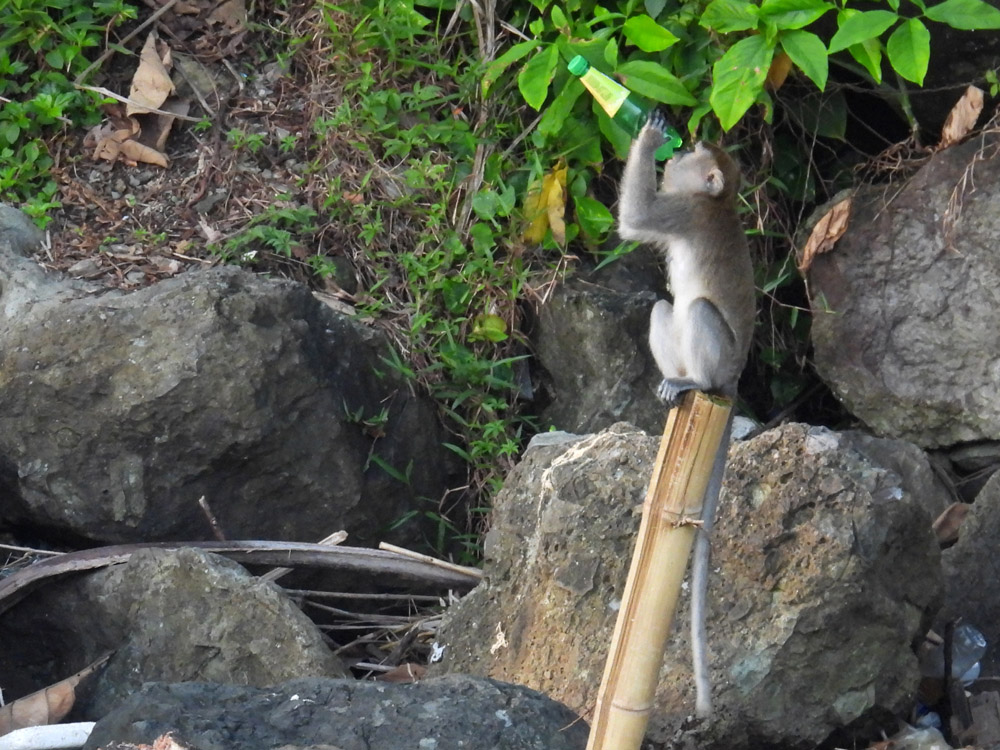
Long-tailed Macaque
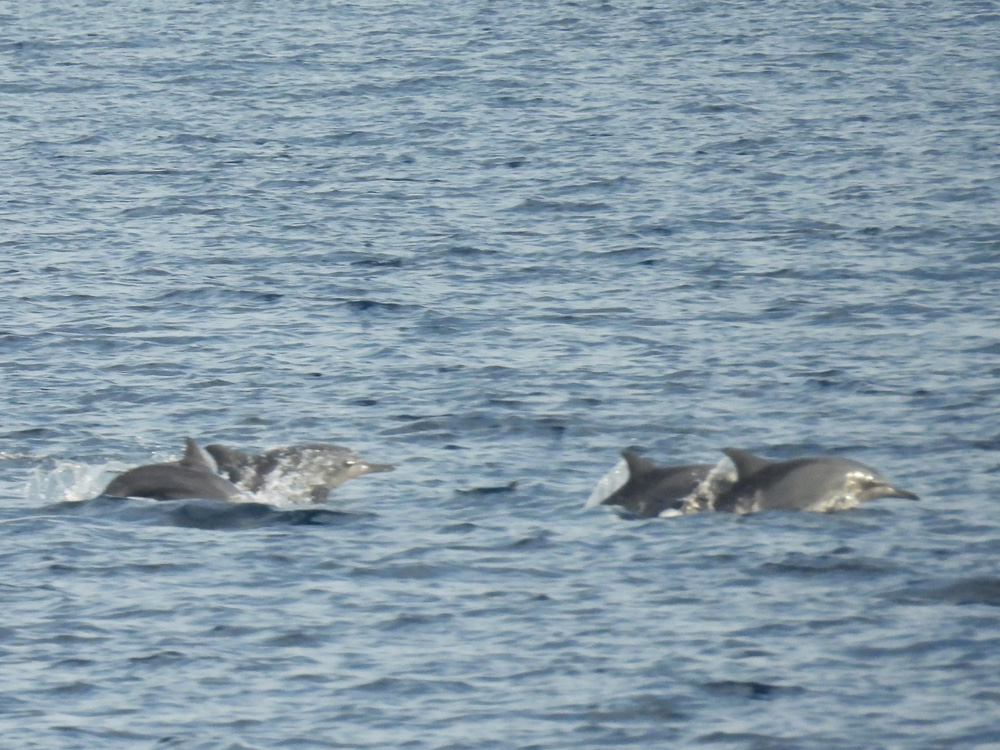
Spinner Dolphin
In less than an hour after the Mentawai Fast on board, two mammals were seen. The first was a group of Long-tailed Macaque, foraging along the estuary. Seeing them is a bonus, as we were not expecting to see it, just kind of a welcome drink. While in the open sea, a couple groups of dolphins. We only able to take a poor documentation of a group of Spinner Dolphin, as the ferry’s speed did not allowed us to got a good moment.
However, I am quite confident for the dolphin’s id, as they have a quite long rostrum. But, any other suggestions are welcome. A study published in recently reveals the open sea around Padang and Mentawai Islands as a cetacean hotspot, where they found 10 species. Well, that’s almost 1/3 of cetacean species recorded in Indonesia! Surely very potential to develop a whale watching spot.
While for the birds, mostly seabirds seen. We saw at least White-winged, Black-naped and Bridled Tern that confidently id in clear. In one of the small islands off Padang, Heru pointed out a White-bellied Sea-Eagle soaring.
After six hours on board, Mas Yoyok, our local team, picked us up in Maileppet, South Siberut. Soon after, we met our other team members and local partners. Seven of us took a pompong boat to Toloulaggo, Southwest Siberut, where the workshop will be held on the next day.
SwaraOwa has initiated wildlife watching, primarily primate and bird watching, and conservation activities in the subvillage since 2016. This workshop will mark a decade of the initiative and hopefully can bring the wildlife watching ecotourism in the subvillage to the next step.To scale up the initiative, more broader communities are involved, up to village level. Through this workshop, we facilitated a discussion forum for the local communities. To hear their thoughts, ideas and plans about what’s best.
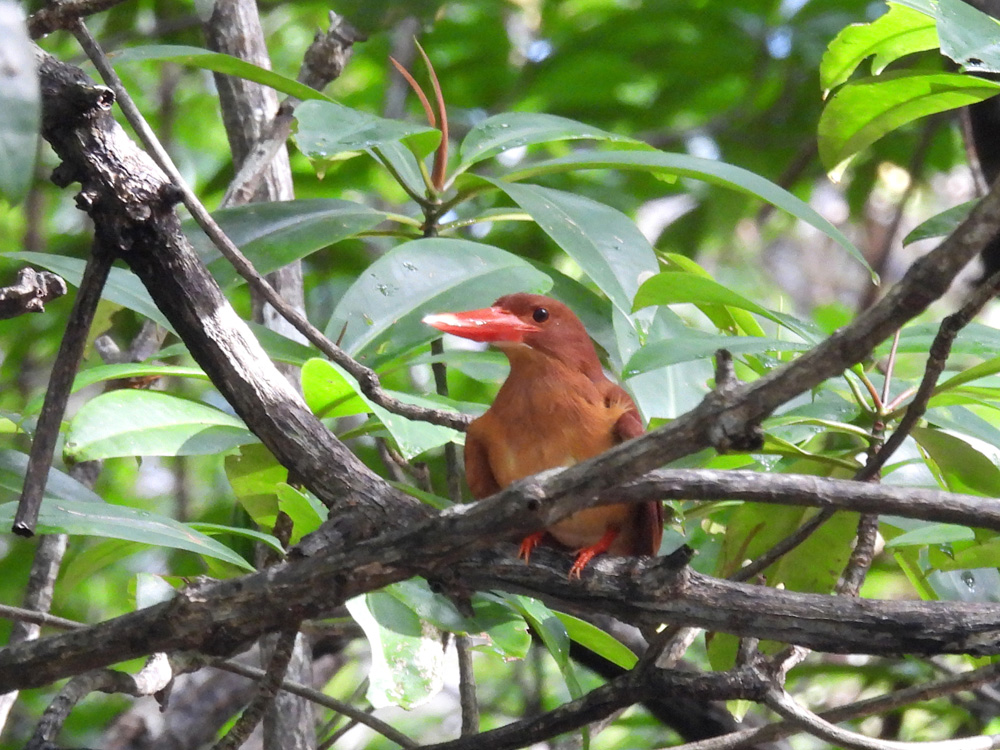
Ruddy Kingfisher
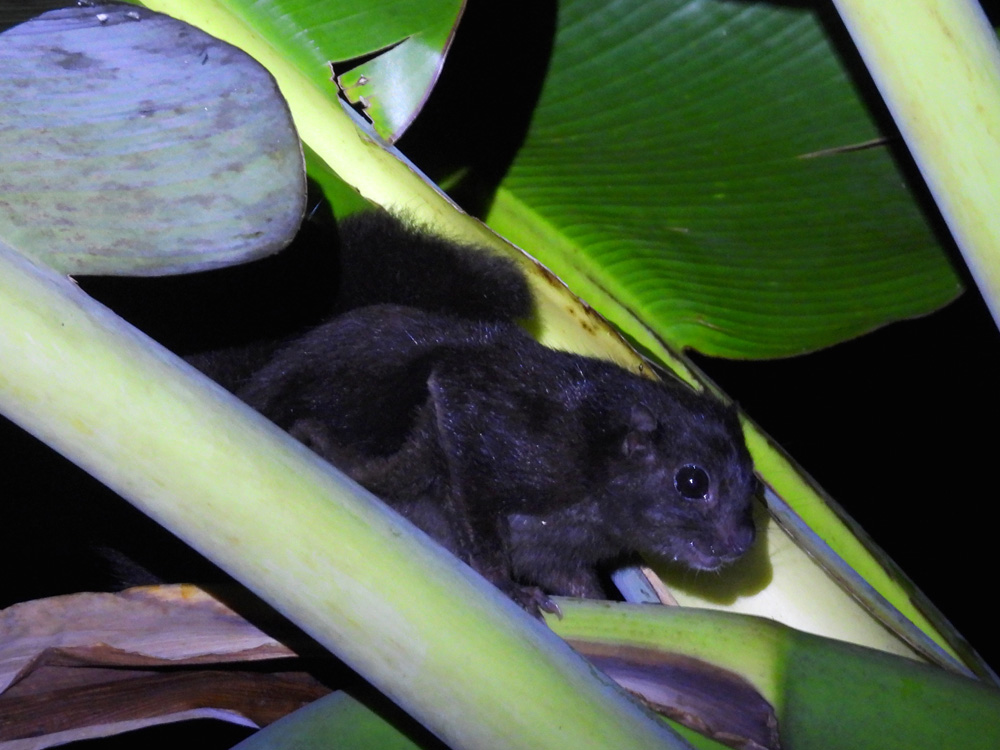
Siberut Flying Squirrel
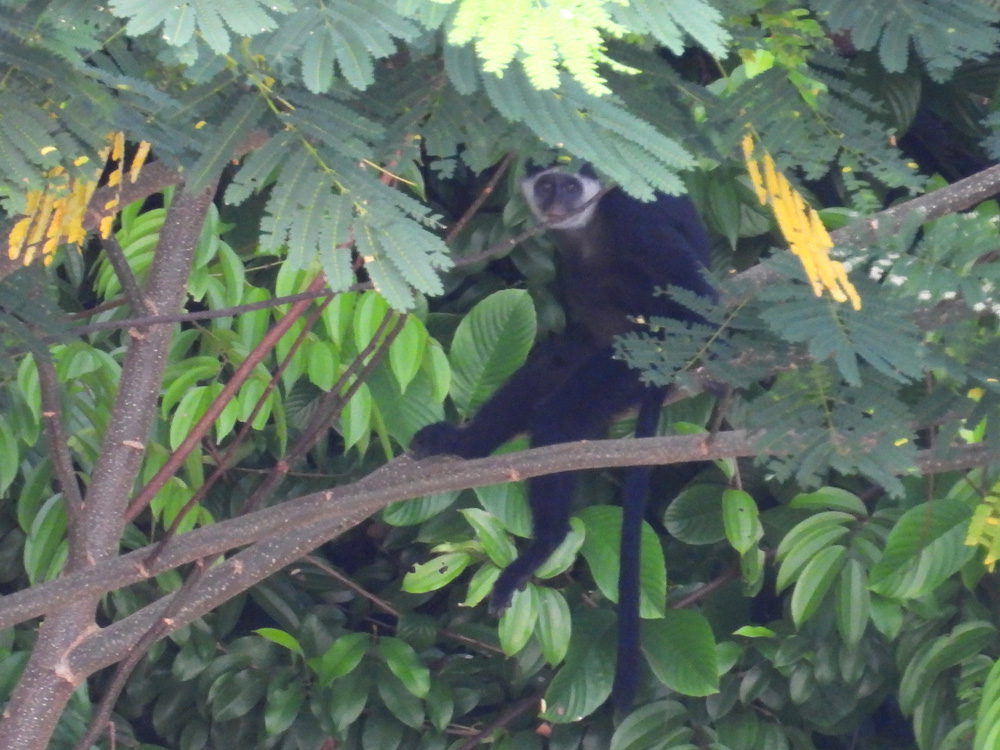
Joja we saw in Toloulaggo
To get to the subvillage, we were passing through the Monaci Canal—named after Italian priest, Ottorino Monaci, who initiated the construction of the canal during six years (1985-1991). This 1.5 kilometers waterway is a monumental work that cuts the long and dangerous route through the open sea. Safe and efficient. For us, there’s another advantage. Thanks to the priest and its students, this mangroves surrounding the canal enabled us to birding along. A Copper-throated Sunbird, Greater Coucal, Ruddy and Stork-billed Kingfisher are among the highlights.
At night in Toloulaggo, we spotlighted through the plantation to look for the Mentawai Flying Squirrel. We saw two individuals. No sighting of Mentawai Scops-owl, despite some birds being already heard so close.
The dawn chorus of bilou enliven the morning. But, we had no sufficient time to look for it as the workshop opened in the morning. We only took our short morning time by boat to look for joja along the beach and found a group feeding at a tree close to the cliff. We watched them from a quite distance, resulting in not a good image. But, still a great experience we had.
The workshop was held in success, with the villagers deciding to take the opportunity in developing the wildlife tourism in their village. They agreed to form a community-based tourism organization. The chief village, the chief of sub-villages, religious leaders, traditional figures, headmaster, and young people attended the workshop and discussed the potential of wildlife ecotourism. Full report of the workshop written by mas Yoyok (in Bahasa), can be read here https://swaraowa.blogspot.com/2026/03/memperkuat-akar-konservasi-workshop.html.
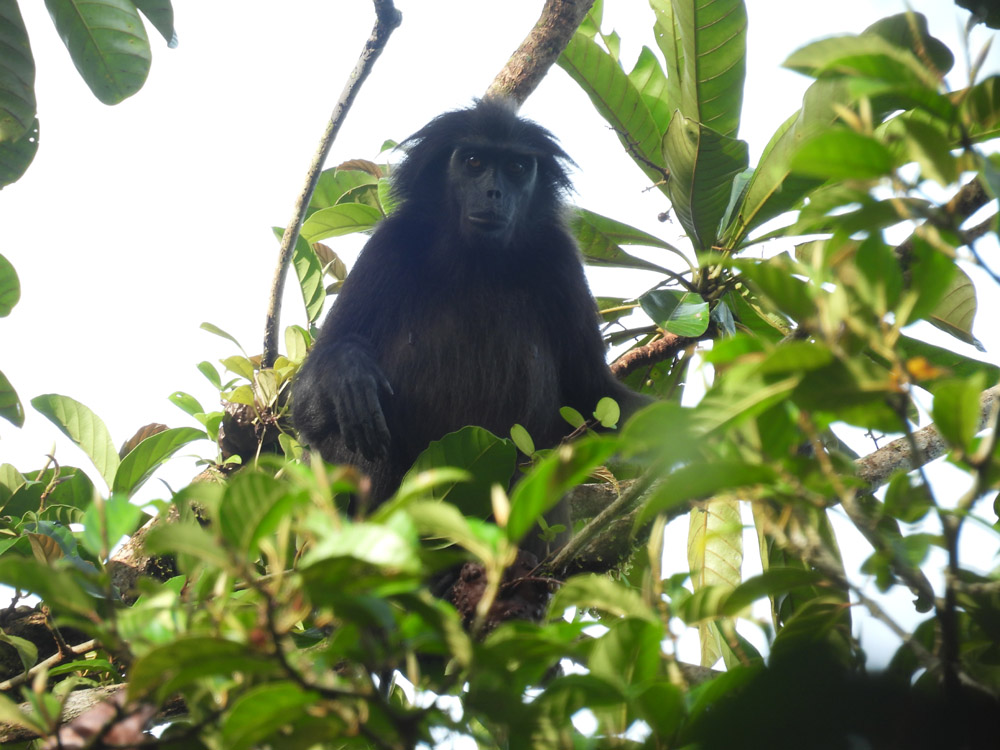
Simakobu or Pig-tailed Langur
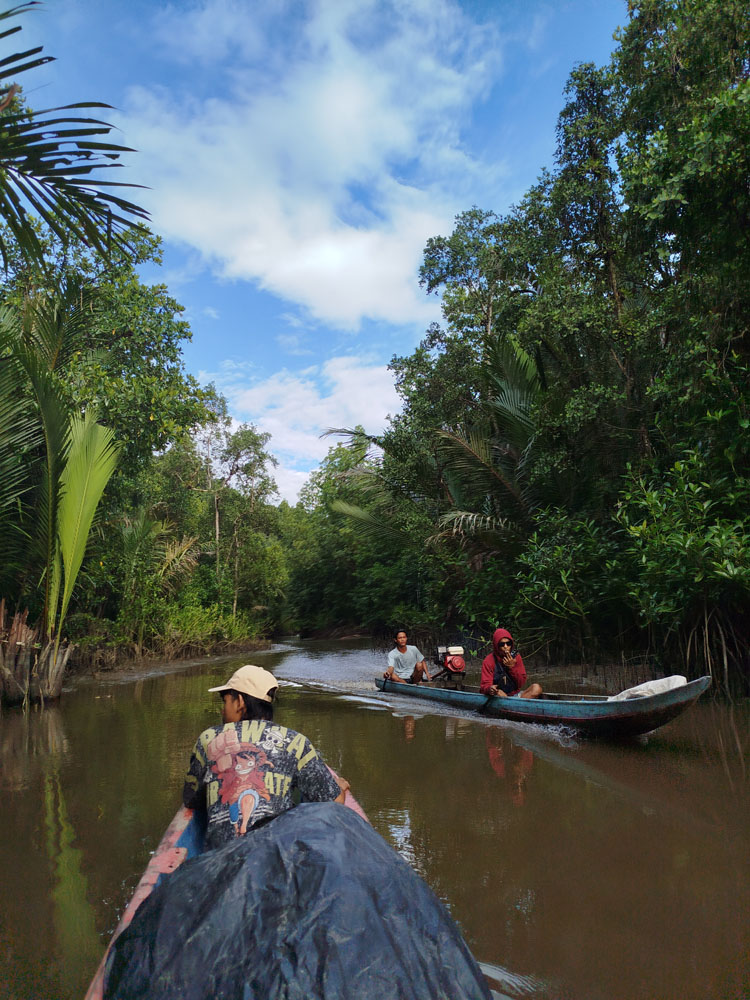
Cruising along the Monaci Canal
The rain fell right after the workshop ended. Even heavier until night. We waited, but then decided not to go out. The heavy rain also happened in North Siberut and became a catastrophe, as you can read it later. The next morning was promising. We went on trails for wildlife watching. Ismael that walked in front said saw bilou. But, not our luck. We then splitted up. Ismael led four of us to a more deep forest, while the other group led by Vincen followed the trail to our shelter. Just about a couple of minutes later, Ismael signed us something. Turned out, a simakobu sitting nicely. Just only about 10 meters! We had this long face to face moment. The infant joined, until the group went away. It was breathtaking.
On our way to catched up the other group, calls of bokoi were heard. But, we didn’t have more time to spend. With two primates seen and the other two heard, the village surely has a big potention. All of the four Siberut primates—with their simple, but really cool names—joja, bokoi, simakobu and bilou are there! We leave the village in the afternoon, with hope the community-based tourism can be grown.
South Siberut
Actually, we were intended to stay in South Siberut for two days. But, turned out spanned until two more nights. During the first two days, we decided to visit one of our survey area. Mas Yoyok told us about the chance for bilou there. We didn’t wait. On the next day, we visited the forest. But, unsuccess. We spent the afternoon by birding along the estuary to join the Asian Waterbird Cencus. Ruddy Turnstone, Terek and Common Sandpiper, Greater Sandplover and Pacific Golden Plover gathered in flock are some that we saw.
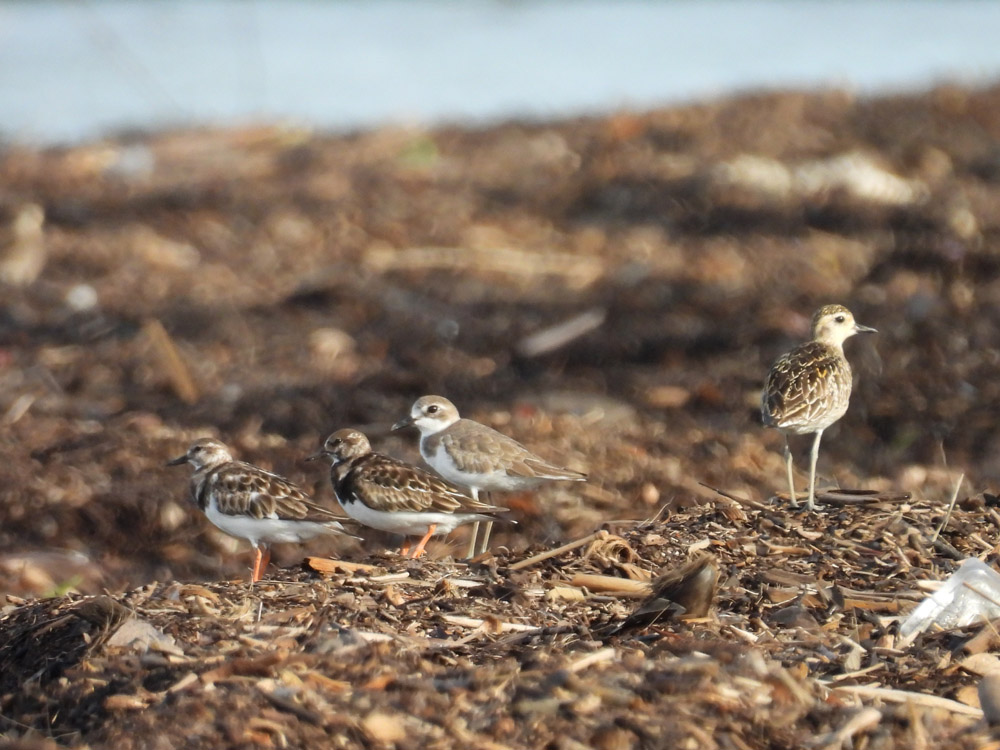
A flock of shorebirds seen in Muara Siberut
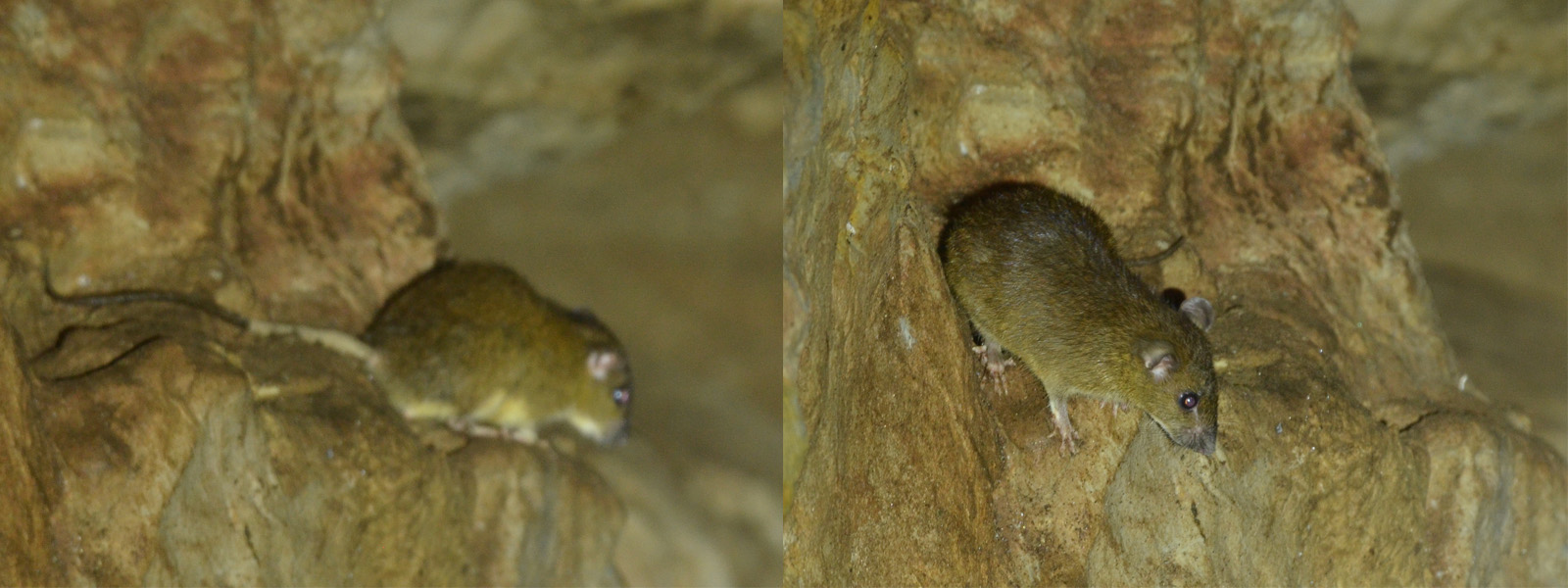
Id, please? Photographed by Heru Fitriyadi
The settlements around the estuary were filled with numerous swiftlet houses. As I remembered, the house was still one or two. Well, surely this ancient commodity are still promising. The next day to the cave. It called Roiget-roiget, means bat. The cave is still sacred to the locals. Pak Darius who led us to the place performed a ritual and sang to the holy spirit asked for permission.
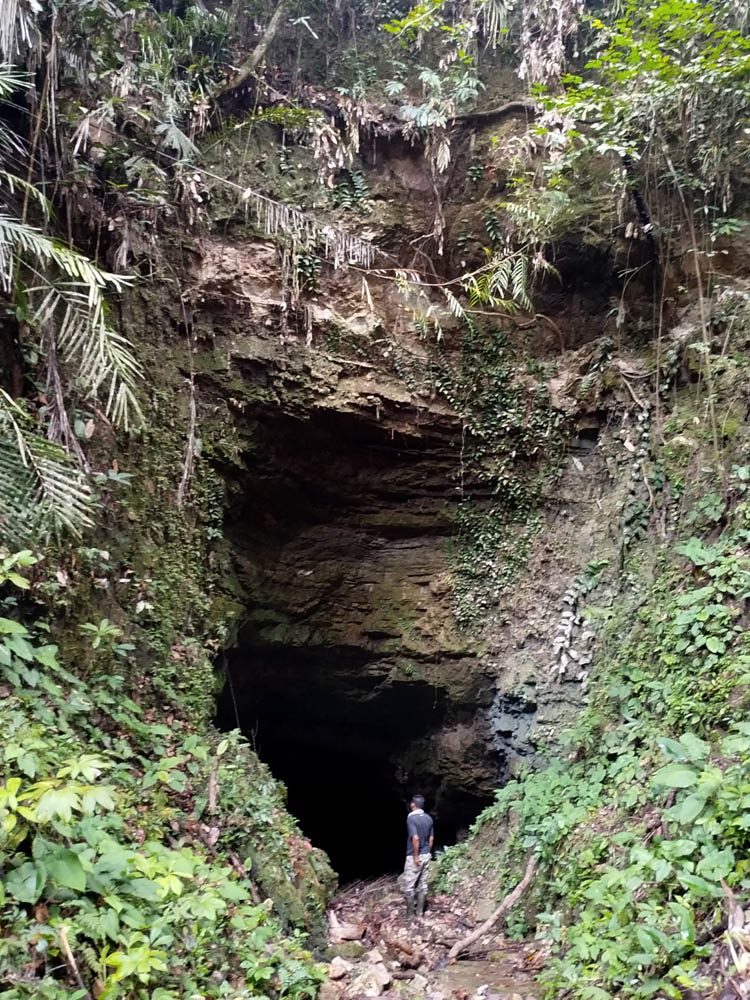
Pak Darius prepared the ritual in front of the Roiget-roiget Cave’s entrance
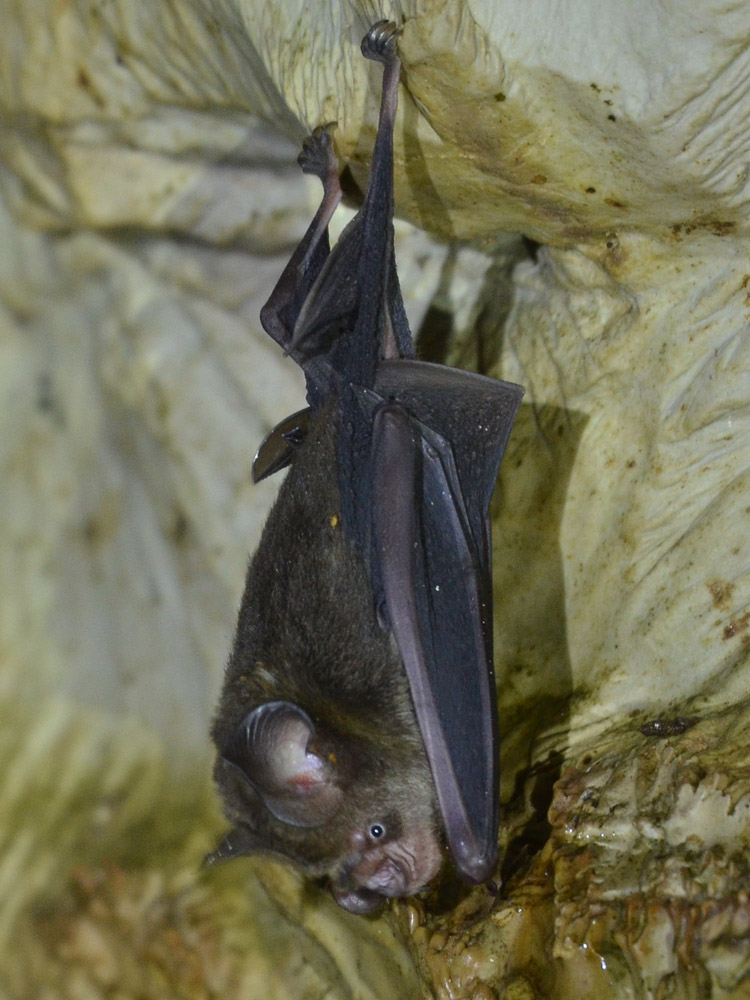
Intermediate Roundleaf Bat. Photographed by Heru Fitriyadi
The cave is big, with a huge entrance. It formed not horizontal nor vertical, but diagonal, with about 30° angle in slope. We tried to be very careful walked down the cave. The good thing is, the floor is not slippery. We encountered numerous bats, but only one species found, the Intermediate Roundleaf Bat. While taking pictures, a small mouse is seen crawling. It’s a small brown mouse, with a long tail (1:1.5) proportion of its body. As our knowledge is far from good about rodents, so any suggested ID is very welcome.
The cave explored less than two hours and we were not deep enough actually. I wish I could explore it more, but me and mas Yoyok had a meeting scheduled already and then continued our journey to Padang. We did not anticipate that our plan was close to two national holidays: Chinese Newyear and also beginning of Ramadhan. Many people plan the same to go back to Padang. As a result, the fast ferry was fully booked and we didn’t get tickets. We decided to stay in Muntei village and took the afternoon for a cultural session. We visited the traditional house of Mentawai, uma. Skull of hunted animals—mostly the primates and also wild boars. Mas Yoyok introduced us to Aman Kesi, his relative who became our interpreteur.
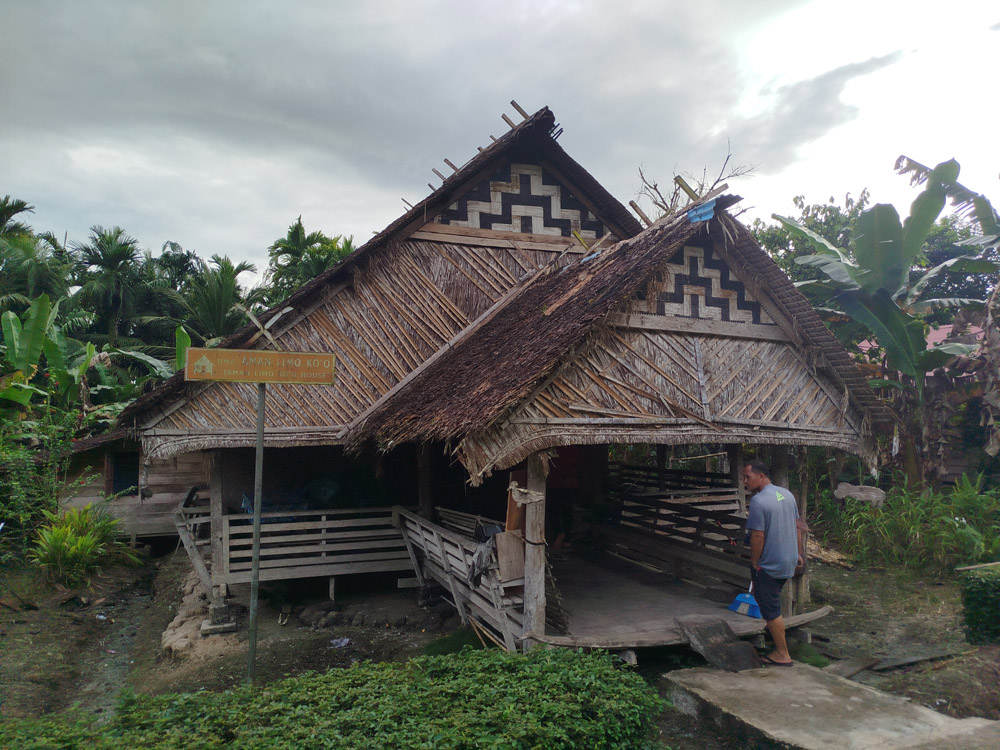
Uma Aman Lima Ko’o
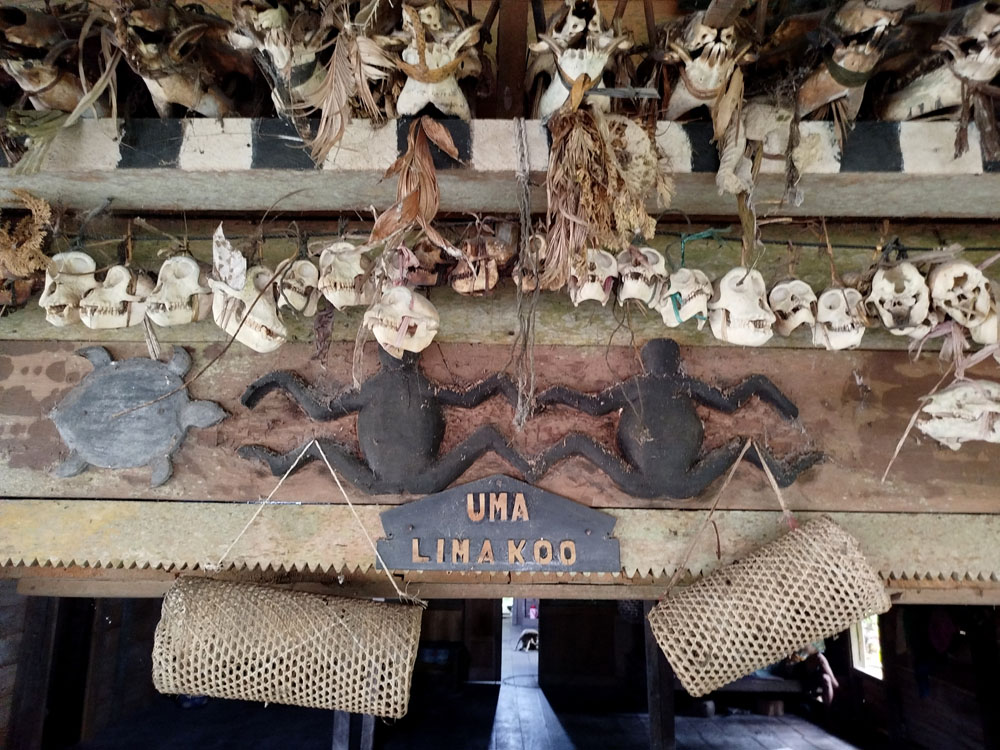
The skulls of wild boars and primates hanging in front of the entrance door.
We took a house tour and Aman Kesi explained uma with details. For example, he said, if the skulls are facing outside, it means the animals were taken from the wild. But in the opposite, if they facing inside the house, wild boars in particular, that’s from livestock. The skulls are not just a house decoration. It is a status symbol for the family or clan owner. It’s a pride and means a lot to Mentawai people.
I wonder, how many primates were killed along three millennials of the Mentawai people existence?
Study by Whitten & Whitten from eight umas in 1980, resulting in almost 2,400 skulls found. Simakobu is the majority and bokoi holds 25% of total kills. Bilou tends to be the lowest. Aman Kesi said, bokoi is the easiest target, as they have big meat and are slow. That’s almost 50 years ago and hunting is still ongoing. No wonder the primates are so sensitive and shy.
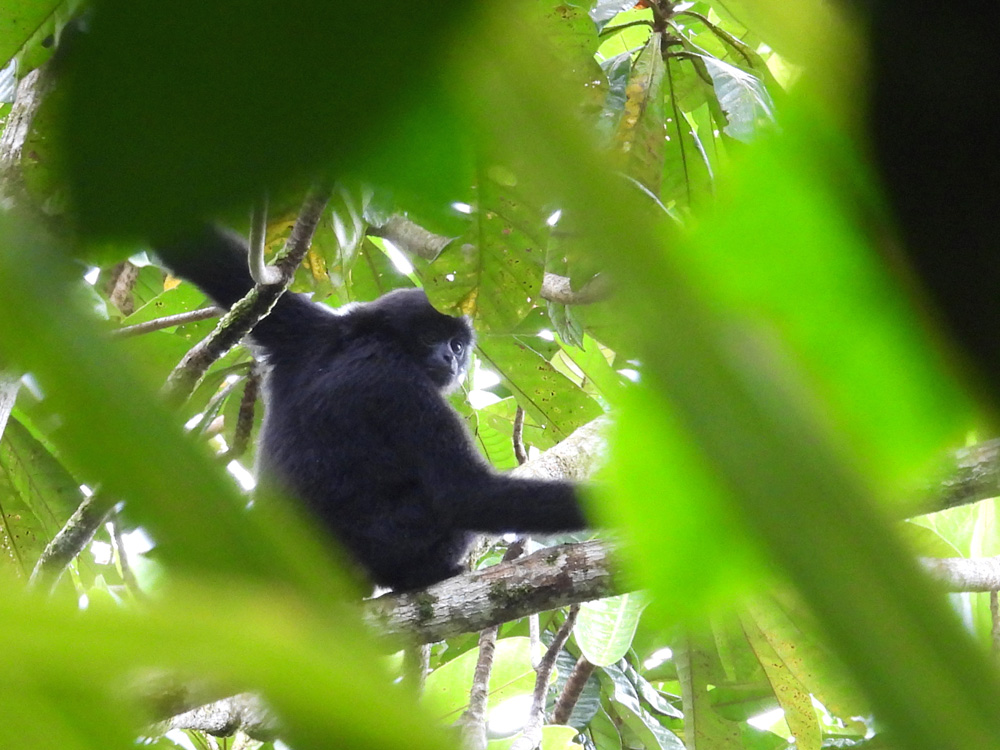
The silent bilou
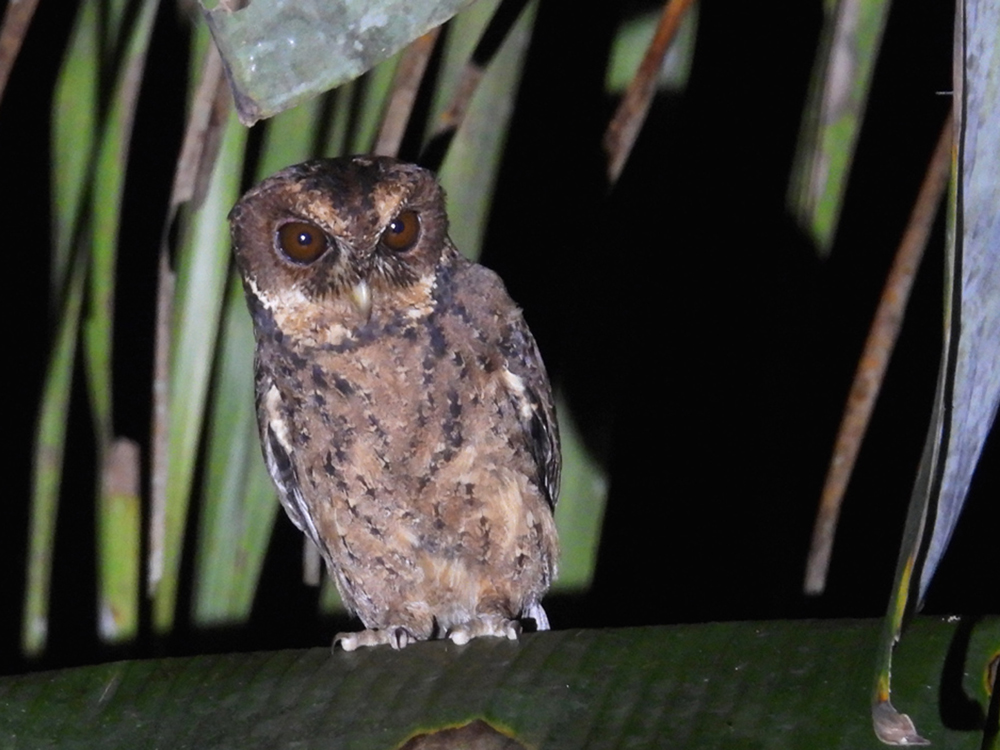
Mentawai Scops-owl
A kailaba puppet hanging in front of the house. For the Mentawai people, they believe that the bird, Oriental Pied Hornbill, is the spirit’s toy. Hanging the puppet in the house can make the good spirit stay. On the next day, we were back to the survey area and this second try was fruitfull. After three and a half hours exploring, we finally saw a group! We experienced ourselves that bilou, the gibbon, can be so silent.
On our last night in South Siberut, we took a chance to look for Mentawai Scops-owl, resulting great success!
North Siberut
Covering almost half of the island, Siberut NP, I must say that the park is one of the mysterious ones. Almost nothing was heard about the park, as a consequence of a long tenurian conflict and rejection. It made the park seem sealed from the outside world. Just last year when SwaraOwa invited the park to share their potential on wildlife—especially primate—watching tourism and invited us to come. They shared their potential and it was so tempting. Here I am now, wanting to prove and experience it by myself. Due to no area in the park for tourism, visit to the park need a special permit called simaksi, a conservation area entry permit. Thanks to Pak Ridho, the head of management area who managed to take care of us and facilitated our visit.
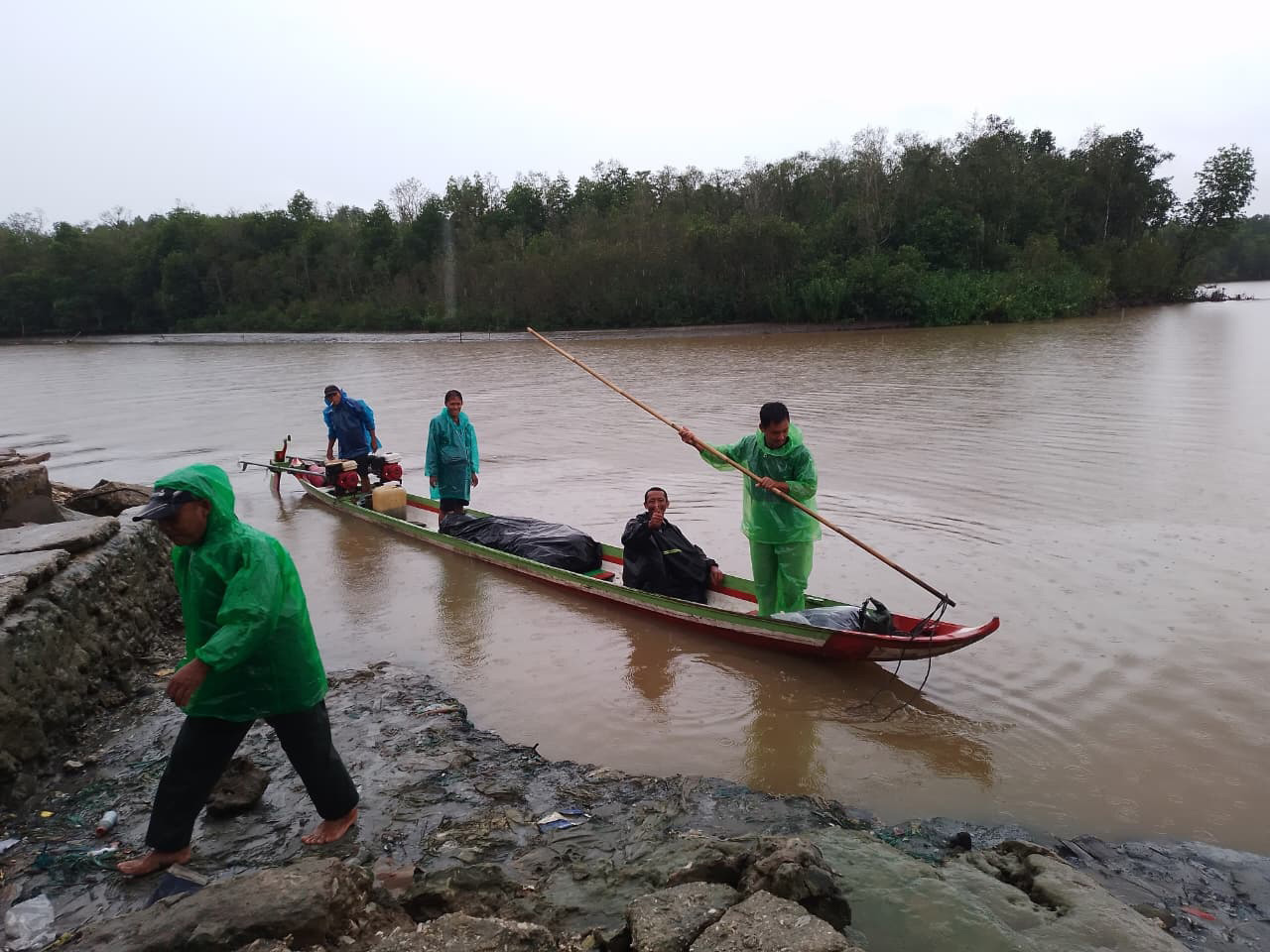
Started the river cruise to Siberut NP
As we were in Southwest Siberut, heavy and long rain also happened in the north. And it was so destructive. The river was flooded and crushed the wooden bridge that connected the villages. That made our journey to the park solely dependent on pompong—for five hours, in rain!
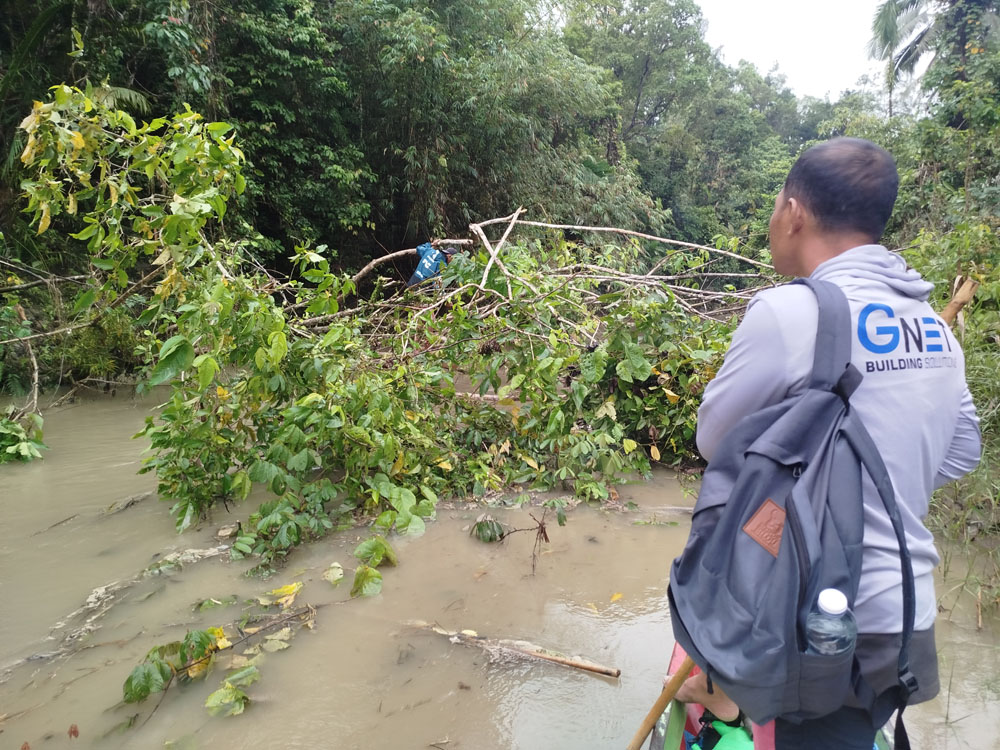
At least six times we had to face fallen trees that cut
We were the first that came to Bekemen after the flood. The last two hours, where the river intersection and became smaller. Six times we faced an obstacle. Fallen trees and we need to ripe them out from the river. It was dark when we finally came to Bekemen research station. Again, not anticipated or even know that the research station was also affected by the floods. More than 1 meter of water, leave a thick mud inside the shelter. The generator was drowned and dead and the water tank gone.
My imagination for having a hot coffee after being cold by rain for 5 hours soon after arriving was gone. We warmed up ourselves by working out to clean up the mud inside the house. Luckily, the stove is still dry and can be used and we also prepared to brought our dinner.
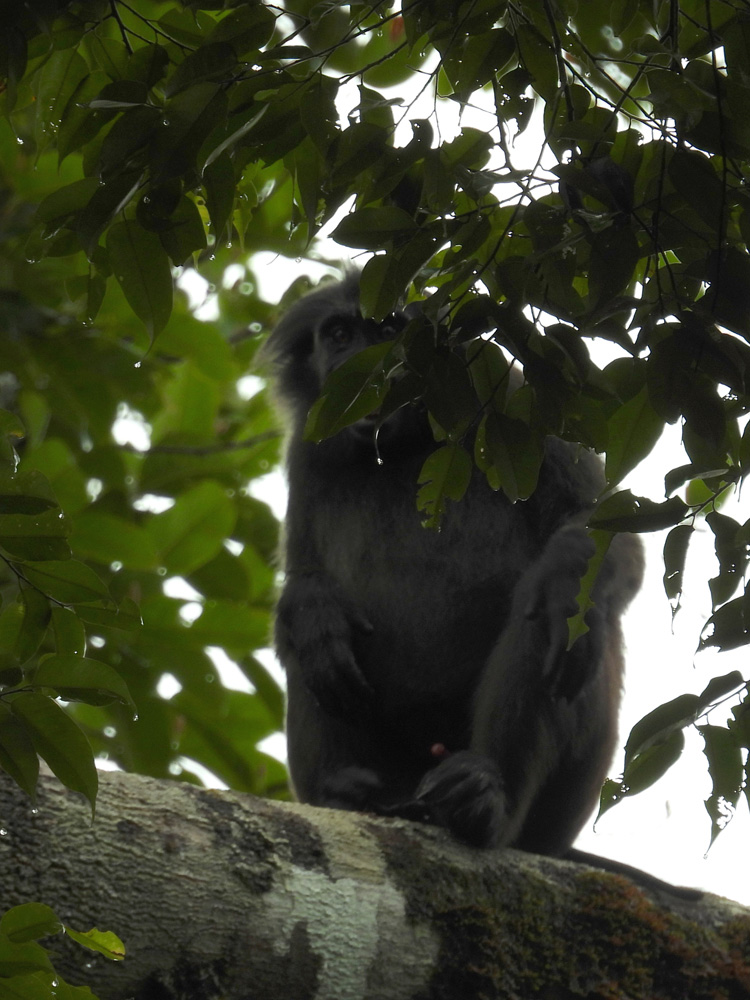
Simakobu, so shy
The next morning, we explored the track. It was hilly, and not an easy trail. The level is more medium to difficult. We saw Simakobu, then a very close call of bokoi. But, just a glimpse without any chance to take a picture. Only Bilou can be photographed as they crosses our path in quick move, but silent.
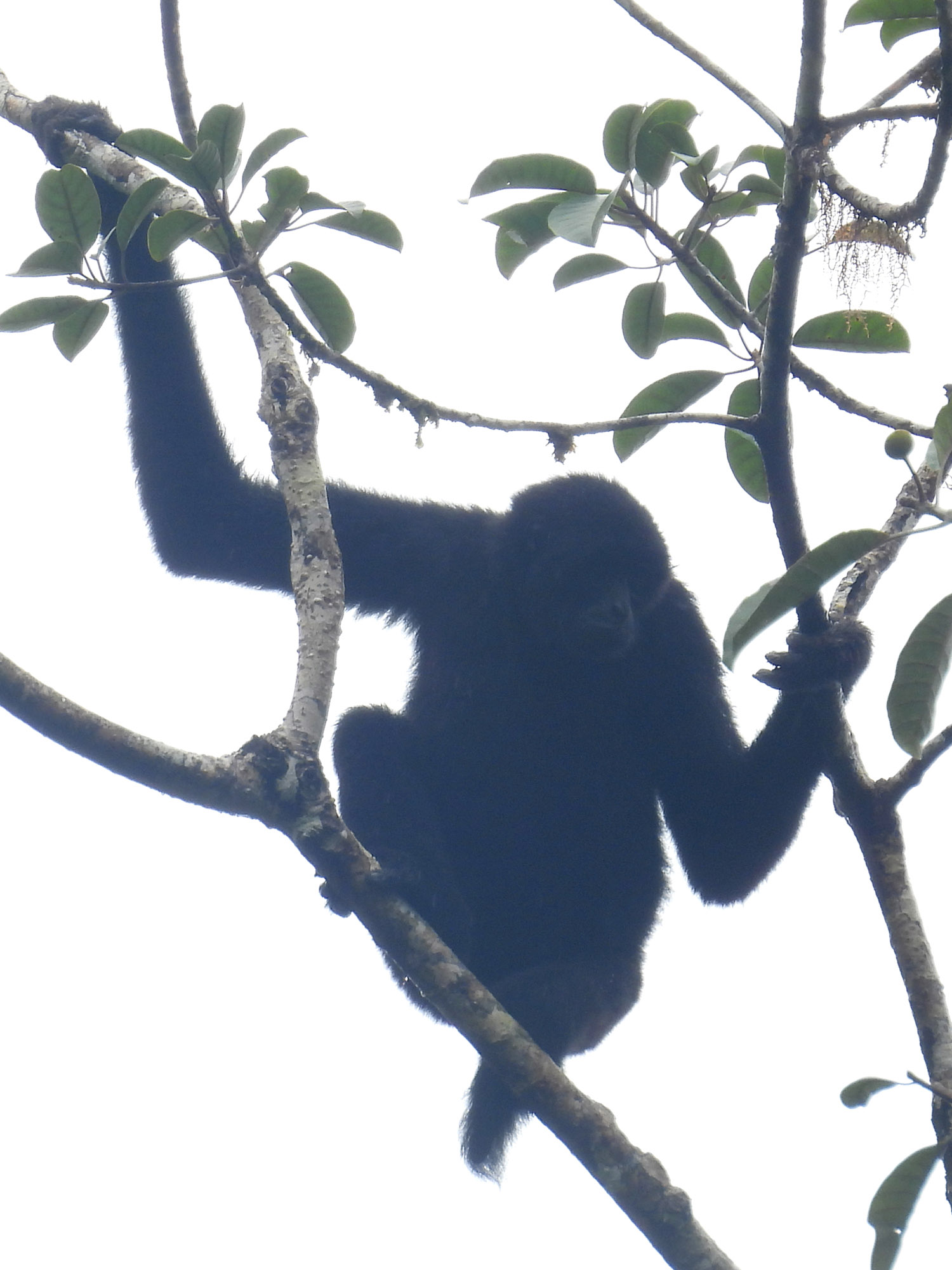
Bilou
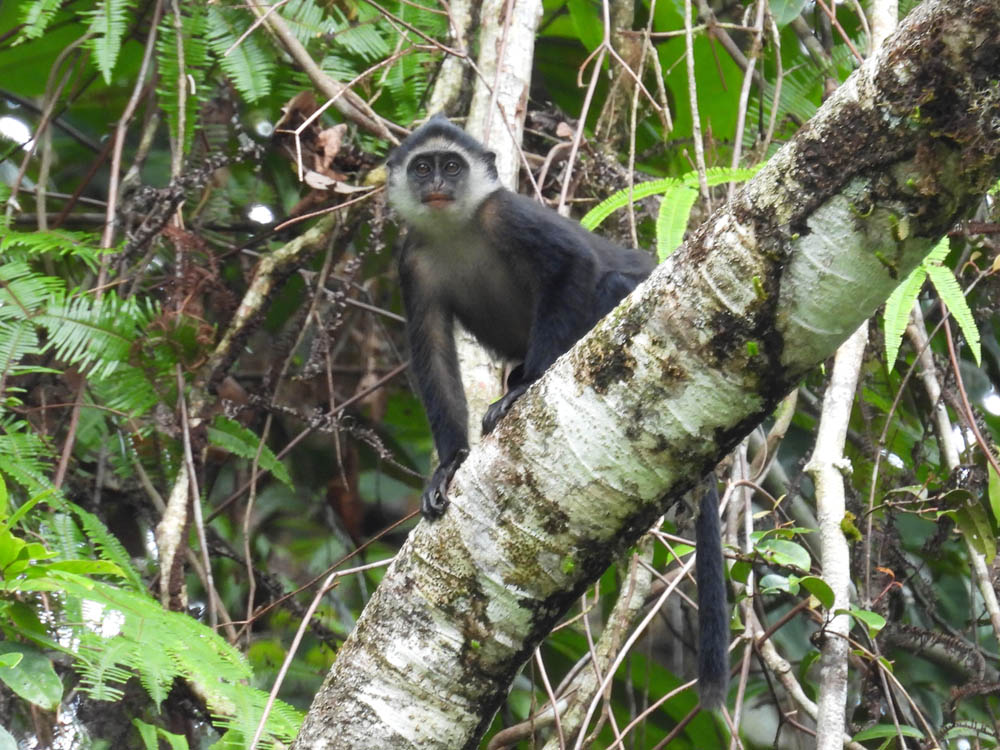
Joja, nicely pose
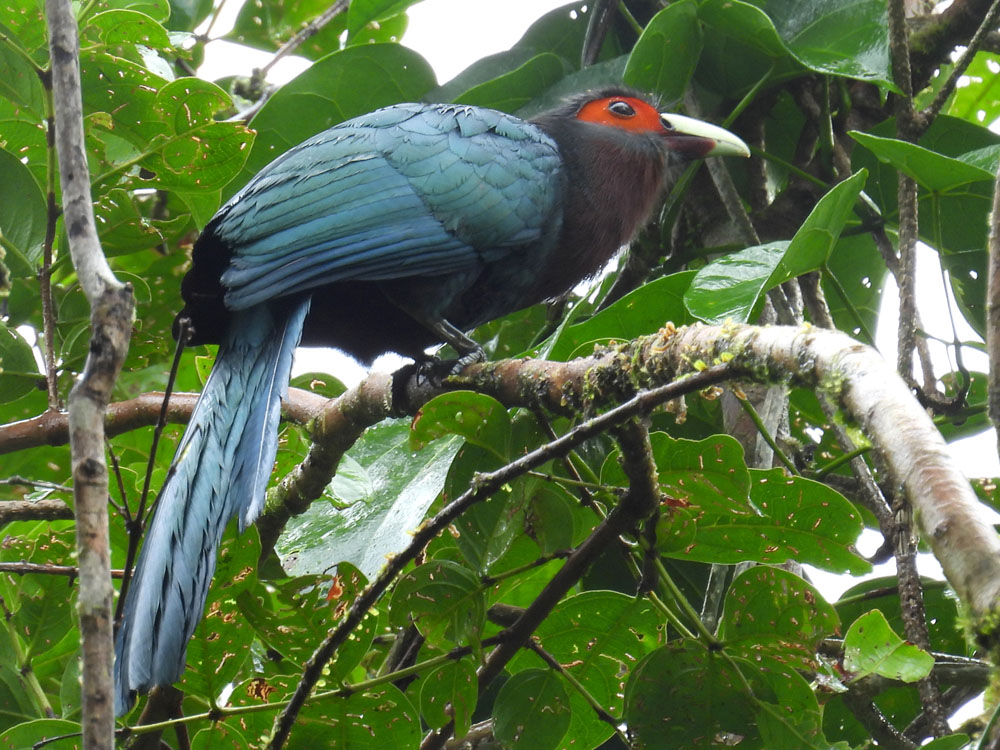
Mentawai Malkoha
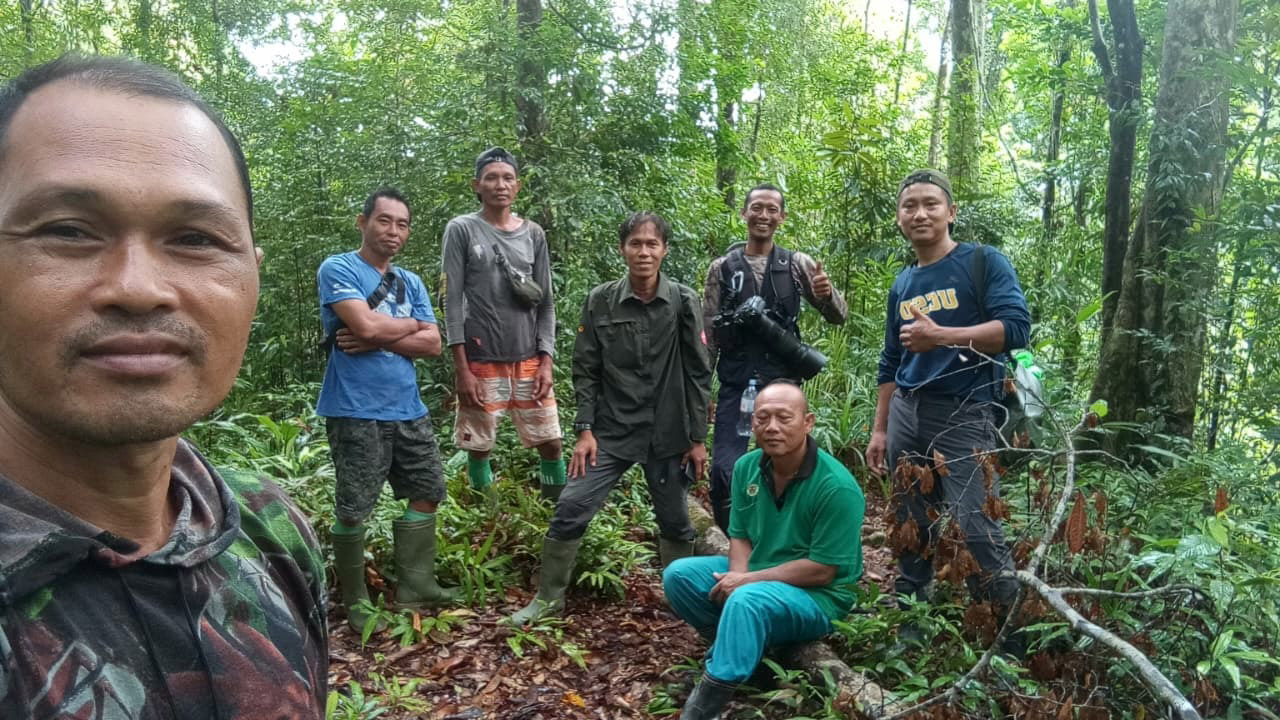
Team in Siberut NP. Photographed by mas Yoyok
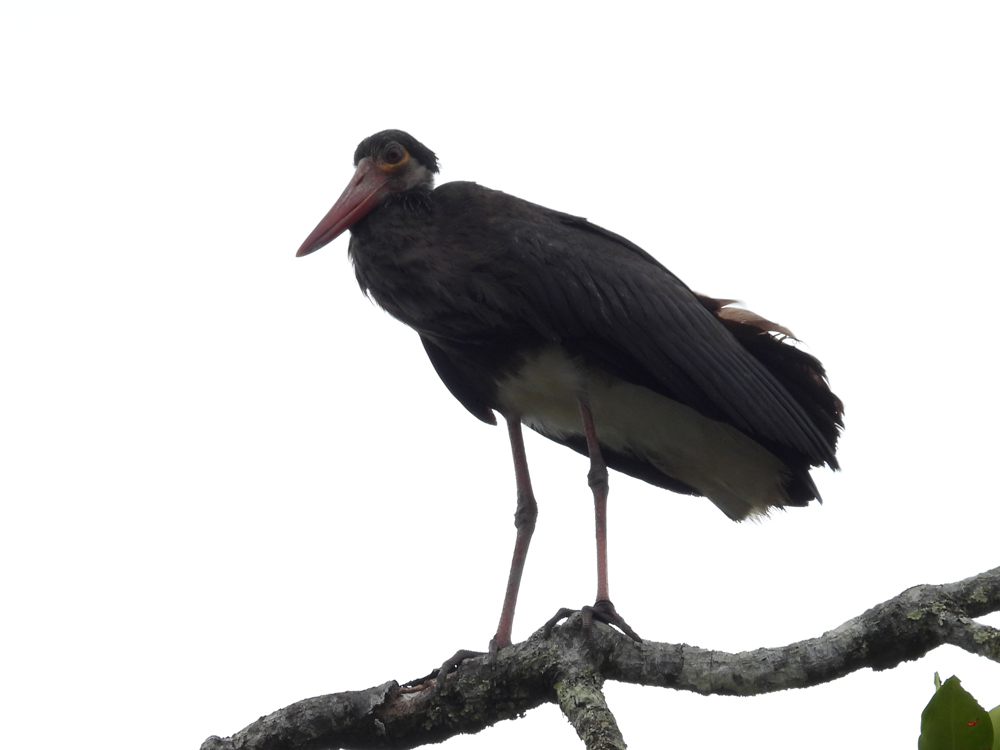
Storm’s Stork saw in the estuary
Three nights as in our first plan, turned out to be just one night. After we had our lunch, we decided to go back. Along the river, we saw at least four groups of Joja. Not as first came, this time they allowed us to be photographed.
Ended up our boat journey in the estuary, we encountered a Storm’s Stork perched in a mangroves. The bird was sitting a couple of minutes. Just perfect!
For two days, we explored the town, rural areas and plantation. Hope to get a chance for another Bokoi. Joja is good to see here. We spent the nights in the park’s mess close in Muara Sikabaluan. The area is close to the beach, with a swamp as the back. Early in the morning, we saw Yellow and Black Bittern. The first was not in the island list. No photographed unfortunately. At night, we spotlighted the rurals and plantations. As dark came, Mentawai Squirrels were still active. Heru even saw the pair mating! I think it was not a common behaviour for this diurnal.
The last morning, Bokoi again soo close, but failed to see it. However, the ferry had a troubled engine. We need to wait until the next morning. Our for the Critically Endangered Silvery Pigeon. We saw them perched high at an emergent tree in the swamp forest. Heru, who tried to approached, saw that the birds feed on a fruiting tree.
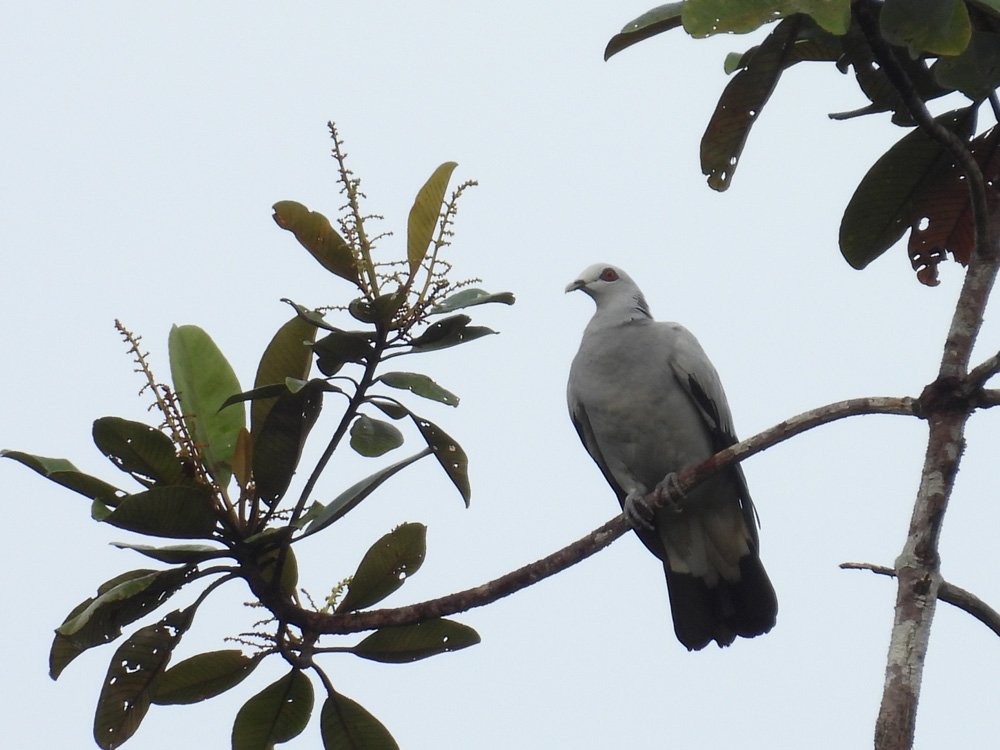
Silvery wood Pigeon
There were 10 birds sitting on the emergent tree, with six others seen by Heru feeding on a fruiting tree. A red oval shaped fruit. It called sosoken by the villagers. I was so thrilled with the bird and we thought that was our sweet closing. But it was not. The Mentawai Fast that made us—again—waited, turned out, it was our luck. In the afternoon we went back to the swamp forest and saw two of them posed perfectly.
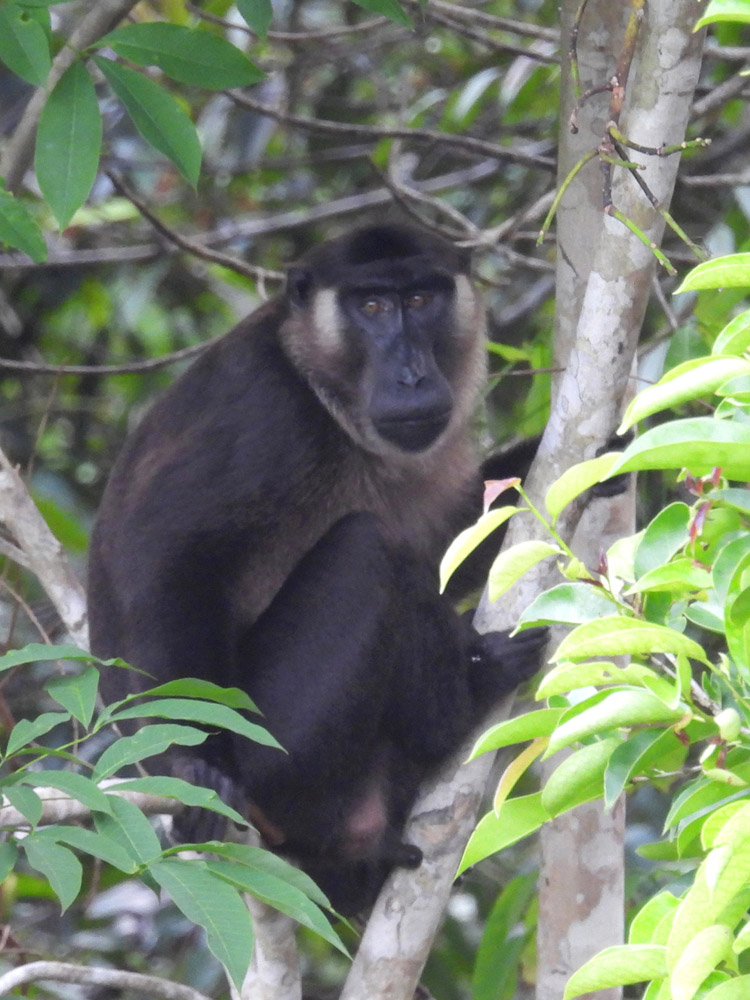
The charming bokoi
We finally got a good view and some good pictures of this beautiful and charming monkey. Now that was the closing to our exploration. A very sweet one.
Mammal list
1. Long-tailed Macaque Macaca fascicularis
2. Siberut Macaque Macaca siberu
3. Pig-tailed Langur Simias concolor
4. Siberut Langur Presbytis siberu
5. Kloss’s Gibbon Hylobates klossii
6. Siberut Flying Squirrel Petinomys lugens
7. Mentawai Squirrel Callosciurus melanogaster
8. Intermediate Roundleaf Bat Hipposideros larvatus
9. Spinner Dolphin Stenella longirostris
Unidentified
10. Unidentified rat-1 (cave, S Siberut)
11. Unidentified rat-2 (banana, N Siberut)
12. Unidentified rat-3 (road kill, N Siberut)
Bird list
- Greater Coucal Centropus sinensis
- Mentawai Malkoha Phaenicophaeus oeneicaudus
- Asian Koel Eudynamys scolopaceus
- Barusan Cuckoo-Dove Macropygia modiglianii
- Silvery Pigeon Columba argentina
- Pink-necked Green Pigeon Treron vernans
- Thick-billed Green Pigeon Treron curvirostra
- Green Imperial Pigeon Ducula aenea
- Pacific Golden Plover Pluvialis fulva
- Tibetan Sand Plover Anarhynchus atrifrons
- Greater Sand Plover Anarhynchus leschenaultii
- Terek Sandpiper Xenus cinereus
- Common Sandpiper Actitis hypoleucos
- Common Redshank Tringa totanus
- Ruddy Turnstone Arenaria interpres
- Red-necked Stint Calidris ruficollis
- Bridled Tern Onychoprion anaethetus
- White-winged Tern Chlidonias leucopterus
- Black-naped Tern Sterna sumatrana
- White-tailed Tropicbird Phaethon lepturus
- Storm’s Stork Ciconia stormi
- Black Bittern Botaurus flavicollis
- Yellow Bittern Botaurus sinensis
- Pacific Reef Heron Egretta sacra
- Little Heron Butorides atricapilla
- Great Egret Ardea alba
- Purple Heron Ardea purpurea
- Grey-rumped Treeswift Hemiprocne longipennis
- Glossy Swiftlet Collocalia esculenta
- Edible-nest Swiftlet Aerodramus fuciphagus
- Mentawai Scops Owl Otus mentawi
- Crested Honey Buzzard Pernis ptilorhynchus
- Crested Serpent Eagle Spilornis cheela
- Blyth’s Hawk-Eagle Nisaetus alboniger
- Brahminy Kite Haliastur indus
- White-bellied Sea Eagle Icthyophaga leucogaster
- Oriental Pied Hornbill Anthracoceros albirostris
- Blue-tailed Bee-eater Merops philippinus
- Blue-eared Kingfisher Alcedo meninting
- Common Kingfisher Alcedo atthis
- Rufous-backed Dwarf Kingfisher Ceyx rufidorsa
- Stork-billed Kingfisher Pelargopsis capensis
- Ruddy Kingfisher Halcyon coromanda
- White-throated Kingfisher Halcyon smyrnensis
- Blue-rumped Parrot Psittinus cyanurus
- Blue-crowned Hanging Parrot Loriculus galgulus
- Green Broadbill Calyptomena viridis
- Black-naped Oriole Oriolus chinensis
- Sumatran Drongo Dicrurus sumatranus
- Ashy Drongo Dicrurus leucophaeus
- Black-naped Monarch Hypothymis azurea
- Tiger Shrike Lanius tigrinus
- Sunda Crow Corvus enca
- Ashy Tailorbird Orthotomus ruficeps
- Pacific Swallow Hirundo javanica
- Black-headed Bulbul Microtarsus melanocephalos
- Olive-winged Bulbul Pycnonotus plumosus
- Common Hill Myna Gracula religiosa
- Orange-bellied Flowerpecker Dicaeum trigonostigma
- Scarlet-backed Flowerpecker Dicaeum cruentatum
- Little Spiderhunter Arachnothera longirostra
- Yellow-eared Spiderhunter Arachnothera chrysogenys
- Brown-throated Sunbird Anthreptes malacensis
- Van Hasselt’s Sunbird Leptocoma brasiliana
- Copper-throated Sunbird Leptocoma calcostetha
- Crimson Sunbird Aethopyga siparaja
- Asian Fairy-bluebird Irena puella
- Scaly-breasted Munia Lonchura punctulata
- White-headed Munia Lonchura maja
- Eurasian Tree Sparrow Passer montanus
- Forest Wagtail Dendronanthus indicus
- Grey Wagtail Motacilla cinerea