Tag Archives: siberut

15Apr/26

Wild Siberut: Eleven Days, Four Primates, Seventy-Two Birds

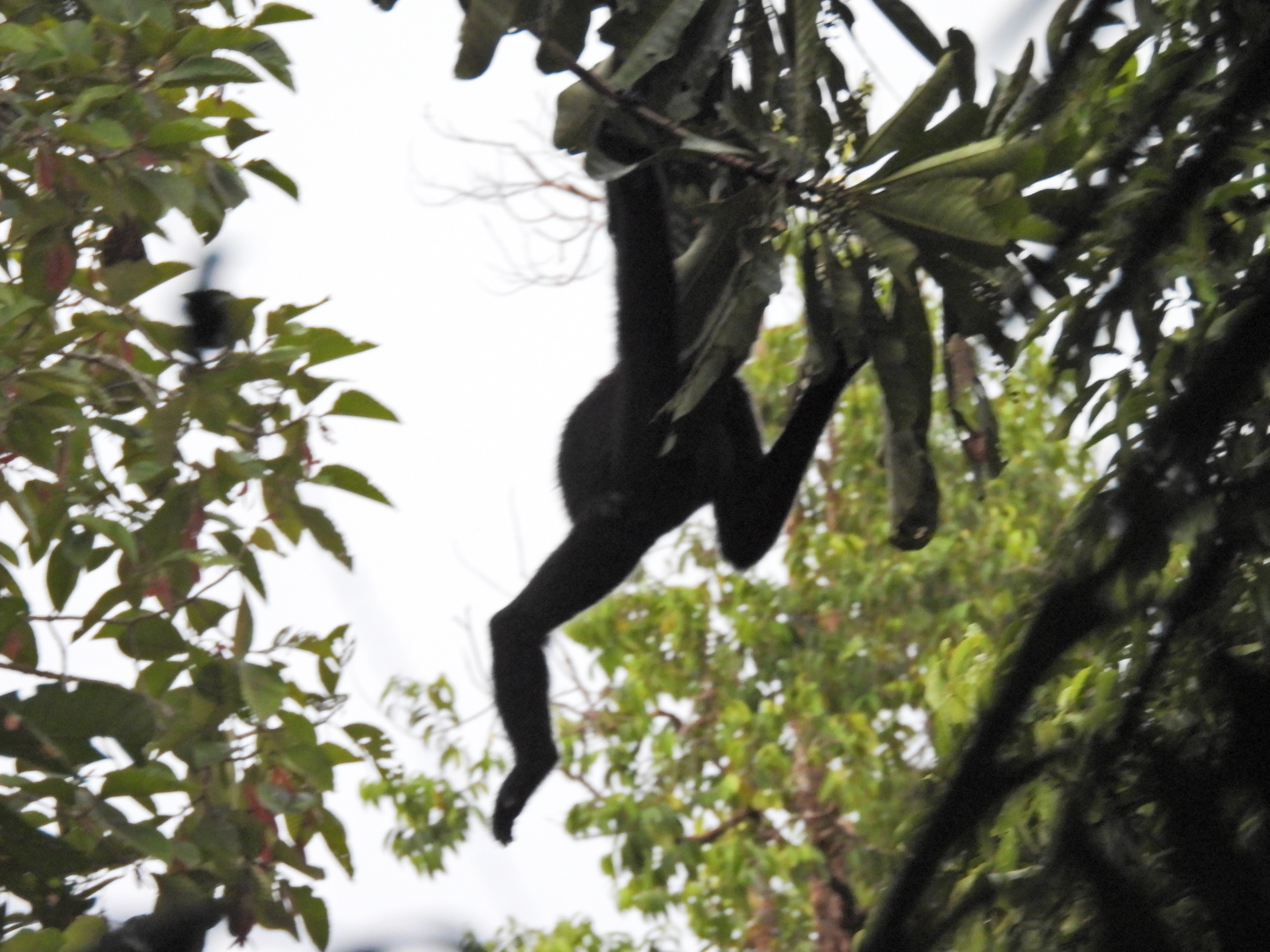
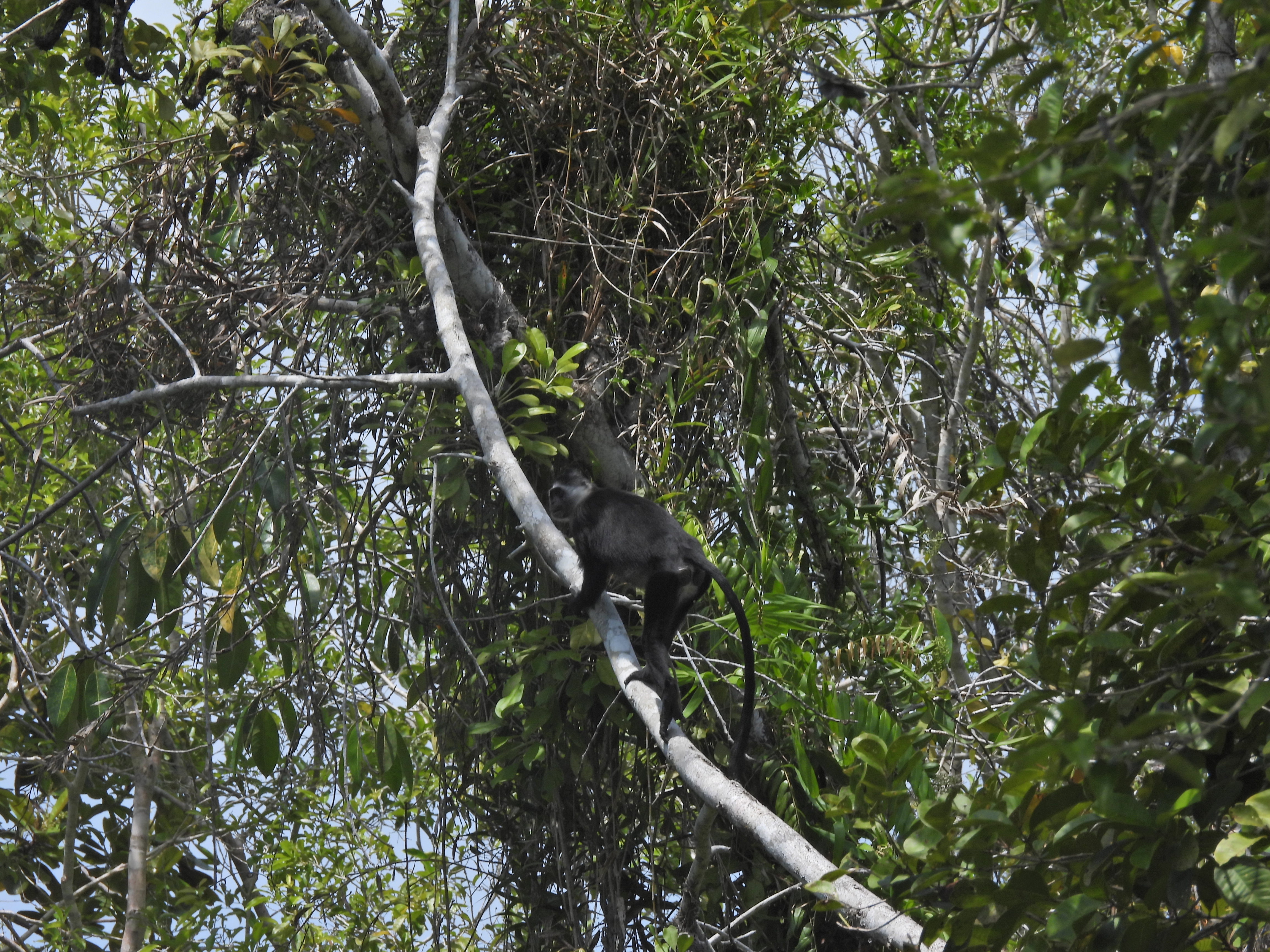
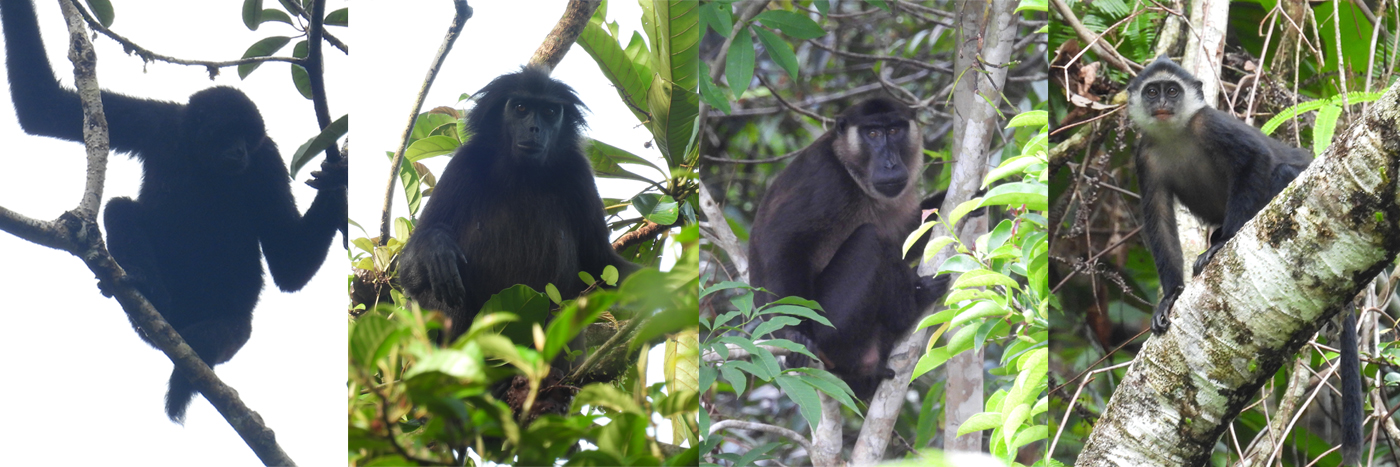
All four Siberut primates seen in our exploration. Fom left to right: bilou, simakobu, bokoi, and joja.

written by : Imam Taufiqurrahman

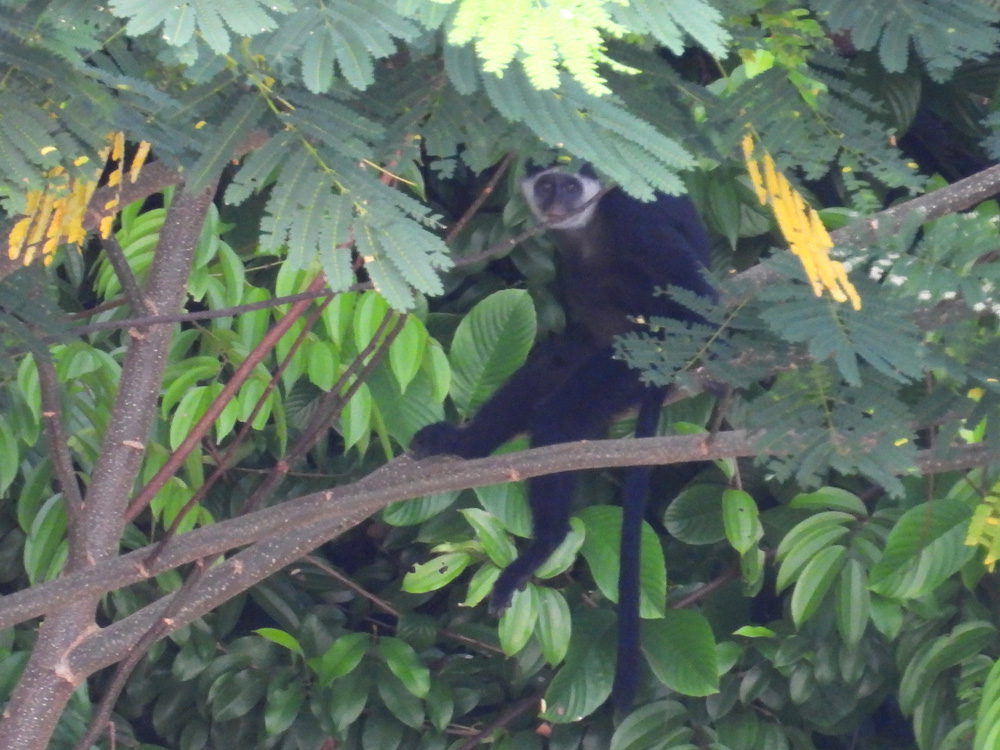
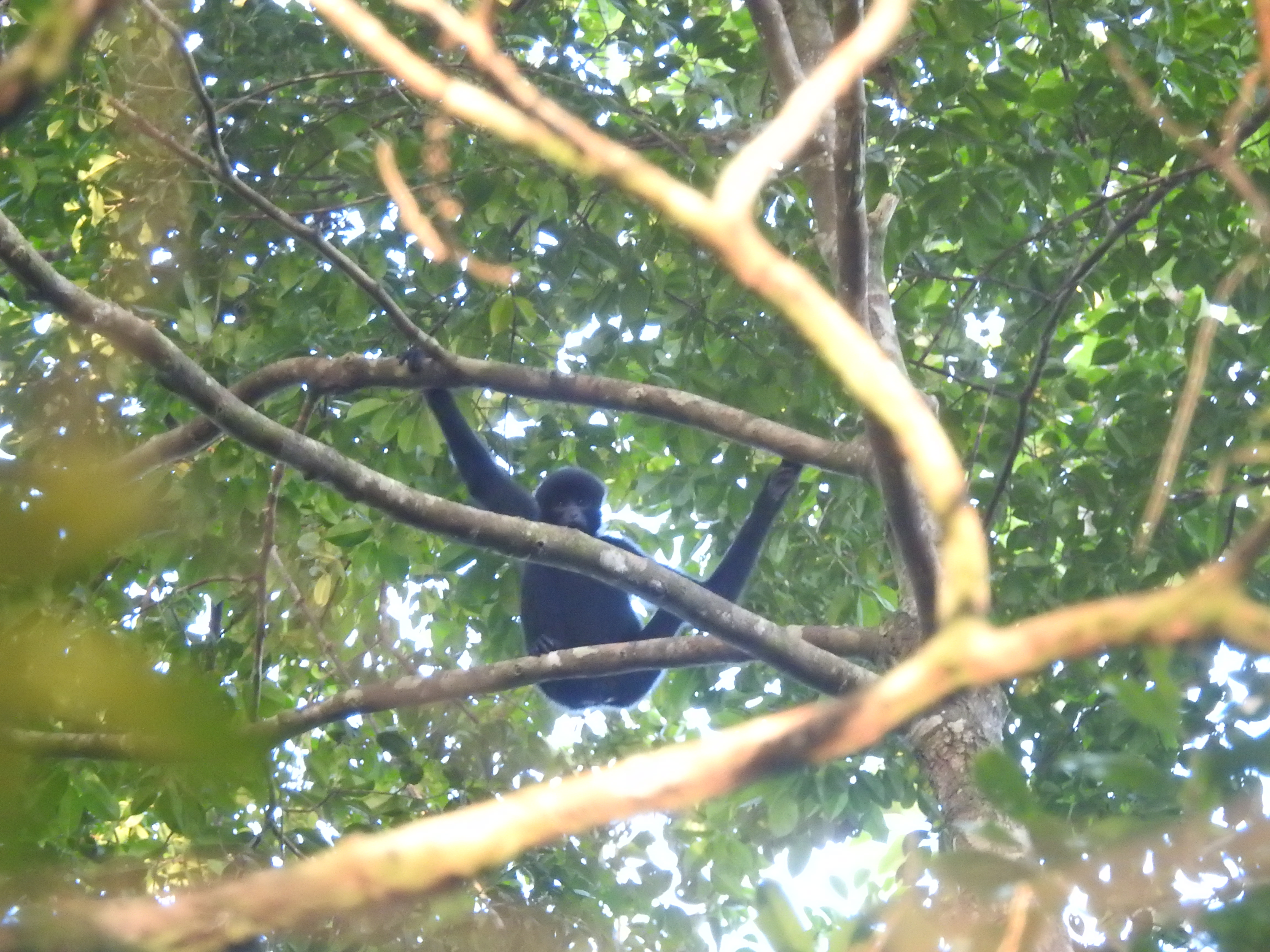
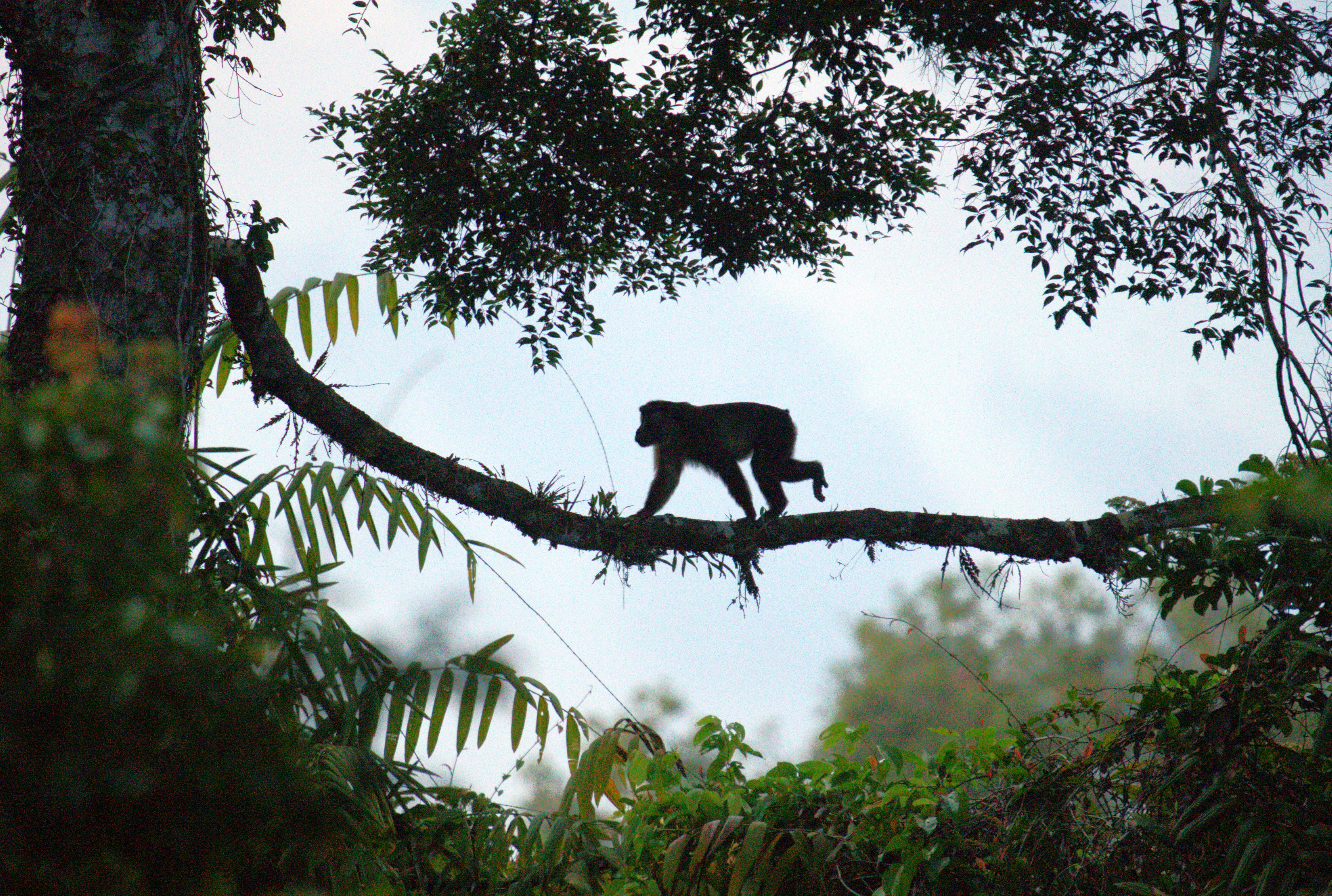
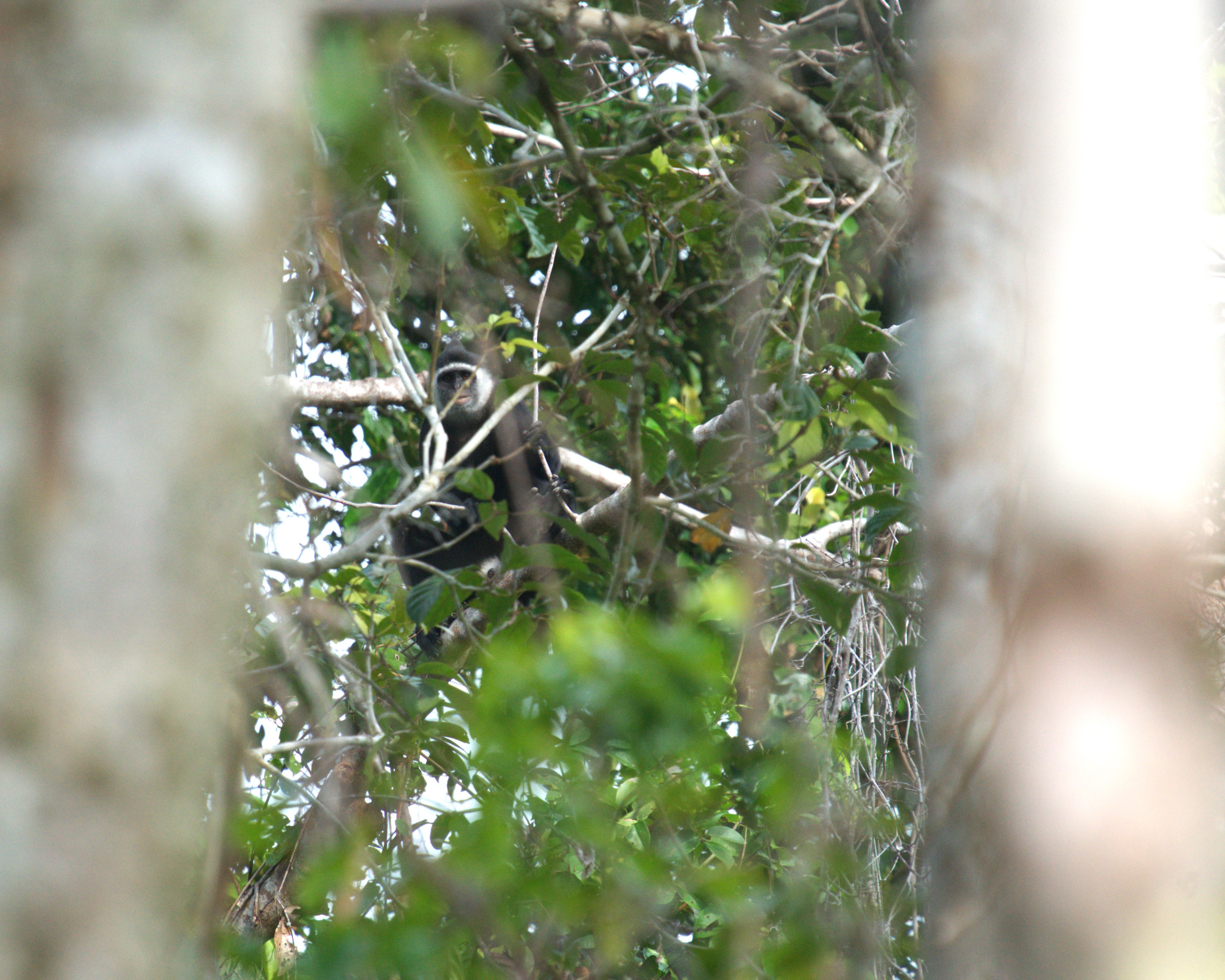
With a ‘clean sweep’ of all four Siberut primates, my 11 days journey with Heru Fitriyadi to Siberut Island, Mentawai Islands, West Sumatra, is so astonishing. Joja the Siberut Langur and simakobu Pig-tailed Langur, seen in Southwest Siberut. In South Siberut, we saw bilou Kloss’s Gibbon. While in North Siberut, all four of them, include bokoi or Siberut Macaque, the hardest one.

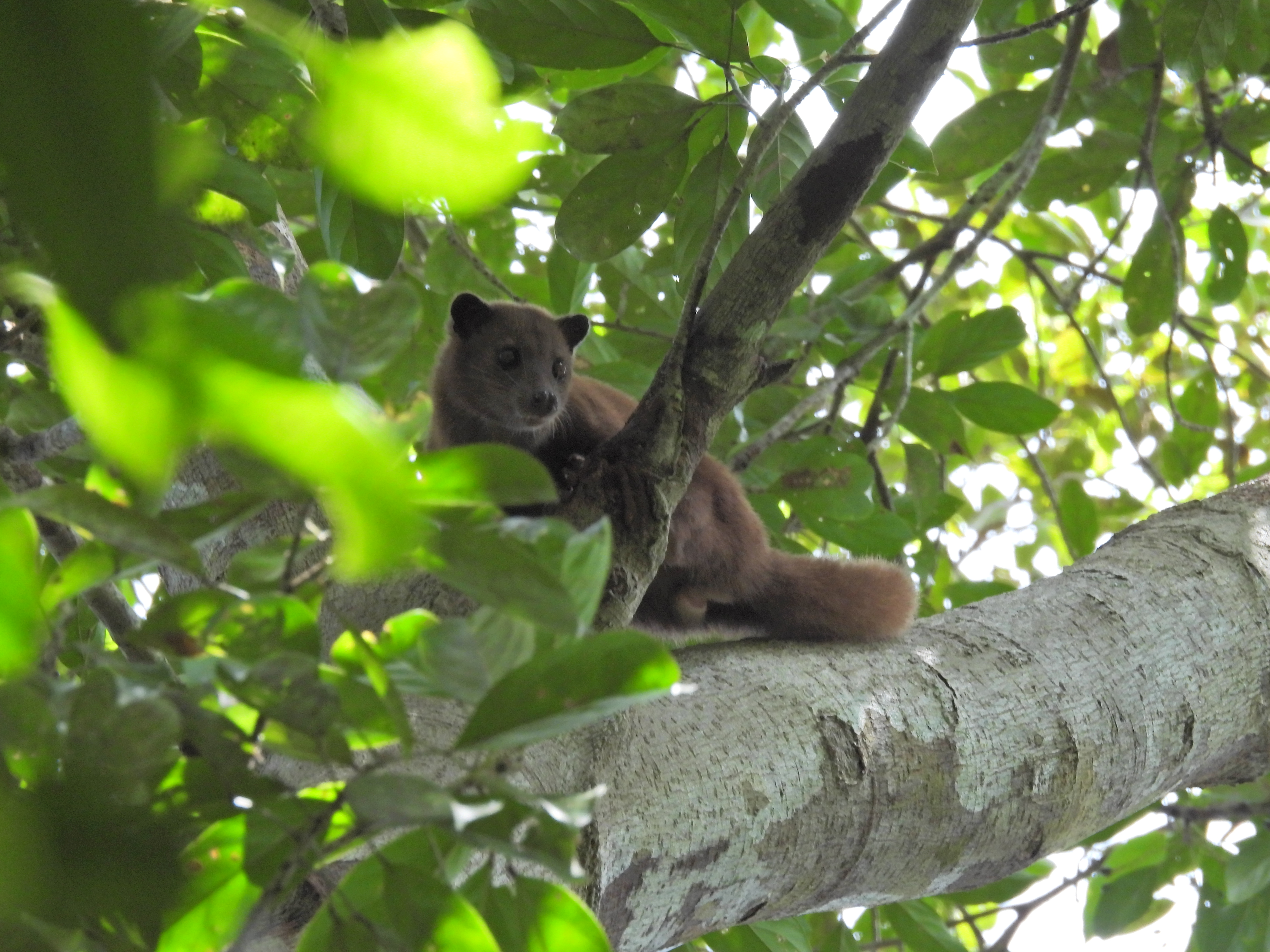
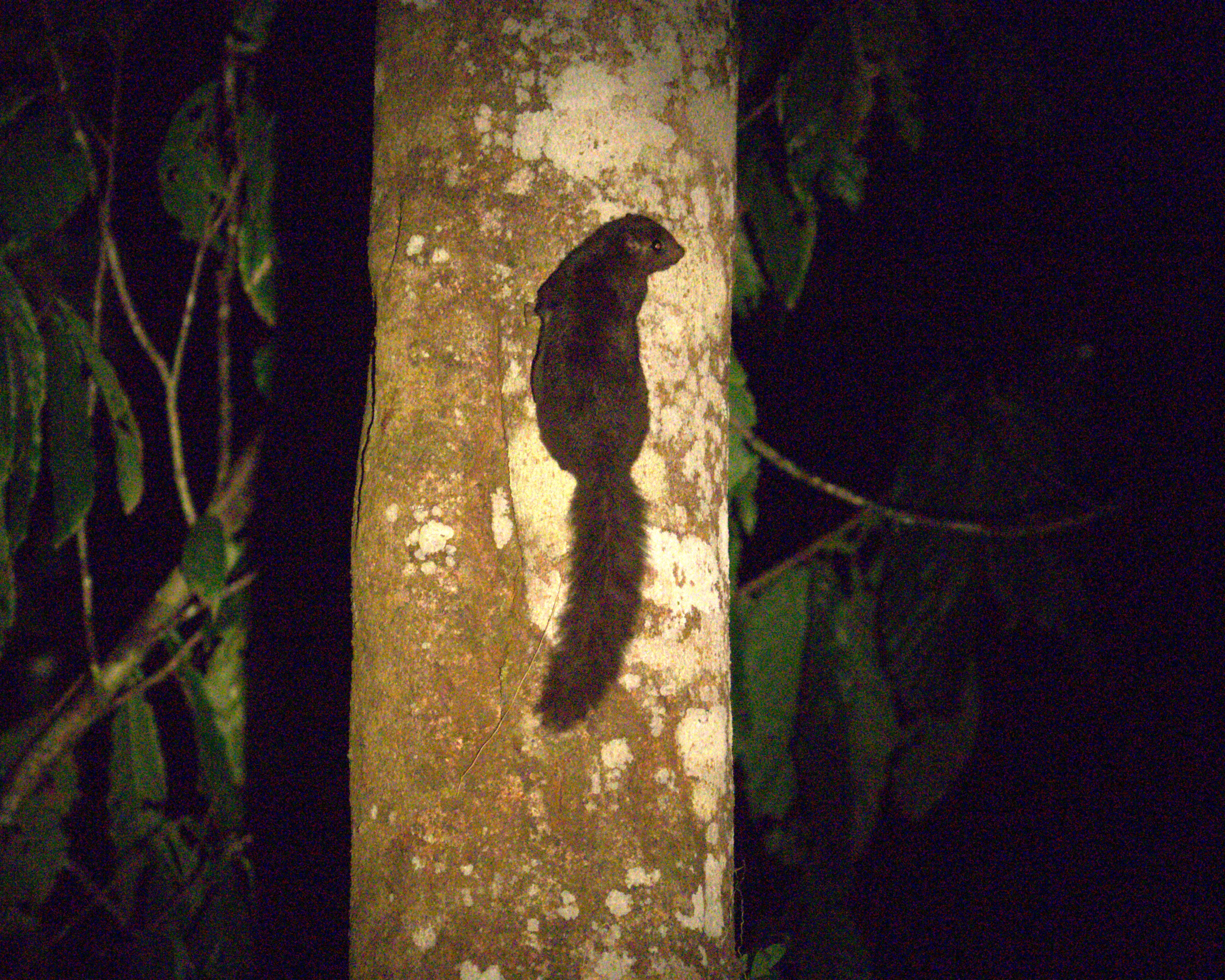
To complete, a group of Long-tailed Macaque and five other mammals sum up to total of at least 9 mammal species in our list: Spinner Dolphin, Siberut Flying Squirrel, Mentawai Squirrel, Intermediate Roundleaf Bat and some difficult taxa: rats.
For birds, of course, 72 species we saw is so overwhelming. Three of them became my lifer: Ruddy Kingfisher, Storm’s Stork and the Critically Endangered Silvery Wood Pigeon. I don’t know how many lifers Heru has.This journey was actually a combination of duty, cultural experience, and wildlife watching—with a big of luck by some coincidental situations. From 10th-20th February 2026, we spent 2 days in Southwest Siberut, 5 days in South Siberut and 4 days in North Siberut.

As part of the duty, we were asked to speak in a workshop on wildlife ecotourism in Southwest Siberut, facilitated by SwaraOwa. And as the workshop only held for two days, we had plans to continue to visit Siberut NP in the north. This actually may only need about a 5-7 days trip. But, it spanned up to 11 days in total.

Southwest Siberut
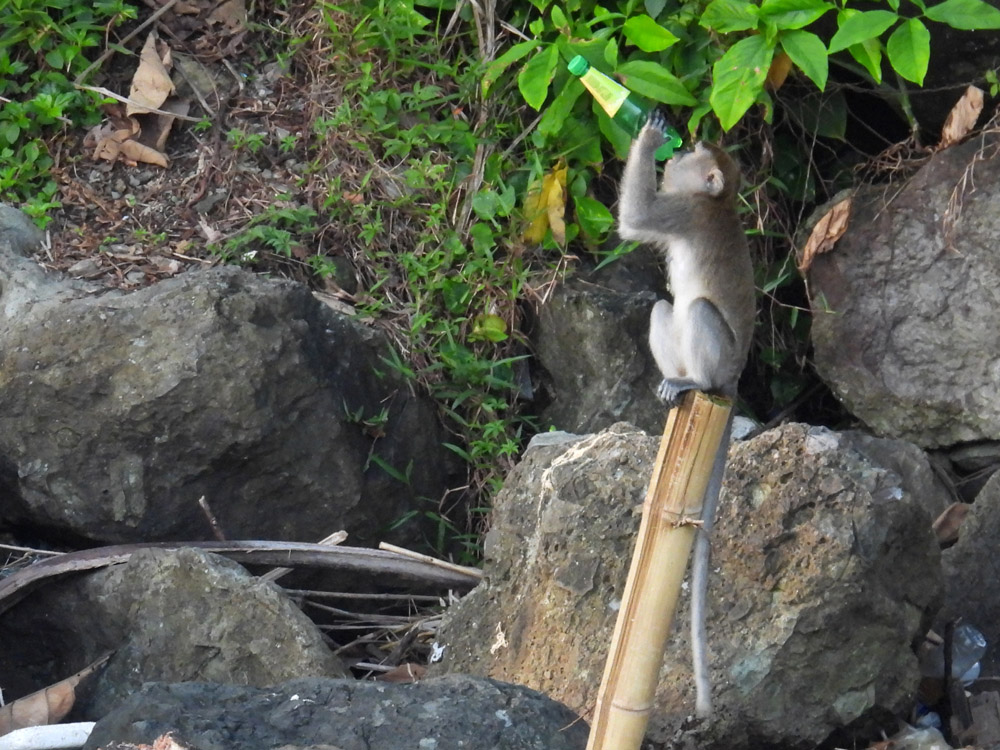
Long-tailed Macaque

Spinner Dolphin

In less than an hour after the Mentawai Fast on board, two mammals were seen. The first was a group of Long-tailed Macaque, foraging along the estuary. Seeing them is a bonus, as we were not expecting to see it, just kind of a welcome drink. While in the open sea, a couple groups of dolphins. We only able to take a poor documentation of a group of Spinner Dolphin, as the ferry’s speed did not allowed us to got a good moment.

However, I am quite confident for the dolphin’s id, as they have a quite long rostrum. But, any other suggestions are welcome. A study published in recently reveals the open sea around Padang and Mentawai Islands as a cetacean hotspot, where they found 10 species. Well, that’s almost 1/3 of cetacean species recorded in Indonesia! Surely very potential to develop a whale watching spot.

While for the birds, mostly seabirds seen. We saw at least White-winged, Black-naped and Bridled Tern that confidently id in clear. In one of the small islands off Padang, Heru pointed out a White-bellied Sea-Eagle soaring.
After six hours on board, Mas Yoyok, our local team, picked us up in Maileppet, South Siberut. Soon after, we met our other team members and local partners. Seven of us took a pompong boat to Toloulaggo, Southwest Siberut, where the workshop will be held on the next day.

SwaraOwa has initiated wildlife watching, primarily primate and bird watching, and conservation activities in the subvillage since 2016. This workshop will mark a decade of the initiative and hopefully can bring the wildlife watching ecotourism in the subvillage to the next step.To scale up the initiative, more broader communities are involved, up to village level. Through this workshop, we facilitated a discussion forum for the local communities. To hear their thoughts, ideas and plans about what’s best.
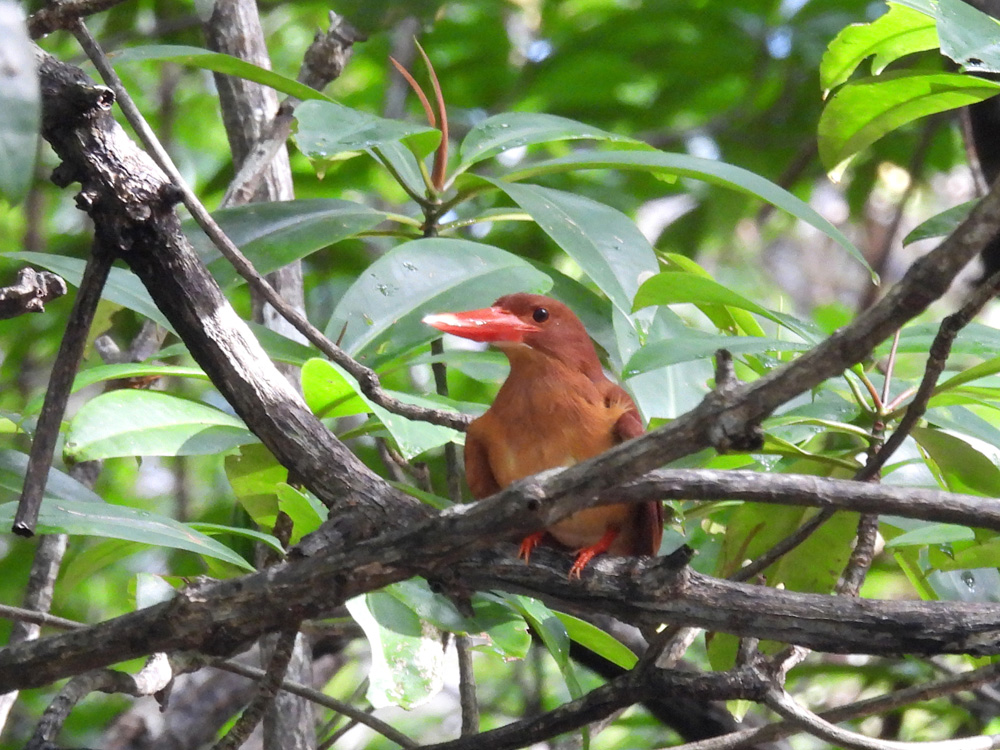
Ruddy Kingfisher
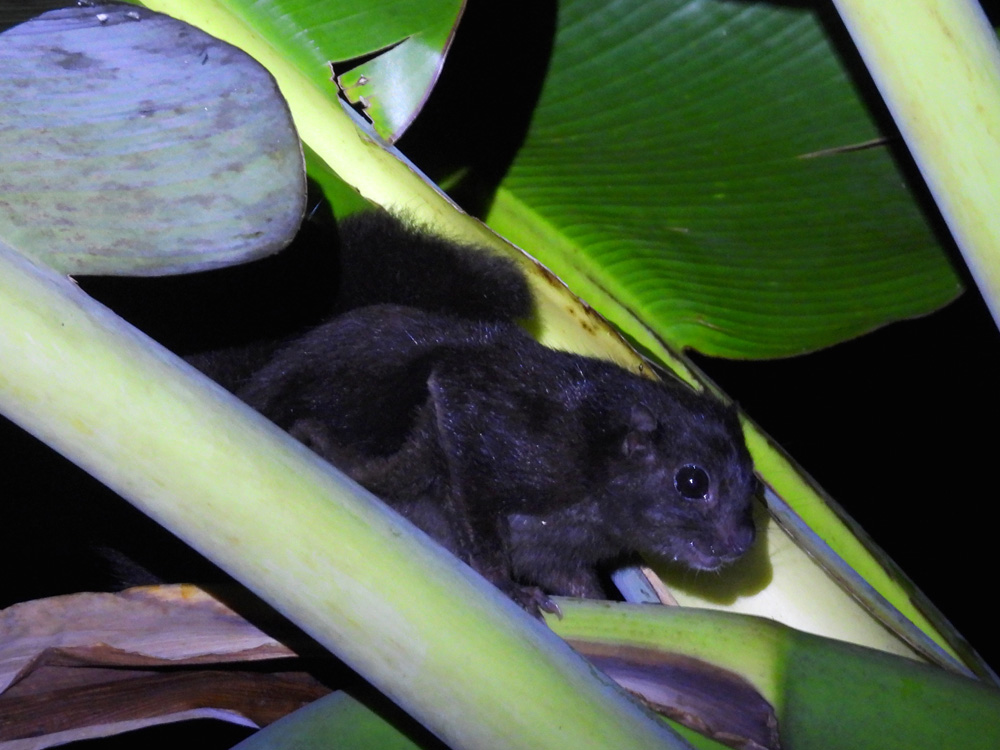
Mentawai Flying Squirrel

Joja we saw in Toloulaggo

To get to the subvillage, we were passing through the Monaci Canal—named after Italian priest, Ottorino Monaci, who initiated the construction of the canal during six years (1985-1991). This 1.5 kilometers waterway is a monumental work that cuts the long and dangerous route through the open sea. Safe and efficient. For us, there’s another advantage. Thanks to the priest and its students, this mangroves surrounding the canal enabled us to birding along. A Copper-throated Sunbird, Greater Coucal, Ruddy and Stork-billed Kingfisher are among the highlights.

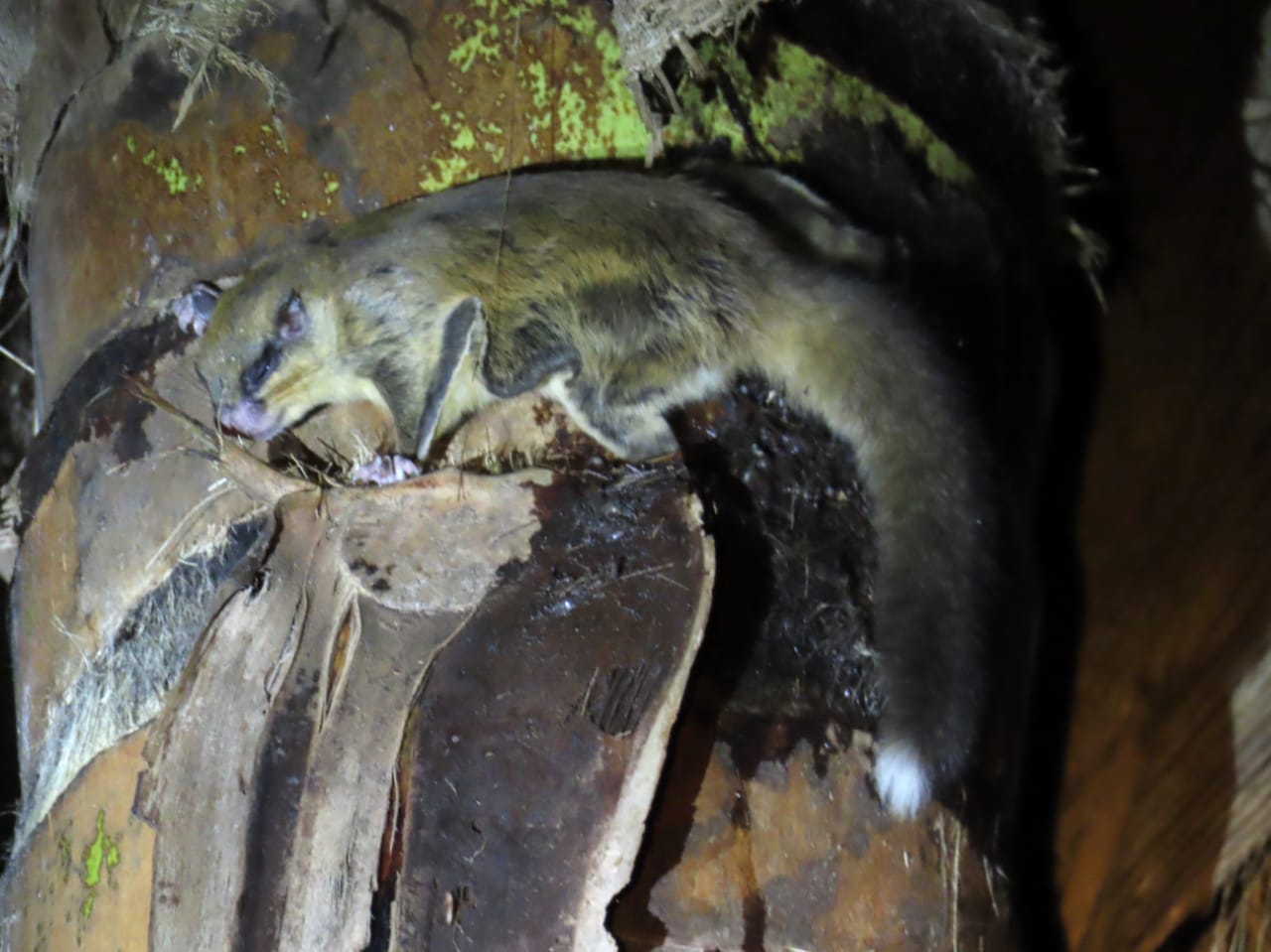
At night in Toloulaggo, we spotlighted through the plantation to look for the Mentawai Flying Squirrel. We saw two individuals. No sighting of Mentawai Scops-owl, despite some birds being already heard so close.

The dawn chorus of bilou enliven the morning. But, we had no sufficient time to look for it as the workshop opened in the morning. We only took our short morning time by boat to look for joja along the beach and found a group feeding at a tree close to the cliff. We watched them from a quite distance, resulting in not a good image. But, still a great experience we had.

The workshop was held in success, with the villagers deciding to take the opportunity in developing the wildlife tourism in their village. They agreed to form a community-based tourism organization. The chief village, the chief of sub-villages, religious leaders, traditional figures, headmaster, and young people attended the workshop and discussed the potential of wildlife ecotourism. Full report of the workshop written by mas Yoyok (in Bahasa), can be read here https://swaraowa.blogspot.com/2026/03/memperkuat-akar-konservasi-workshop.html.
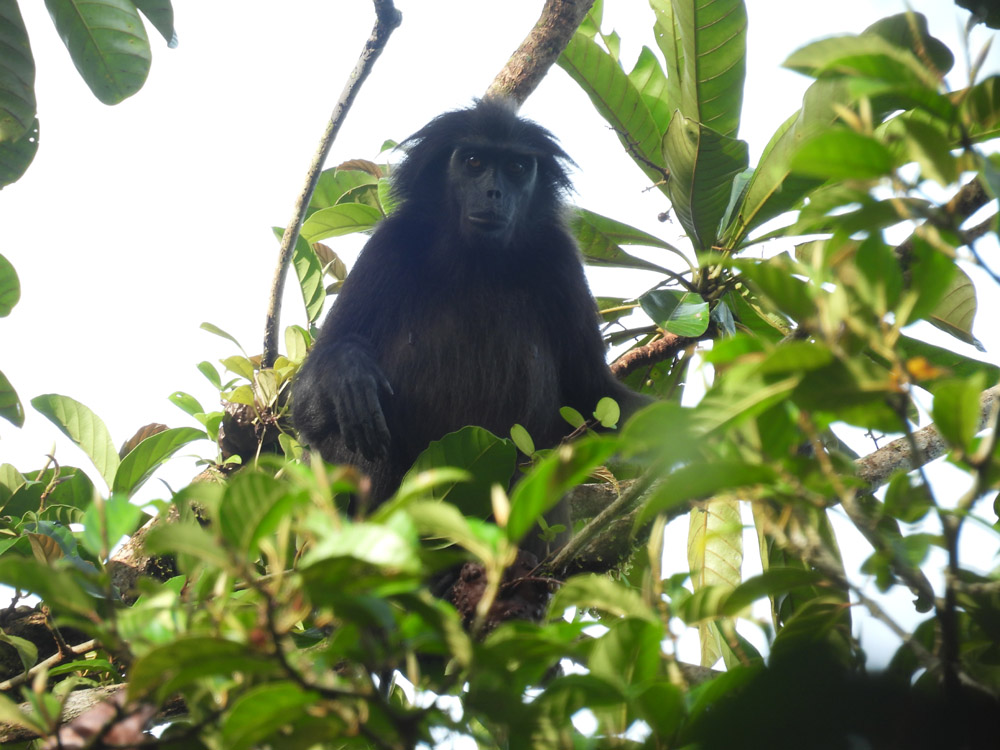
Simakobu or Pig-tailed Langur
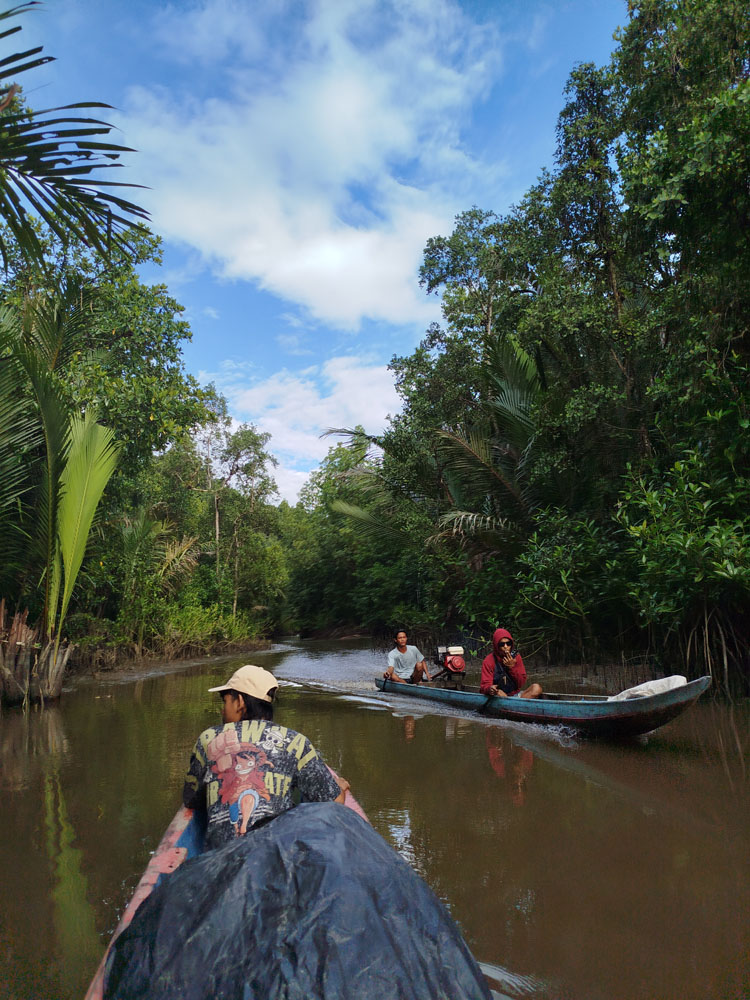
Cruising along the Monaci Canal

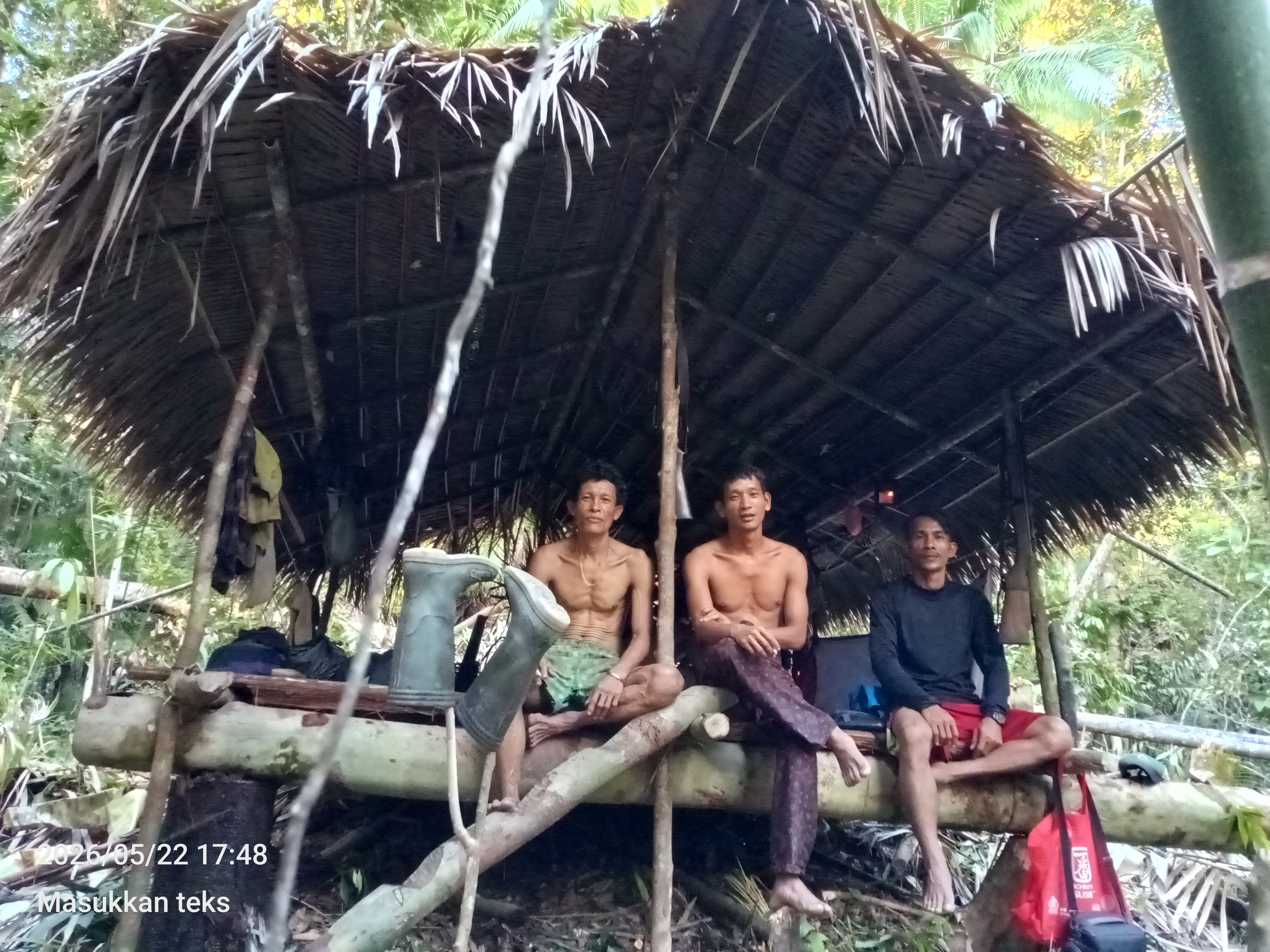
The rain fell right after the workshop ended. Even heavier until night. We waited, but then decided not to go out. The heavy rain also happened in North Siberut and became a catastrophe, as you can read it later. The next morning was promising. We went on trails for wildlife watching. Ismael that walked in front said saw bilou. But, not our luck. We then splitted up. Ismael led four of us to a more deep forest, while the other group led by Vincen followed the trail to our shelter. Just about a couple of minutes later, Ismael signed us something. Turned out, a simakobu sitting nicely. Just only about 10 meters! We had this long face to face moment. The infant joined, until the group went away. It was breathtaking.

On our way to catched up the other group, calls of bokoi were heard. But, we didn’t have more time to spend. With two primates seen and the other two heard, the village surely has a big potention. All of the four Siberut primates—with their simple, but really cool names—joja, bokoi, simakobu and bilou are there! We leave the village in the afternoon, with hope the community-based tourism can be grown.

South Siberut

Actually, we were intended to stay in South Siberut for two days. But, turned out spanned until two more nights. During the first two days, we decided to visit one of our survey area. Mas Yoyok told us about the chance for bilou there. We didn’t wait. On the next day, we visited the forest. But, unsuccess. We spent the afternoon by birding along the estuary to join the Asian Waterbird Cencus. Ruddy Turnstone, Terek and Common Sandpiper, Greater Sandplover and Pacific Golden Plover gathered in flock are some that we saw.
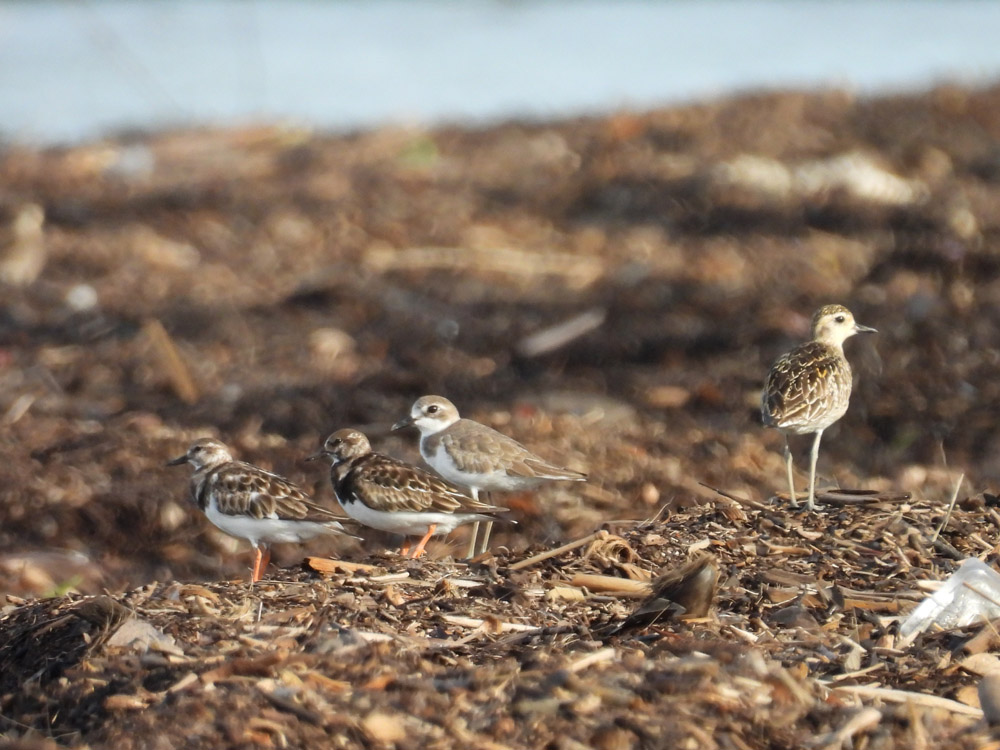
A flock of shorebirds seen in Muara Siberut
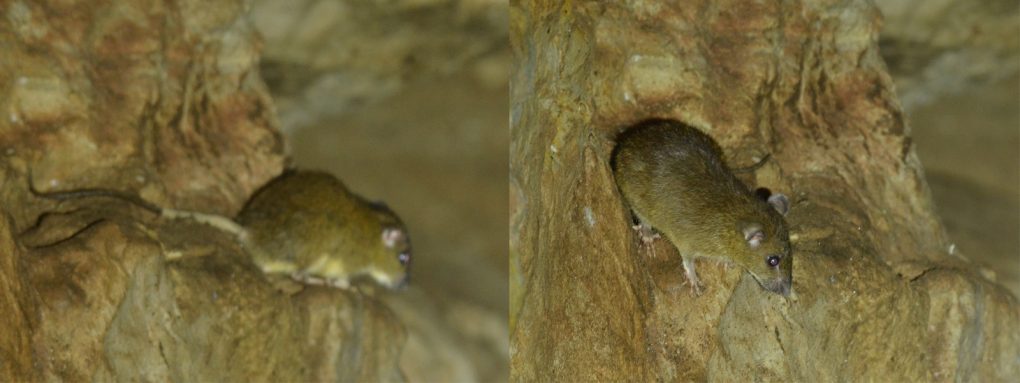
Id, please? Photographed by Heru Fitriyadi

The settlements around the estuary were filled with numerous swiftlet houses. As I remembered, the house was still one or two. Well, surely this ancient commodity are still promising. The next day to the cave. It called Roiget-roiget, means bat. The cave is still sacred to the locals. Pak Darius who led us to the place performed a ritual and sang to the holy spirit asked for permission.
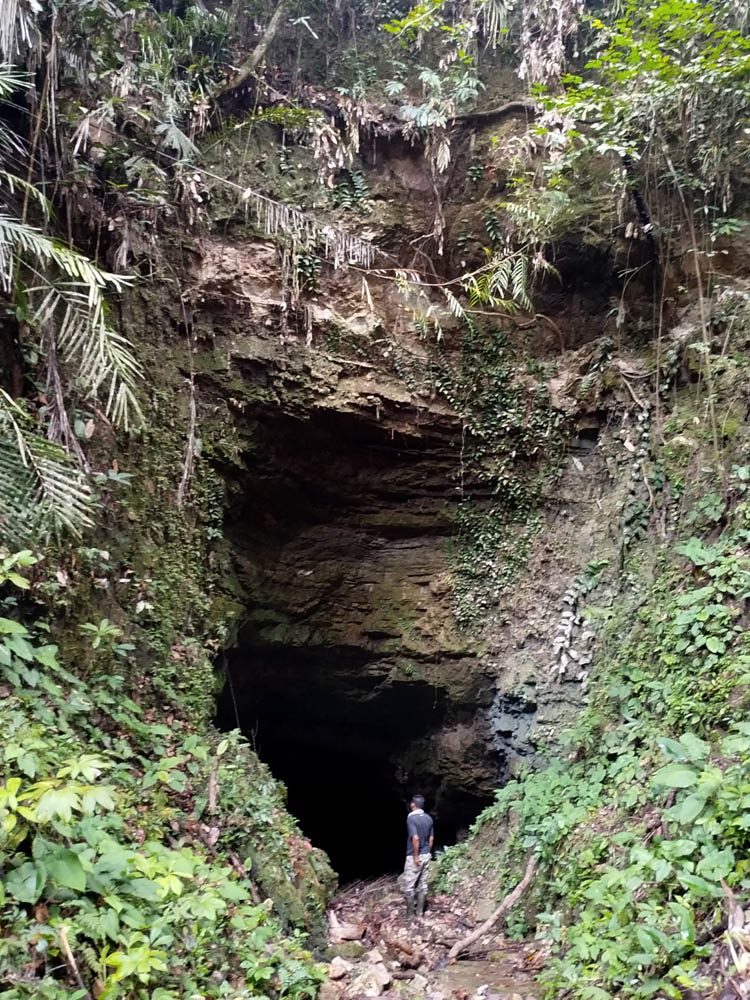
Pak Darius prepared the ritual in front of the Roiget-roiget Cave’s entrance
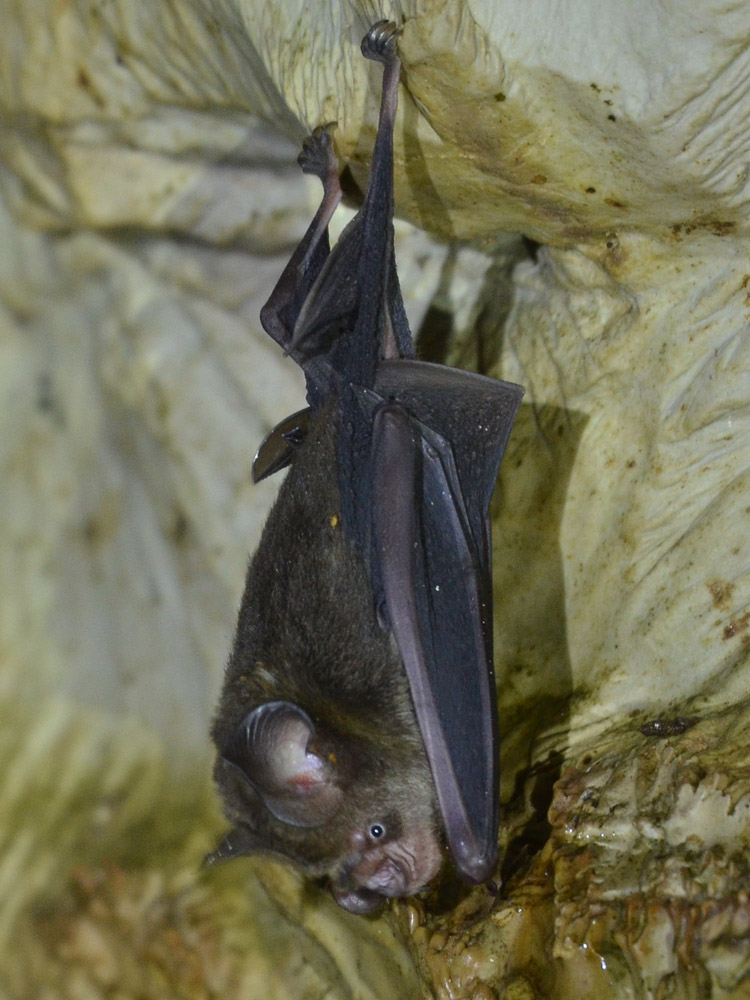
Intermediate Roundleaf Bat. Photographed by Heru Fitriyadi

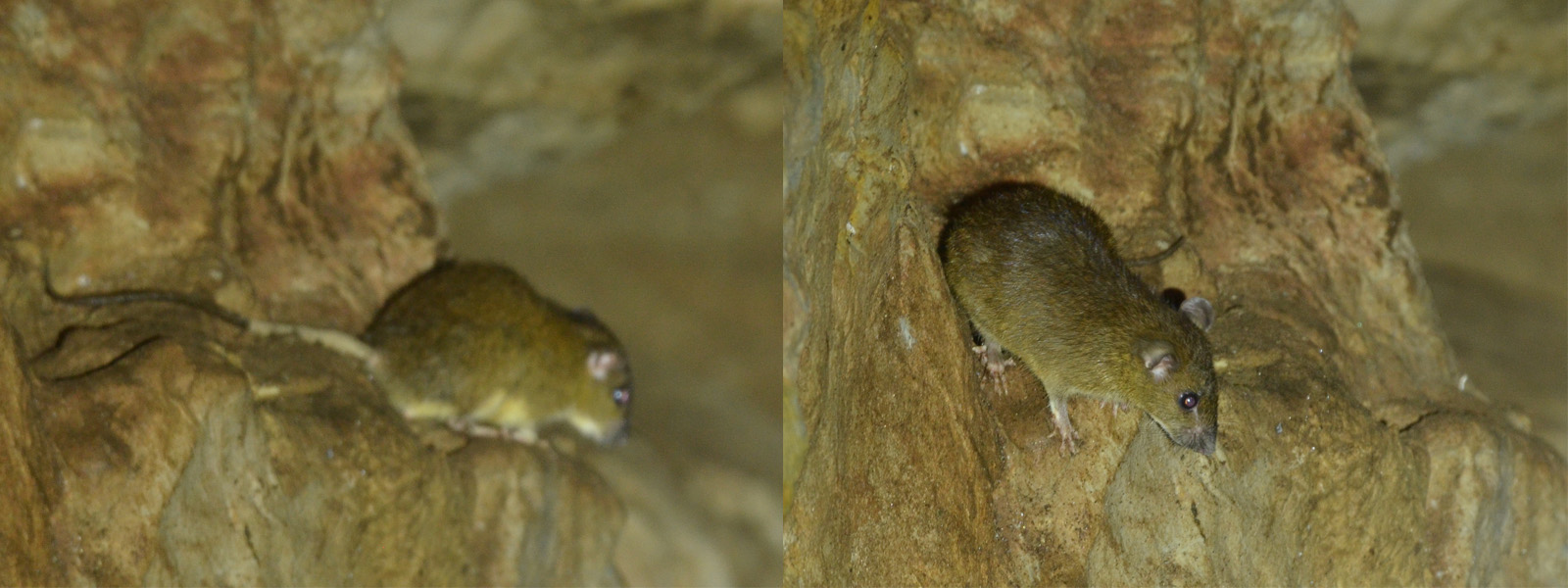
The cave is big, with a huge entrance. It formed not horizontal nor vertical, but diagonal, with about 30° angle in slope. We tried to be very careful walked down the cave. The good thing is, the floor is not slippery. We encountered numerous bats, but only one species found, the Intermediate Roundleaf Bat. While taking pictures, a small mouse is seen crawling. It’s a small brown mouse, with a long tail (1:1.5) proportion of its body. As our knowledge is far from good about rodents, so any suggested ID is very welcome.

The cave explored less than two hours and we were not deep enough actually. I wish I could explore it more, but me and mas Yoyok had a meeting scheduled already and then continued our journey to Padang. We did not anticipate that our plan was close to two national holidays: Chinese Newyear and also beginning of Ramadhan. Many people plan the same to go back to Padang. As a result, the fast ferry was fully booked and we didn’t get tickets. We decided to stay in Muntei village and took the afternoon for a cultural session. We visited the traditional house of Mentawai, uma. Skull of hunted animals—mostly the primates and also wild boars. Mas Yoyok introduced us to Aman Kesi, his relative who became our interpreteur.
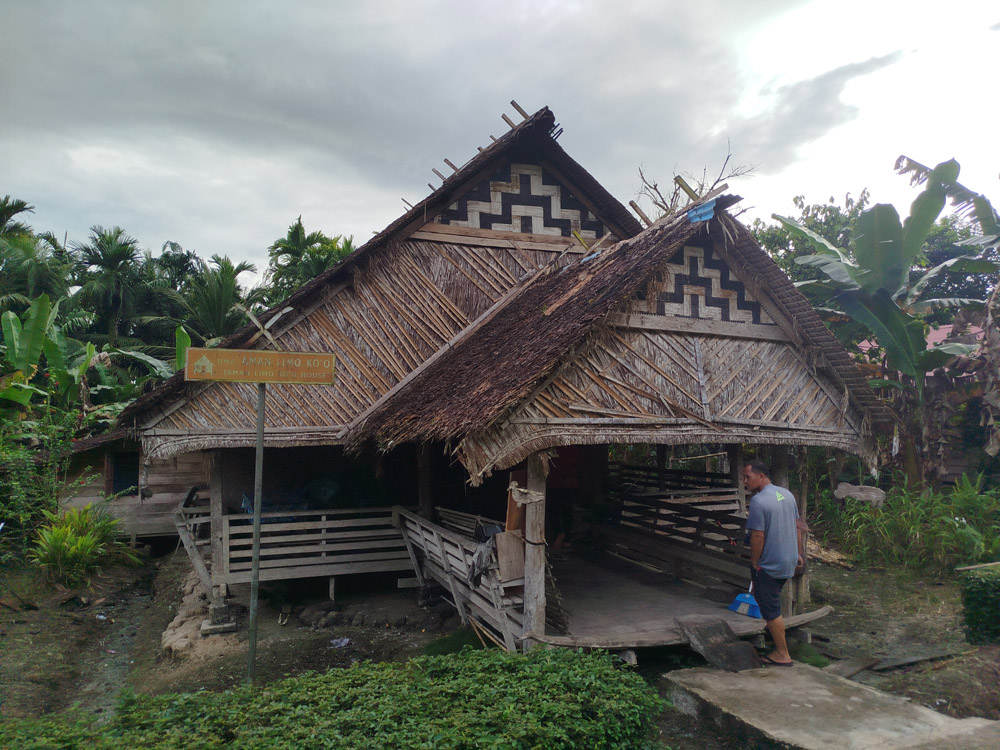
Uma Aman Lima Ko’o
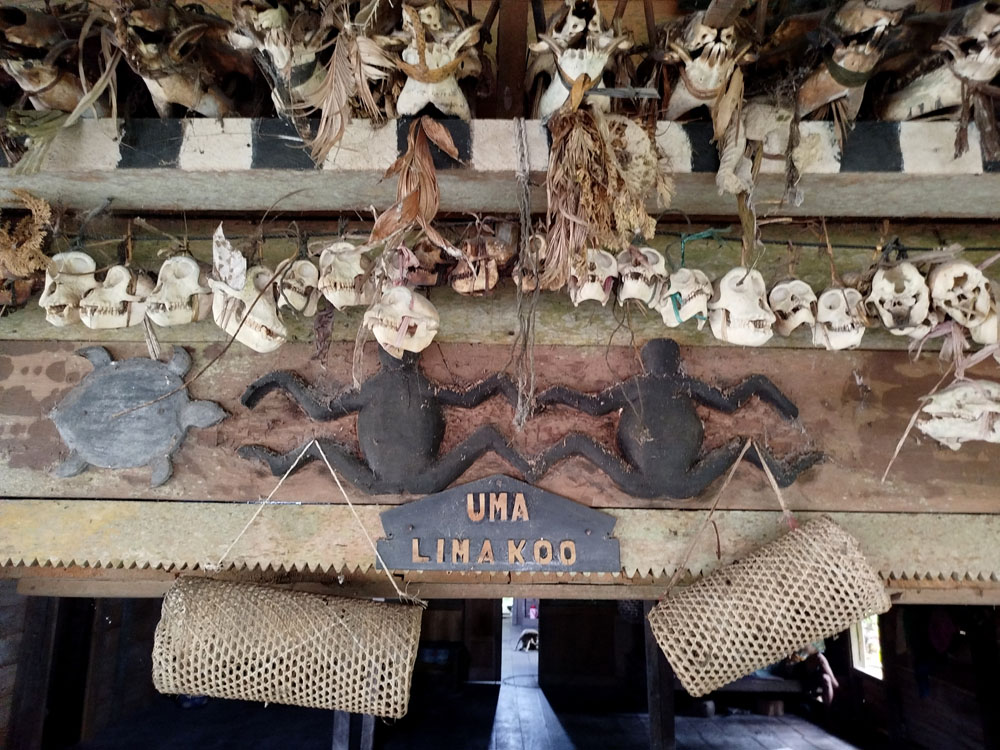
The skulls of wild boars and primates hanging in front of the entrance door.

We took a house tour and Aman Kesi explained uma with details. For example, he said, if the skulls are facing outside, it means the animals were taken from the wild. But in the opposite, if they facing inside the house, wild boars in particular, that’s from livestock. The skulls are not just a house decoration. It is a status symbol for the family or clan owner. It’s a pride and means a lot to Mentawai people.
I wonder, how many primates were killed along three millennials of the Mentawai people existence?
Study by Whitten & Whitten from eight umas in 1980, resulting in almost 2,400 skulls found. Simakobu is the majority and bokoi holds 25% of total kills. Bilou tends to be the lowest. Aman Kesi said, bokoi is the easiest target, as they have big meat and are slow. That’s almost 50 years ago and hunting is still ongoing. No wonder the primates are so sensitive and shy.
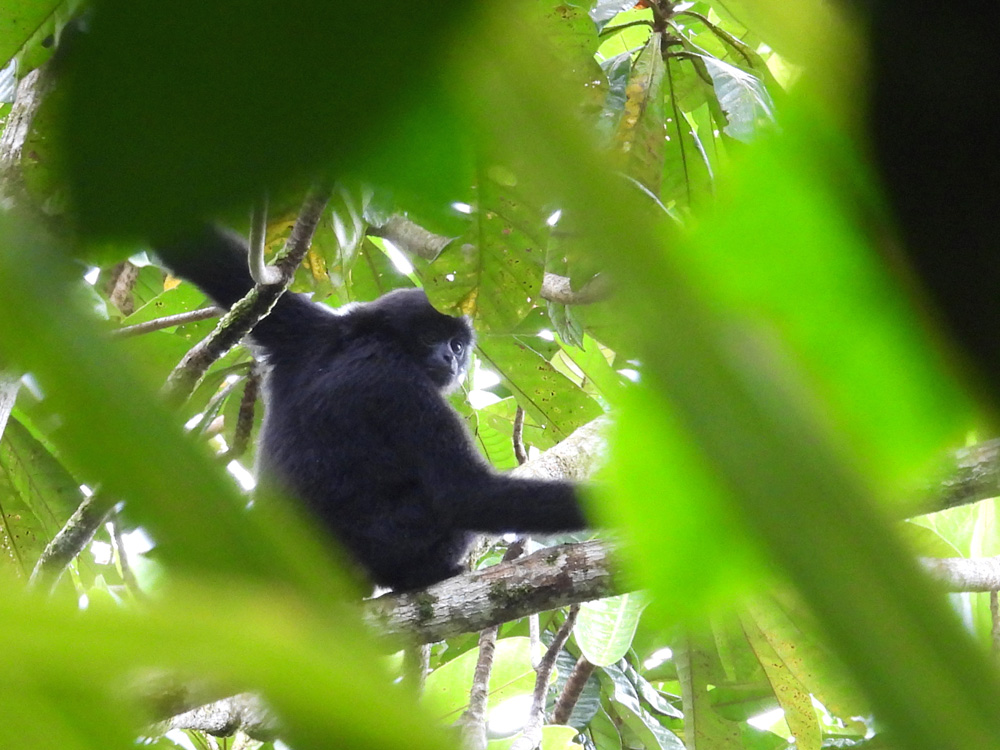
The silent bilou
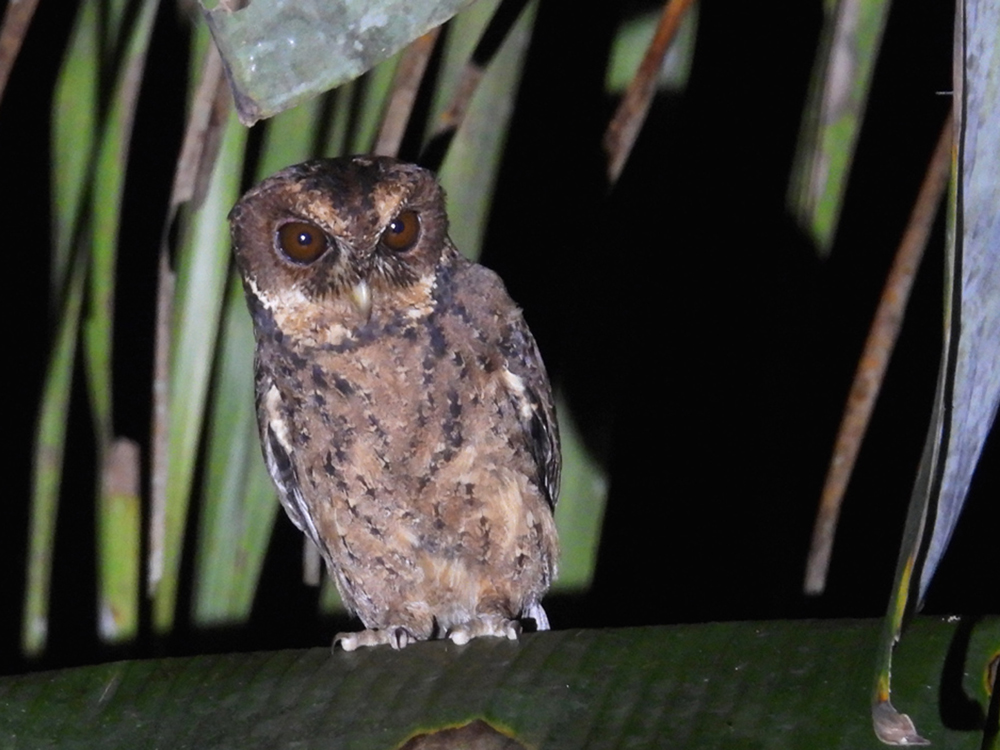
Mentawai Scops-owl

A kailaba puppet hanging in front of the house. For the Mentawai people, they believe that the bird, Oriental Pied Hornbill, is the spirit’s toy. Hanging the puppet in the house can make the good spirit stay. On the next day, we were back to the survey area and this second try was fruitfull. After three and a half hours exploring, we finally saw a group! We experienced ourselves that bilou, the gibbon, can be so silent.

On our last night in South Siberut, we took a chance to look for Mentawai Scops-owl, resulting great success!

North Siberut

Covering almost half of the island, Siberut NP, I must say that the park is one of the mysterious ones. Almost nothing was heard about the park, as a consequence of a long tenurian conflict and rejection. It made the park seem sealed from the outside world. Just last year when SwaraOwa invited the park to share their potential on wildlife—especially primate—watching tourism and invited us to come. They shared their potential and it was so tempting. Here I am now, wanting to prove and experience it by myself. Due to no area in the park for tourism, visit to the park need a special permit called simaksi, a conservation area entry permit. Thanks to Pak Ridho, the head of management area who managed to take care of us and facilitated our visit.
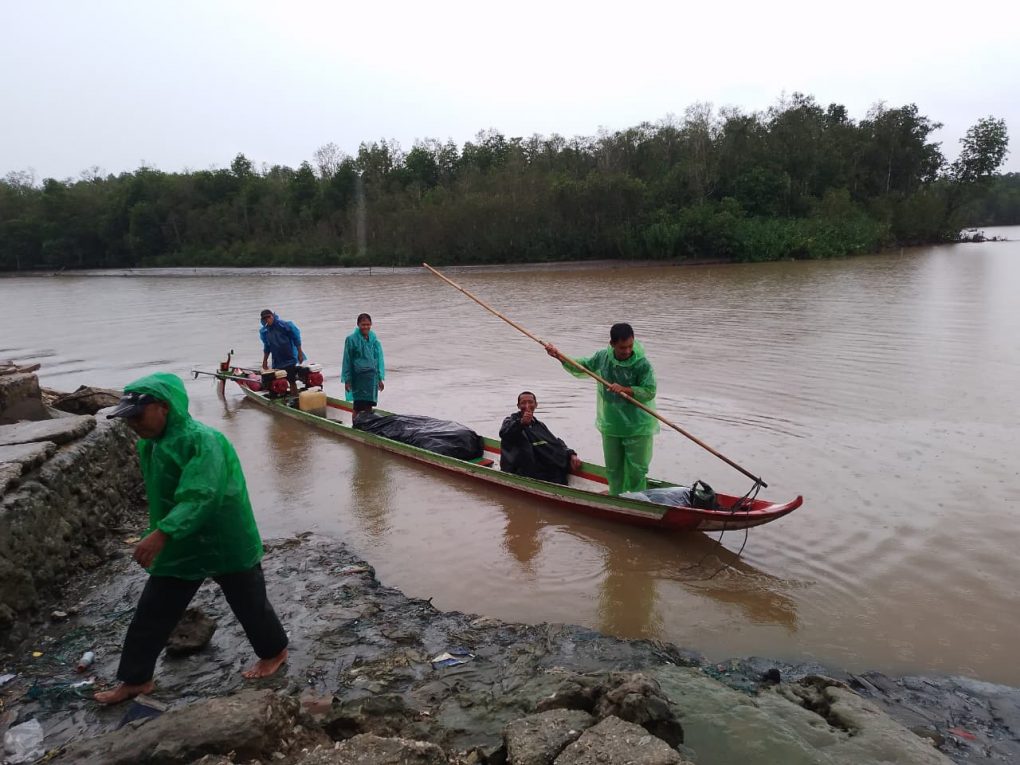
Started the river cruise to Siberut NP

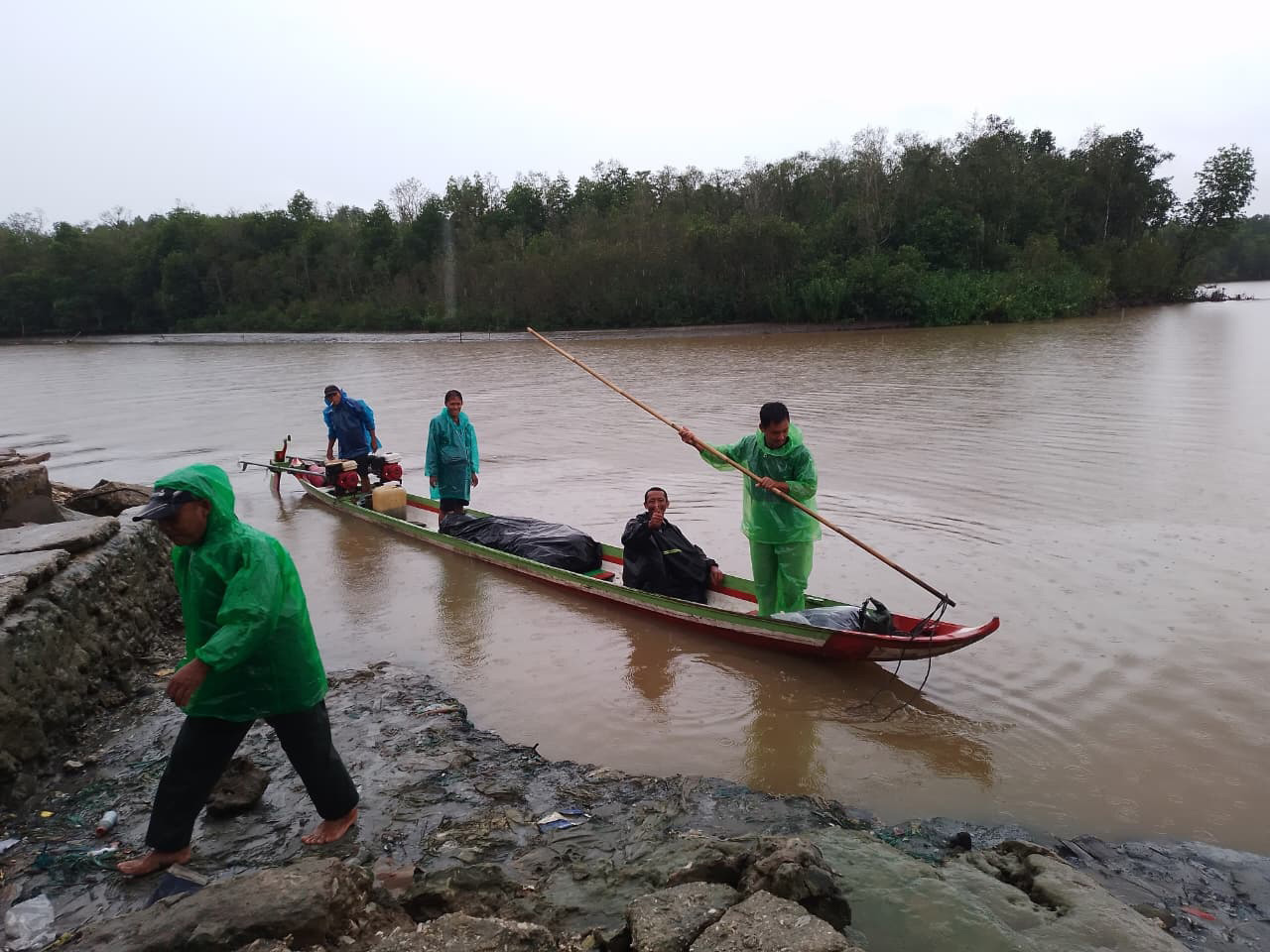
As we were in Southwest Siberut, heavy and long rain also happened in the north. And it was so destructive. The river was flooded and crushed the wooden bridge that connected the villages. That made our journey to the park solely dependent on pompong—for five hours, in rain!
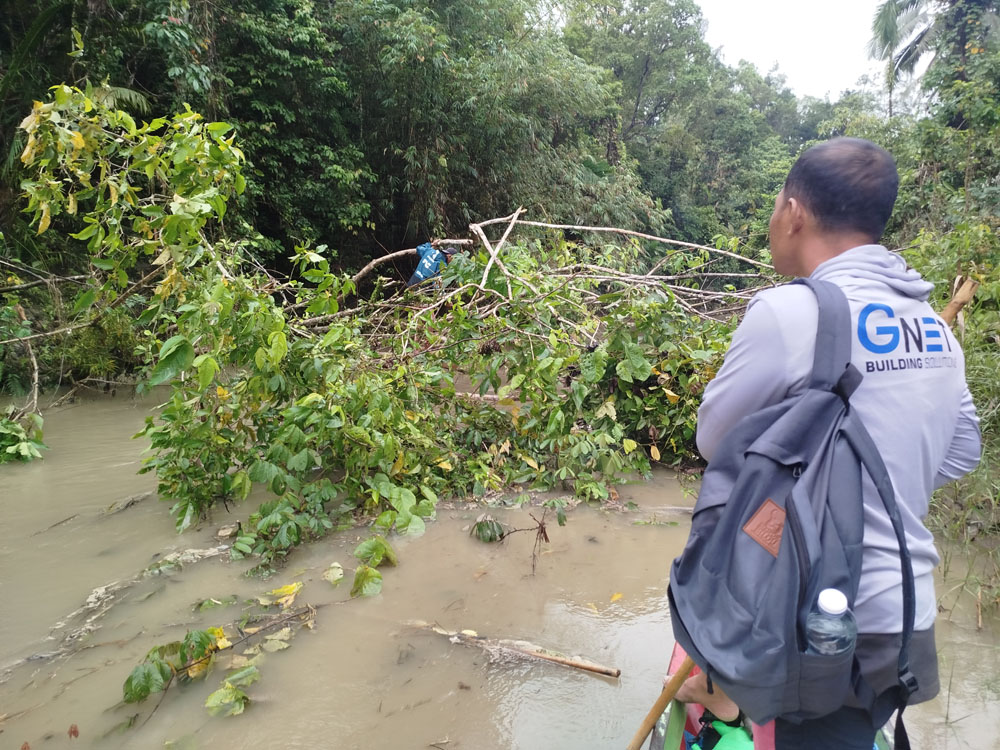
At least six times we had to face fallen trees that cut

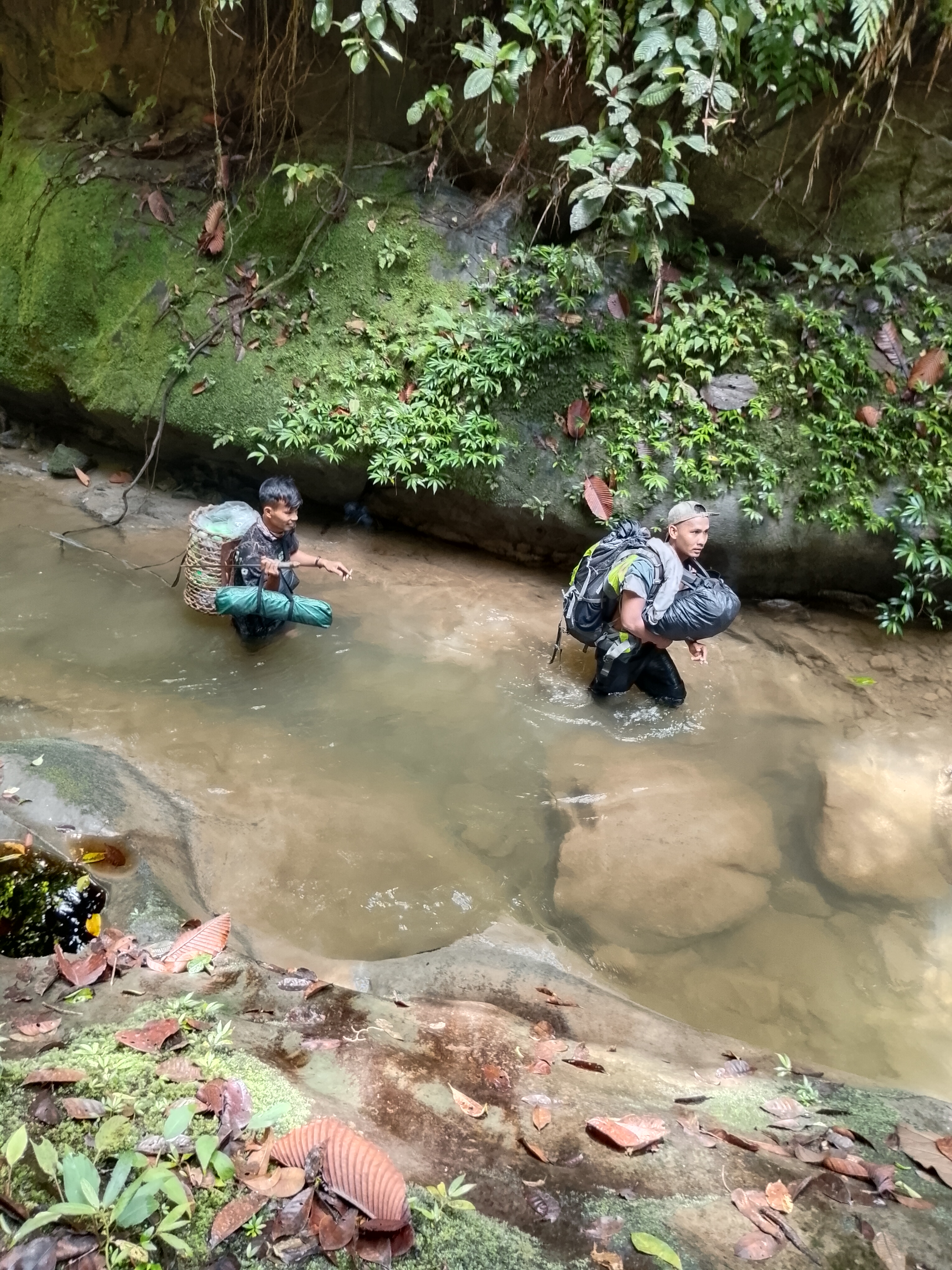
We were the first that came to Bekemen after the flood. The last two hours, where the river intersection and became smaller. Six times we faced an obstacle. Fallen trees and we need to ripe them out from the river. It was dark when we finally came to Bekemen research station. Again, not anticipated or even know that the research station was also affected by the floods. More than 1 meter of water, leave a thick mud inside the shelter. The generator was drowned and dead and the water tank gone.
My imagination for having a hot coffee after being cold by rain for 5 hours soon after arriving was gone. We warmed up ourselves by working out to clean up the mud inside the house. Luckily, the stove is still dry and can be used and we also prepared to brought our dinner.
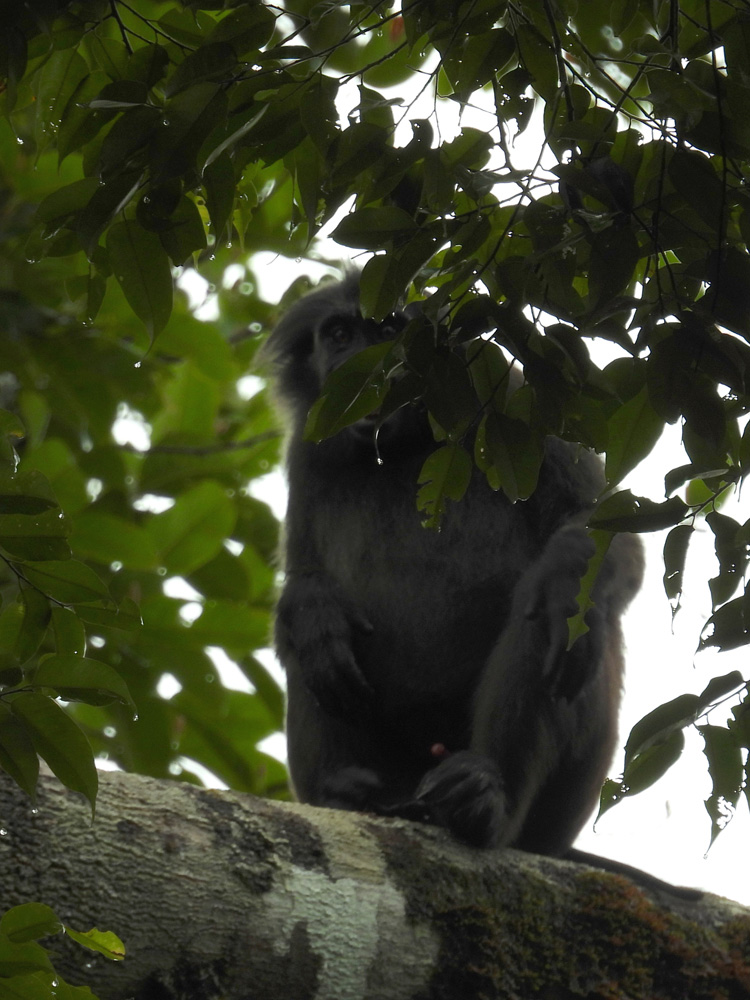
Simakobu, so shy

The next morning, we explored the track. It was hilly, and not an easy trail. The level is more medium to difficult. We saw Simakobu, then a very close call of bokoi. But, just a glimpse without any chance to take a picture. Only Bilou can be photographed as they crosses our path in quick move, but silent.
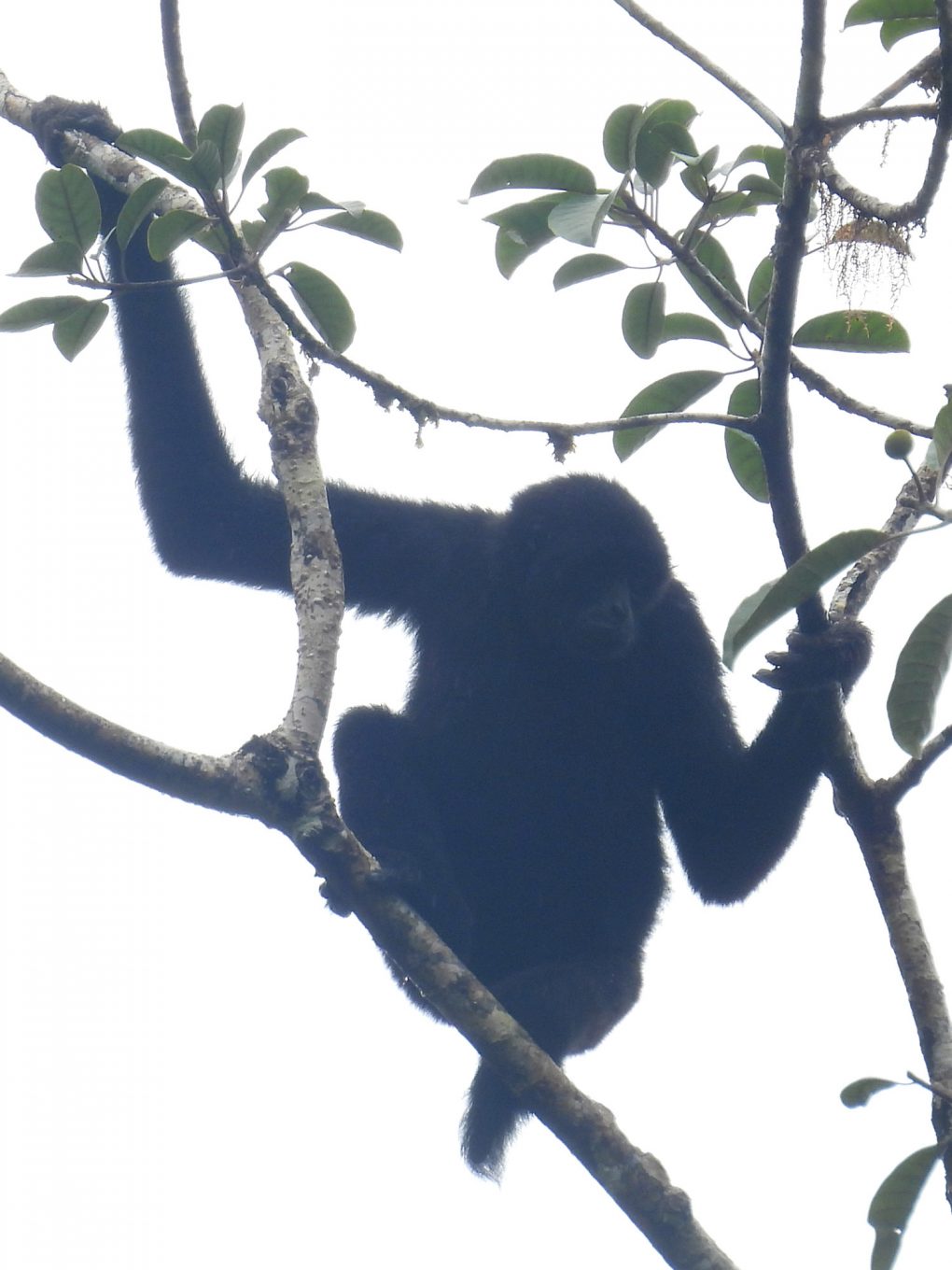
Bilou
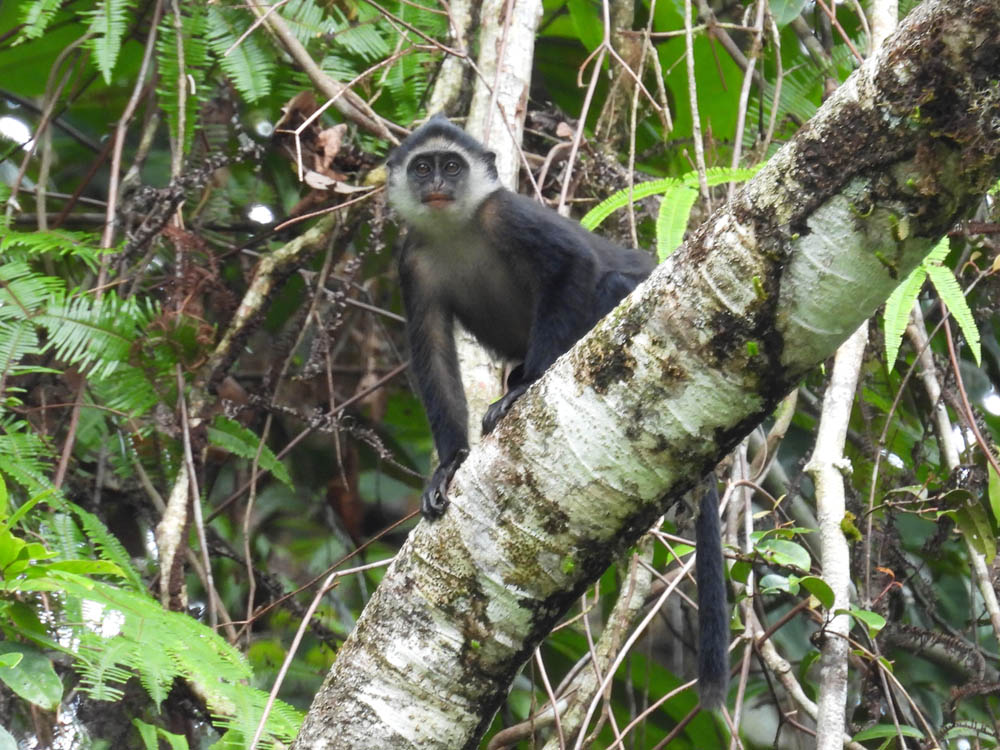
Joja, nicely pose
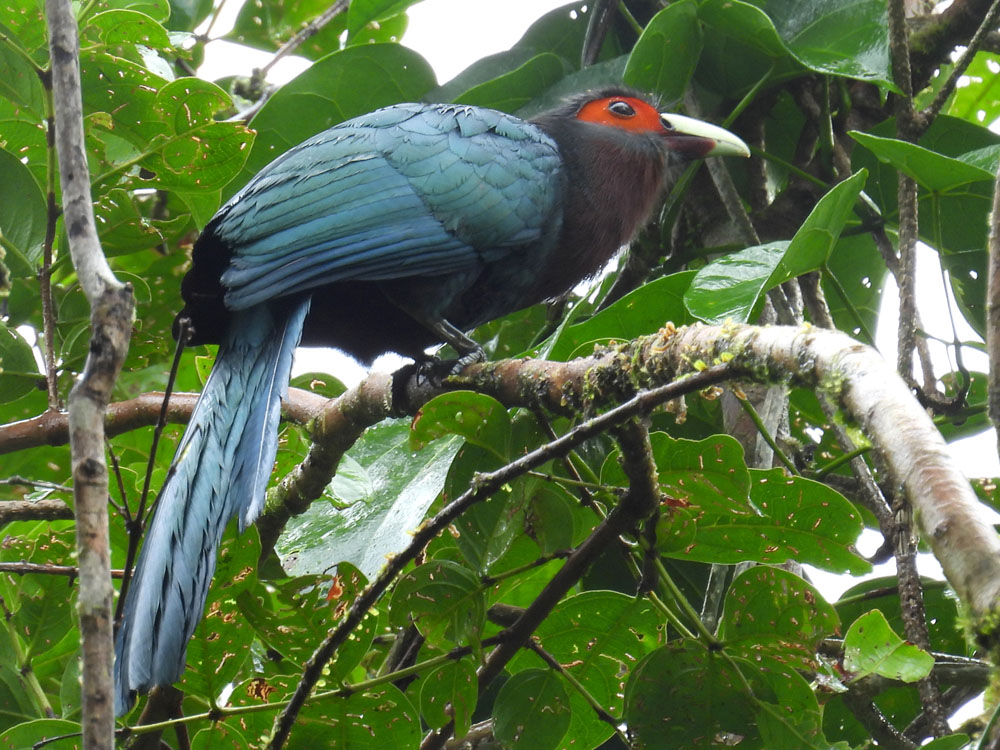
Mentawai Malkoha
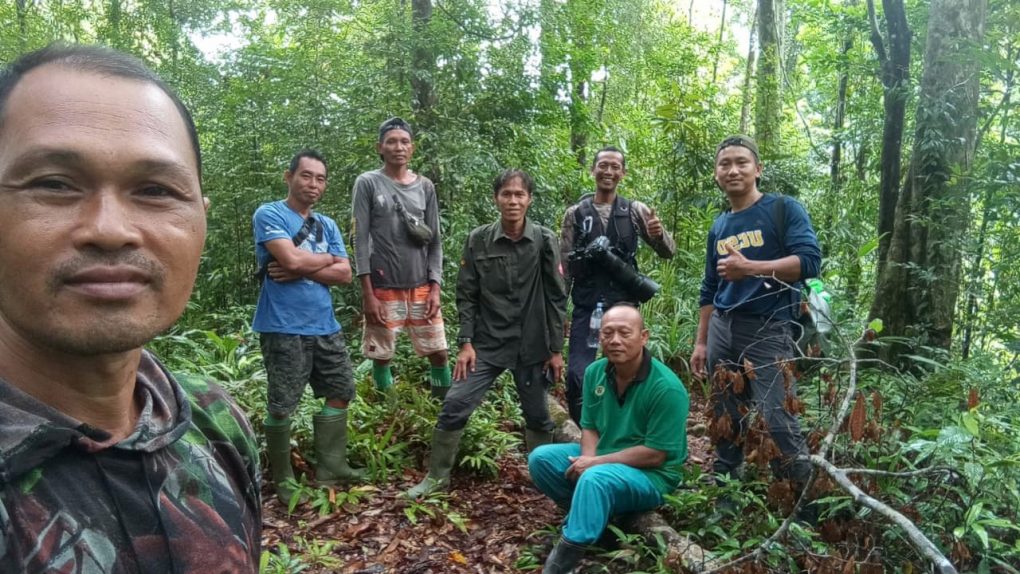
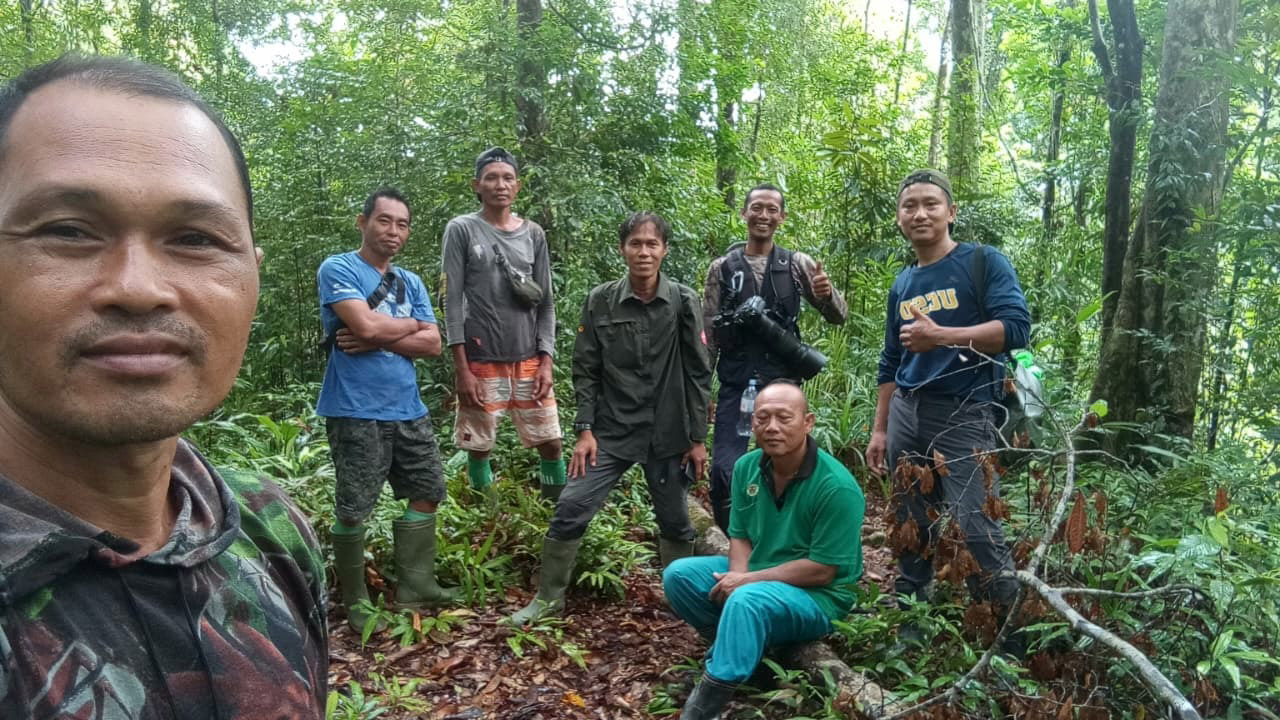
Team in Siberut NP. Photographed by mas Yoyok
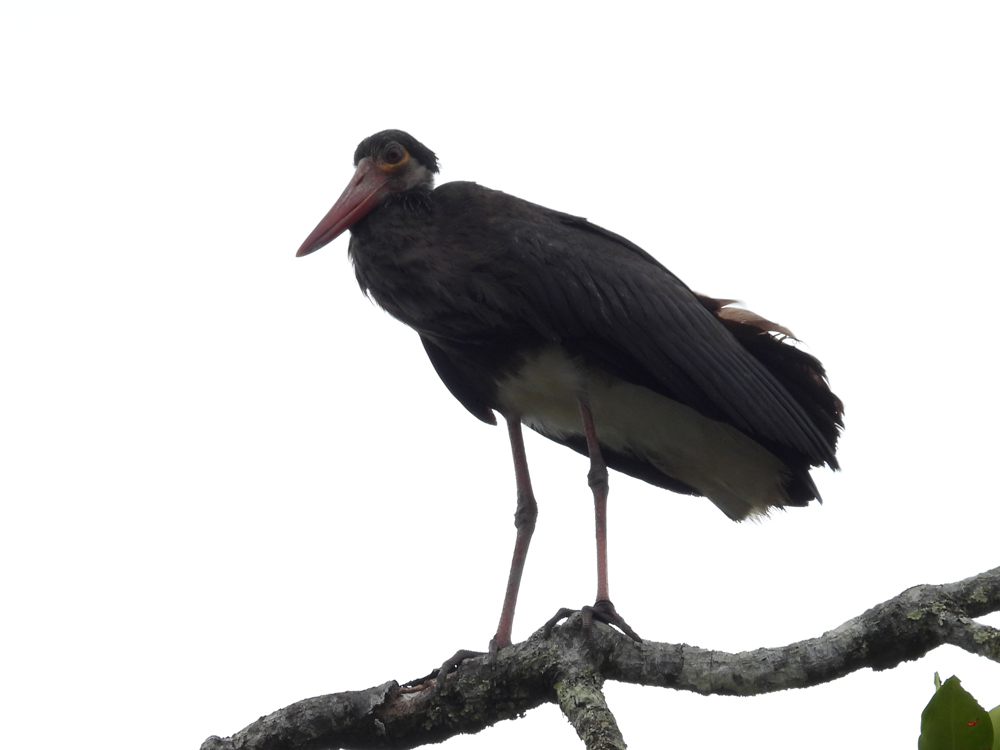
Storm’s Stork saw in the estuary

Three nights as in our first plan, turned out to be just one night. After we had our lunch, we decided to go back. Along the river, we saw at least four groups of Joja. Not as first came, this time they allowed us to be photographed.

Ended up our boat journey in the estuary, we encountered a Storm’s Stork perched in a mangroves. The bird was sitting a couple of minutes. Just perfect!

For two days, we explored the town, rural areas and plantation. Hope to get a chance for another Bokoi. Joja is good to see here. We spent the nights in the park’s mess close in Muara Sikabaluan. The area is close to the beach, with a swamp as the back. Early in the morning, we saw Yellow and Black Bittern. The first was not in the island list. No photographed unfortunately. At night, we spotlighted the rurals and plantations. As dark came, Mentawai Squirrels were still active. Heru even saw the pair mating! I think it was not a common behaviour for this diurnal.

The last morning, Bokoi again soo close, but failed to see it. However, the ferry had a troubled engine. We need to wait until the next morning. Our for the Critically Endangered Silvery Pigeon. We saw them perched high at an emergent tree in the swamp forest. Heru, who tried to approached, saw that the birds feed on a fruiting tree.
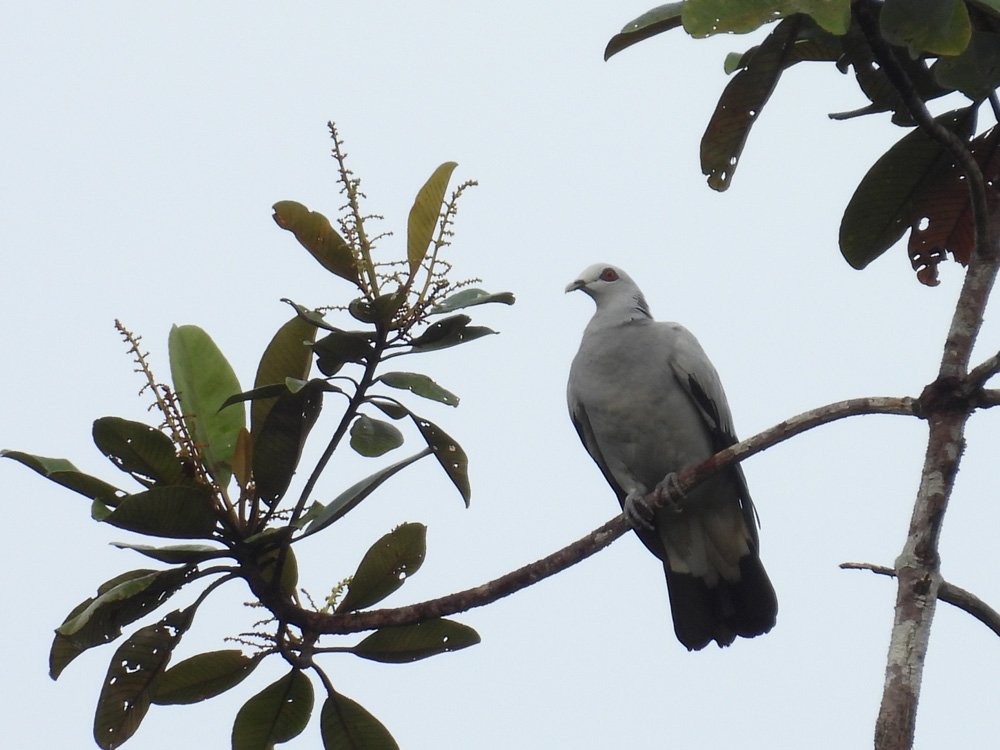
Silvery wood Pigeon

There were 10 birds sitting on the emergent tree, with six others seen by Heru feeding on a fruiting tree. A red oval shaped fruit. It called sosoken by the villagers. I was so thrilled with the bird and we thought that was our sweet closing. But it was not. The Mentawai Fast that made us—again—waited, turned out, it was our luck. In the afternoon we went back to the swamp forest and saw two of them posed perfectly.
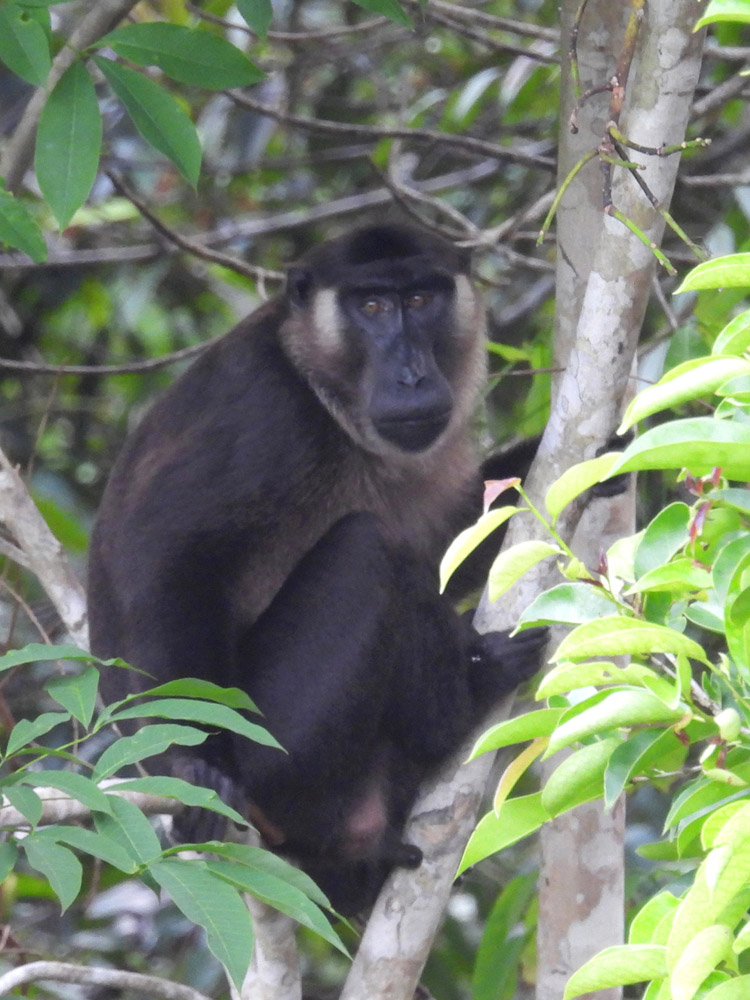
The charming bokoi

We finally got a good view and some good pictures of this beautiful and charming monkey. Now that was the closing to our exploration. A very sweet one.

Mammal list
1. Long-tailed Macaque Macaca fascicularis
2. Siberut Macaque Macaca siberu
3. Pig-tailed Langur Simias concolor
4. Siberut Langur Presbytis siberu
5. Kloss’s Gibbon Hylobates klossii
6. Siberut Flying Squirrel Petinomys lugens
7. Mentawai Squirrel Callosciurus melanogaster
8. Intermediate Roundleaf Bat Hipposideros larvatus
9. Spinner Dolphin Stenella longirostris
Unidentified
10. Unidentified rat-1 (cave, S Siberut)
11. Unidentified rat-2 (banana, N Siberut)
12. Unidentified rat-3 (road kill, N Siberut)

Bird list

  1. Greater Coucal Centropus sinensis
  2. Mentawai Malkoha Phaenicophaeus oeneicaudus
  3. Asian Koel Eudynamys scolopaceus
  4. Barusan Cuckoo-Dove Macropygia modiglianii
  5. Silvery Pigeon Columba argentina
  6. Pink-necked Green Pigeon Treron vernans
  7. Thick-billed Green Pigeon Treron curvirostra
  8. Green Imperial Pigeon Ducula aenea
  9. Pacific Golden Plover Pluvialis fulva
  10. Tibetan Sand Plover Anarhynchus atrifrons
  11. Greater Sand Plover Anarhynchus leschenaultii
  12. Terek Sandpiper Xenus cinereus
  13. Common Sandpiper Actitis hypoleucos
  14. Common Redshank Tringa totanus
  15. Ruddy Turnstone Arenaria interpres
  16. Red-necked Stint Calidris ruficollis
  17. Bridled Tern Onychoprion anaethetus
  18. White-winged Tern Chlidonias leucopterus
  19. Black-naped Tern Sterna sumatrana
  20. White-tailed Tropicbird Phaethon lepturus
  21. Storm’s Stork Ciconia stormi
  22. Black Bittern Botaurus flavicollis
  23. Yellow Bittern Botaurus sinensis
  24. Pacific Reef Heron Egretta sacra
  25. Little Heron Butorides atricapilla
  26. Great Egret Ardea alba
  27. Purple Heron Ardea purpurea
  28. Grey-rumped Treeswift Hemiprocne longipennis
  29. Glossy Swiftlet Collocalia esculenta
  30. Edible-nest Swiftlet Aerodramus fuciphagus
  31. Mentawai Scops Owl Otus mentawi
  32. Crested Honey Buzzard Pernis ptilorhynchus
  33. Crested Serpent Eagle Spilornis cheela
  34. Blyth’s Hawk-Eagle Nisaetus alboniger
  35. Brahminy Kite Haliastur indus
  36. White-bellied Sea Eagle Icthyophaga leucogaster
  37. Oriental Pied Hornbill Anthracoceros albirostris
  38. Blue-tailed Bee-eater Merops philippinus
  39. Blue-eared Kingfisher Alcedo meninting
  40. Common Kingfisher Alcedo atthis
  41. Rufous-backed Dwarf Kingfisher Ceyx rufidorsa
  42. Stork-billed Kingfisher Pelargopsis capensis
  43. Ruddy Kingfisher Halcyon coromanda
  44. White-throated Kingfisher Halcyon smyrnensis
  45. Blue-rumped Parrot Psittinus cyanurus
  46. Blue-crowned Hanging Parrot Loriculus galgulus
  47. Green Broadbill Calyptomena viridis
  48. Black-naped Oriole Oriolus chinensis
  49. Sumatran Drongo Dicrurus sumatranus
  50. Ashy Drongo Dicrurus leucophaeus
  51. Black-naped Monarch Hypothymis azurea
  52. Tiger Shrike Lanius tigrinus
  53. Sunda Crow Corvus enca
  54. Ashy Tailorbird Orthotomus ruficeps
  55. Pacific Swallow Hirundo javanica
  56. Black-headed Bulbul Microtarsus melanocephalos
  57. Olive-winged Bulbul Pycnonotus plumosus
  58. Common Hill Myna Gracula religiosa
  59. Orange-bellied Flowerpecker Dicaeum trigonostigma
  60. Scarlet-backed Flowerpecker Dicaeum cruentatum
  61. Little Spiderhunter Arachnothera longirostra
  62. Yellow-eared Spiderhunter Arachnothera chrysogenys
  63. Brown-throated Sunbird Anthreptes malacensis
  64. Van Hasselt’s Sunbird Leptocoma brasiliana
  65. Copper-throated Sunbird Leptocoma calcostetha
  66. Crimson Sunbird Aethopyga siparaja
  67. Asian Fairy-bluebird Irena puella
  68. Scaly-breasted Munia Lonchura punctulata
  69. White-headed Munia Lonchura maja
  70. Eurasian Tree Sparrow Passer montanus
  71. Forest Wagtail Dendronanthus indicus
  72. Grey Wagtail Motacilla cinerea
28Dec/25

Why is it Important to Count the Mentawai Bilou Population?

Bilou, the mentawai Gibbon observed in Saguruju customary forest

By: Arif Setiawan, Aloysius Yoyok, Nur Aoliya, Kurnia Latifiana, Kurnia Ahmaddin,

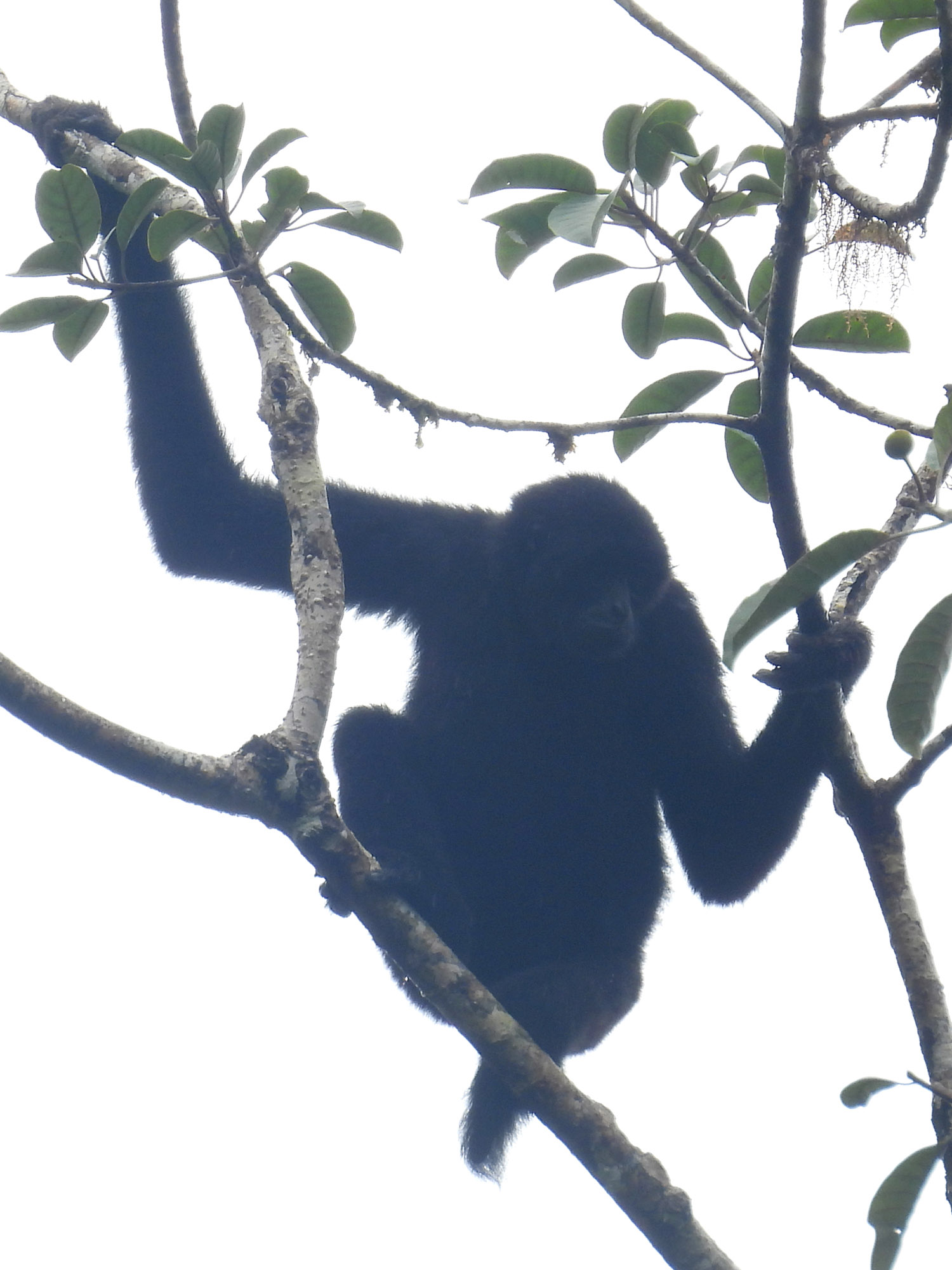
The bilou, the endemic gibbon of the Mentawai Islands ( Hylobates klosii ), is unlike any other animal. It is part of the Mentawai people’s story. Its early morning call signifies the forest’s survival. Mentawaians believe that if a bilou calls in the early morning, it signals a bad omen, such as a death or an impending disaster. If the call is gone, where will we learn about these natural omens? If we know how many bilou are left, we can ensure the forest remains healthy, as bilou help disperse tree seeds and maintain the balance of nature.

If we don’t count the population, we don’t know whether the bilou are dwindling or whether they are still safe. Population is the number of individuals occupying a specific area of ​​habitat. It’s like counting the number of children in a village: if there are fewer, we worry about the village’s future being deserted. The same is true for bilou—if their population declines, it’s a sign that our forests are ailing.

What are the Benefits for us:

– Know the condition of the forest: lots of bilou = healthy forest.

– Preserving cultural heritage: bilou is part of Mentawai identity.

– Attracting global attention: population data can help gain support for protecting forests.

– Ensuring the future: our children and grandchildren can still hear the sound of the bilou in the forest.

So, counting the bilou population isn’t just about numbers. It’s how we protect our shared home, ensure the forest remains alive, and preserve the Mentawai story.

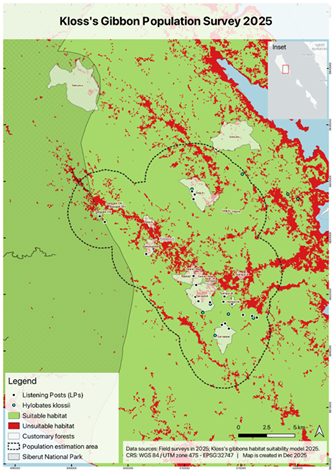
Location map of the bilou survey  on triangulastion set locations

The Siripok Bilou team, formed in early 2025, successfully conducted a survey to estimate the number of bilou in selected areas on Siberut. We surveyed nine customary forest areas based on recommendations from the local Citra Mandiri Foundation. Using the vocal count-triangulation survey method, the survey was conducted based on bilou sounds. Observers conducted the survey using a triangulation system (three observation points in different locations, with a distance of 300-500 meters between them). These three points were then repeated for four consecutive days to listen and estimate the distance. The assumption was that the same group would vocalize at the same location for four consecutive days.

Population analysis was conducted using the same point count formula used in previous Bilou population estimates (Setiawan et al. 2020; Whittaker et al. 1995). To determine the area, we used a habitat suitability analysis, which can be read here: https://swaraowa.blogspot.com/2025/12/dimana-bilou-bersuara-pemetaan-habitat.html

Mentawai bilou population calculation table in 2025

From the population analysis that we conducted, the estimated population of bilou in the customary forest area in South Siberut (11 locations) with an area of ​​approximately 208.64 km 2 is approximately 396 individuals consisting of 146 (96-186) groups.

These results are preliminary from a survey that will be conducted throughout Mentawai and are subject to change based on the latest information obtained from field teams that have, are, or will conduct surveys at other locations in the Mentawai Islands. For discussions regarding this analysis, please contact [email protected].

26Dec/25

Where the Gibbons Sing: Forest Maps for Mentawai’s Future

By Kurnia Latifiana

Updating land cover information and habitat suitability assessments provide a baseline for identifying priority areas for protection, restoration, and improved management. The maps produced through this assessment can thus support in considering conservation decision making across Mentawai Islands. By providing insight and a comprehensive spatial perspective as an effort to strengthen primate conservation strategies and contribute to evidence based actions that safeguarding Kloss’s gibbon and their remaining forest habitat.

Objectives

To contribute insight of conservation actions for Kloss’s gibbon, this assessment aims to:

  1. Update the land cover map of Mentawai Islands to provide current representation of forest condition and potential threats in the landscape
  2. Develop and estimate suitable habitat for Kloss’s gibbon across the islands using spatial and ecological variables to identify priority habitats and areas potential at risk

Methods

Our study took place across the Mentawai Islands, focusing especially on nine customary forests in Madobag and Matotonan villages. These forests are cared for by local communities, and they are very important because they provide homes for Kloss’s gibbons and help keep the forest connected. To understand how well these areas support gibbons, we combined knowledge from past studies with new observations from the field. We looked at where gibbons were seen, and we also noted the condition of the land and forest. Using satellite images, we created updated maps of forest cover, which we checked and refined with help from local surveys. Finally, we used a computer model to predict which areas are most suitable for gibbons, considering factors like forest cover, tree health, land shape, climate, and how close the forest is to rivers or villages. This way, we can see which places are most important for protecting gibbons and supporting community efforts to keep the forest healthy.

Results

Land cover mapping

Kloss’s gibbons are strongly associated with forested habitats, particularly secondary forests.The updated land cover map of 2025 provides a current spatial overview of forest conditions across the Mentawai Islands, with particular attention to nine customary forests in Madobag and Matotonan villages. Land cover classification has limitation in distinguishing between secondary forest and mixed planted trees vegetation. Field verification helped improve classification accuracy, particularly in areas dominated by mixed vegetation zones and small patches of secondary forest.

Habitat suitability assessment

The predicted suitable habitat spatially overlapped with the majority of gibbon occurrence records from previous studies and recent field survey in 2025. There are 60 presence points (95%) fall within areas classified as suitable habitat, indicating agreement between model prediction and field observation.

Across the Mentawai Islands, suitable habitat was estimated at around 399,045.24 ha and representing 66.69% of the total area (see Table ), which 302,647.59 ha area is in Siberut Island. Within priority customary forests on Siberut Island, suitable habitat was predicted to cover approximately 78.59% of the island. Suitable habitat area by island is summarized in the table.

Habitat suitability was shaped by a combination pattern of forest structure, climatic conditions, and terrain characteristics. As shown in Figure 2, land cover was the most influential variable, contributing 40% to the model, followed by precipitation (22%), tree cover (18%), and elevation (14%), while all remaining variables individually contributed less than 10%. Human pressure variables showed relatively low direct contributions, not because they are ecologically insignificant, but because their effects are largely captured indirectly through land cover changes and forest condition.

The model confirmed that the secondary forest is the most critical predictor of Kloss’s gibbon distribution in Mentawai Islands. Areas with higher tree cover were associated with a higher probability of gibbon occurrence. This condition also confirmed the gibbons are strong dependence on structurally intact forest canopies. Kloss’s gibbons depend on upper canopy layers for key behaviors, including locomotion, feeding, resting, and vocalization, which require continuous and well developed forest structure.

Disclaimer :The information displayed here is only some part of the habitat suitability analysis for the Mentawai Gibbon Conservation Program, please please contact swaraOwa @gmail.com, for further discussion of the analysis.

09Mar/25

A Dance of Spirits : Sacred Farewell in Mentawai Traditions

by Arif Setiawan

a sikerei, mentawai shaman, spiritual leader, healer and mediator between physical and spiritual world

Located in Malinggai Uma, South of Siberut,  the traditional stilt house measuring 25 meters x 12 meters appeared crowded. The extended Tateburuk clan gathered at Uma, with around 200 families present. Including small children, there were likely over 400 people. This Punen Eeruk was considered a large ceremony because it did not conclude in a single day. The significant involvement of tribe members and their sacrifices included approximately 13 pigs and 200 chickens. The women were also very busy in the kitchen, cooking taro and sago in bamboo, preparing meals for everyone present.

sacrificial pig for Punen eeruk traditional ceremony

Sikereis prays for sacrifice animals

This Punen eeruk aimed to “pacify” the spirits of the deceased. The belief in spirits or souls within every object remains deeply ingrained in the Mentawai community, especially in Siberut. The Arat Sabulungan belief holds that nearly every place and object, every animal, every plant, and every natural phenomenon possesses awareness and feelings and can communicate directly with humans. This Punen can also be described as a farewell party for the spirits of the deceased, marking the end of the mourning period. It is the final celebration as an eternal farewell between the spirits and their families, accompanying and praying for the safety and happiness of those left behind, ensuring they are free from all difficulties and dangers. This relationship is relatively complex but can be understood, and there are those who can assist in communicating with these non-material entities, namely the “Sikerei.” They can all communicate through the intermediaries of dance, song, sacrificed animals, or ceremonies.

peforming gibbon dance during Punen Eeruk, in Uma (long house) a sacred farwell in Mentawai tradition

Through dances accompanied by the beating of drums, the ringing of bells, and the stomping of feet on wooden floors, a harmonization of movements and sounds full of magical and emotional nuances is created. The bilou dance, uliat bilou, becomes both entertainment and a communication medium, telling stories of several Bilou joyfully playing in the forest. The sikeerei’s voice also emerges softly, imitating the call of the bilou on a bright morning.

the meat of the sacrificed animal is divided equally among all members of the tribe

Efforts to preserve natural knowledge, enrich culture and its content, especially in Mentawai, become a challenge of their own. This identity might only be a mere romanticism, with the unique nature and culture only beautiful in reports and writings while extinction continues to occur on a micro scale. The messages implied in this ceremony should be a reflection continuously conveyed to the current generation that the history of nature heavily depends on humans. We can harm, damage, or eradicate our natural culture, but we are also endowed with intellect, energy, and perfect communication abilities to manage nature wisely.

12Dec/24

Siberut Wildlife Watch: preserving nature , cuture and sustainable economy

by Arif Setiawan

Bokkoi ( Macaca Siberu)

Siripok bilou, means “friends of the gibbons “ in Siberut language was  swaraOwa initiated in 2016 in as a movement to promote primate watching eco-tourism , has provided experience for the Siberut team, because since then it has also received attention from local and foreign visitors who are interested in seeing Siberut’s endemic primates directly (Gibbons, siberut langur, Siberut Macaque, and Simakobu , critically endangered pigtailed langur), or other animals through observation and adventure activities.

From September October to November 2024 guests come and go to the observation location in Toloulago, South West of Siberut. The Siripok Bilou team led by Ismael, Vincent and Franky organizes each visit.  The guests who come vary according to their respective interests.  These guests usually get information from previous guests, and through Swaraowa’s website and social media. Mammal watching is still the main reference for these guests for observation visits in Mentawai, especially Siberut.

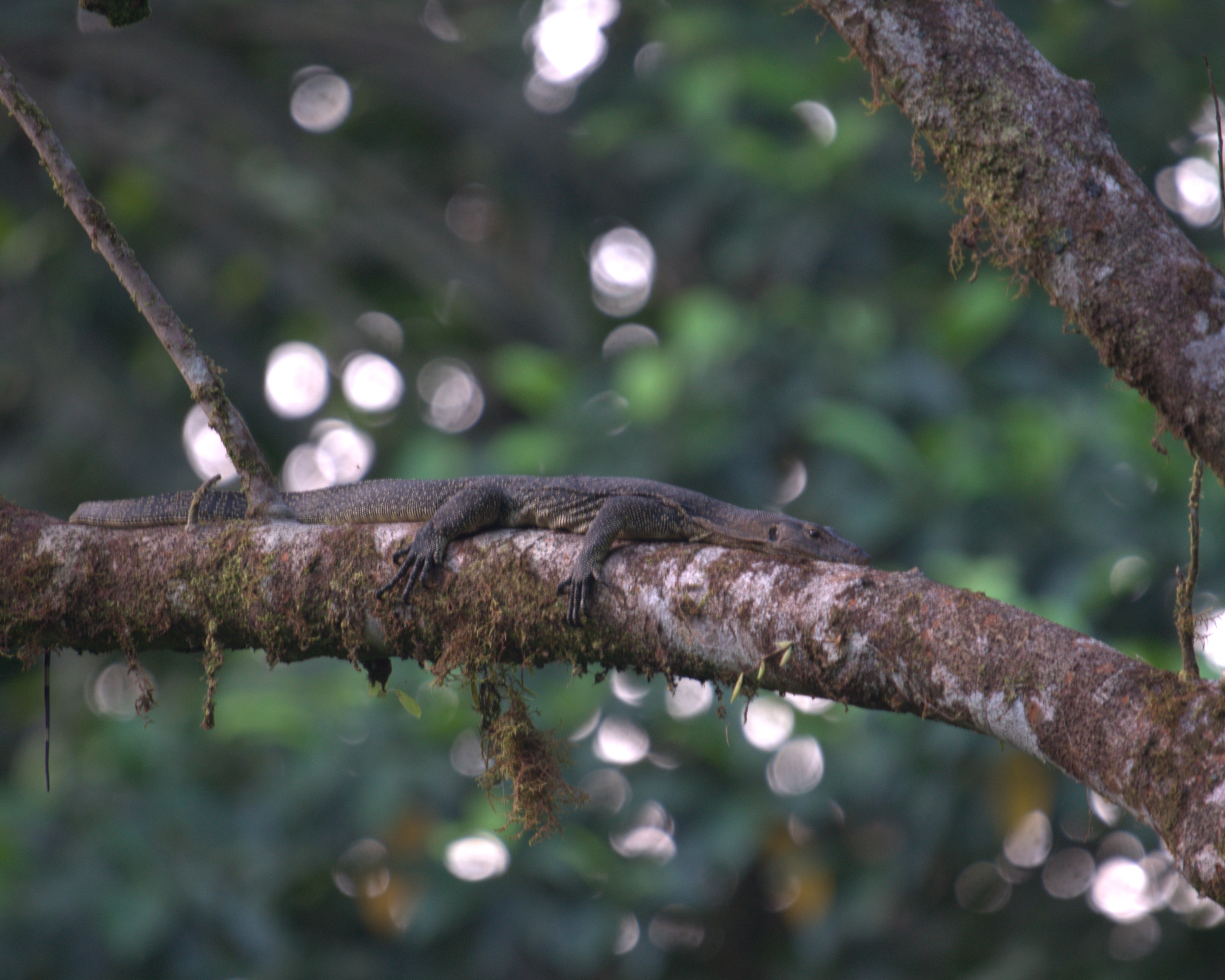
Batek-Asian Water Monitor ( Varanus salvator)

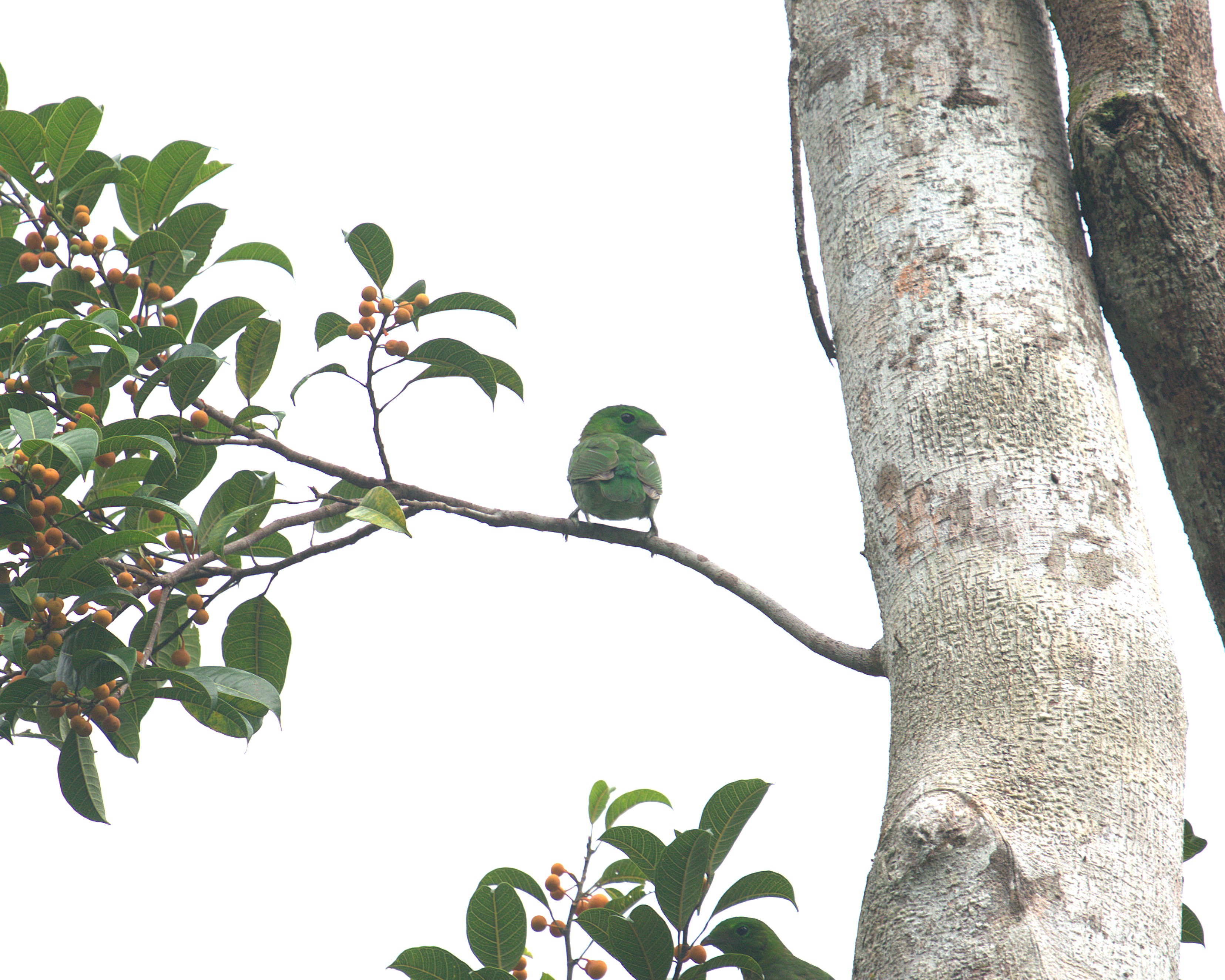
Green Broadbill (Caliptomena viridis)

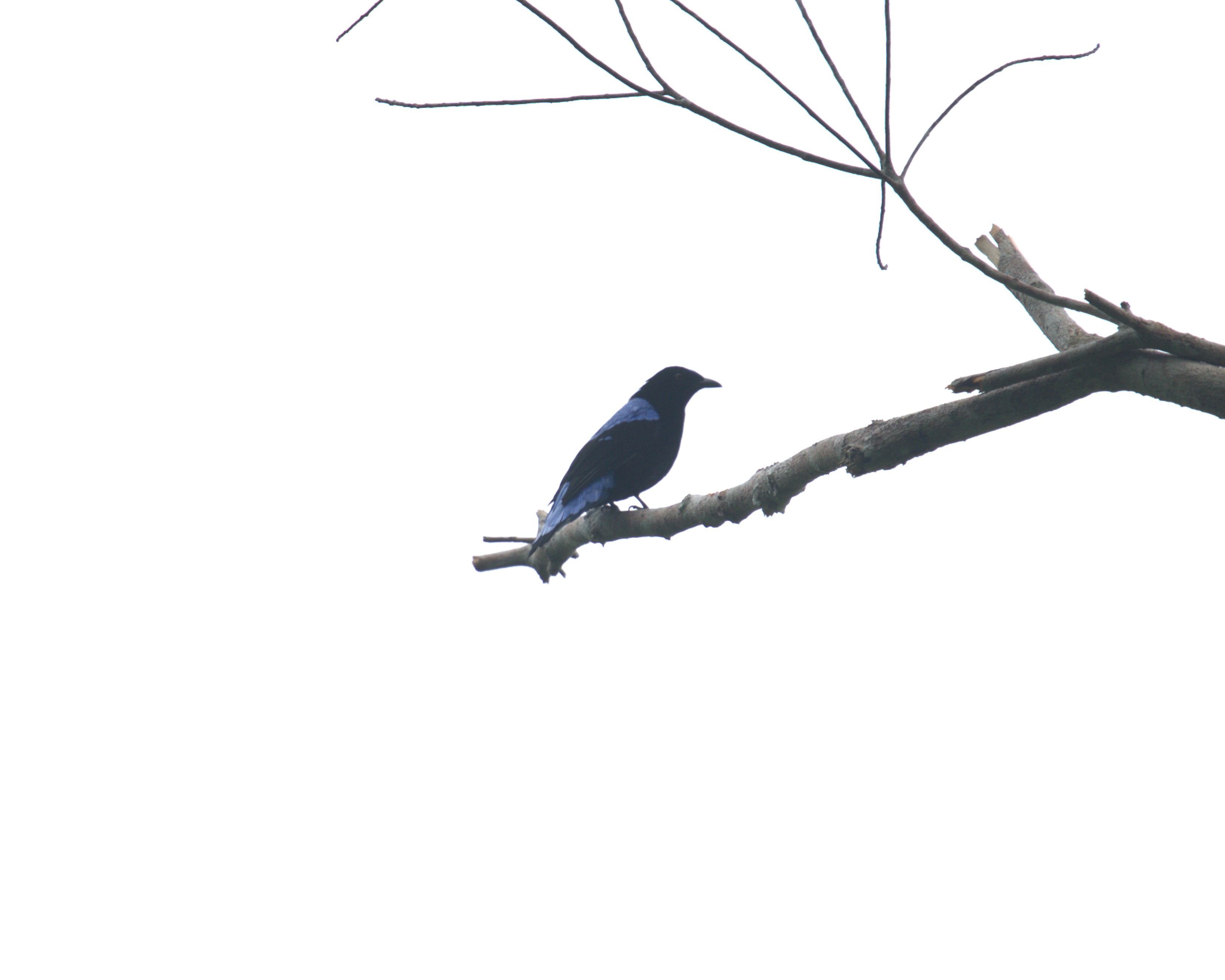
Asian Fairy- Blue Bird ( Irena puella)

Joja Siberut langur ( Presbytis siberu)

Siberut flysing Squirrel ( Petynomis lugens)

Sipora flying squirrel ( Hylopetes sipora)

The trip reports they write on the website are very useful for marketing as well as biodiversity reports, because they usually write about list of species that they encounter, their locations and visuals or photo or video documentation.

Our field work in 30 August to 4 September, 2024,  we did Tololago wildlife watch  and recorded numerous wildlife such as Siberut macaque, Siberut langur, Siberut flying squirrel, Greed broad bill, Asian Fairy-Blue bird, asian water monitor, the gibbon,  and many more. These new collection upated visual documentary list of Mentawaian wildlife. through this fieldwork we also improving skill of guiding and develop further plan to conserve Tololago forest area.

One of the very popular trip reports is the one written by Mark Spence in 2018, https://www.mammalwatching.com/2019/10/17/new-trip-report-siberut-mentawai-islands/ .He initially got the information through SwaraOwa’s social media, and we helped him prepare the itinerary and technical details of his visit. The Siripok Bilou team arranged the technical aspects of the visit including logistics, local transport and accommodation.

Visits vary in duration, depending on the ship’s schedule, it can be 3 days and two nights, 4 days and 5 nights or 6 days and 7 nights.

Last September the Siripok Bilou team also had guests who initially read Mark Spence’s trip report and then contacted SwaraOwa via email, the target of their visit was mammal species. We actually already have a list of mammals in Toloulago, but the photos or visual documentation is not yet complete. Just based on local names and identification of previous reports, species of rats and squirrels  it doesn’t seem like there are many recent reports from Siberut. I met Ian Thomson and Paul Carter from Canada and England in Padang before going to Siberut, and explained their expectations for their visit to Siberut.

During their 6 days and 7 nights in Toloulago, accompanied by Ismael, Vinsen and Franky, they said in their email that they had great success findings small mammals in Siberut. You can read their trip report here : https://www.pacapix.com/indonesia-siberut/.

Ian Thomson made his own trip report about his trip and can be read here: https://www.mammalwatching.com/community-post/indonesia-siberut-sumatra-and-java-september-2024/

These trip  reports are very meaningful for us to continue to advocate for nature protection in Mentawai, even though it is not yet a tourism priority, special interest tourism like this has potential that is worthy of development. The threat of deforestation and hunting which is home to Siberut’s wildlife still continues. Visits like this have also had a positive impact on residents around the forest especially in Toloulago, lodging businesses, local guides,  and providing meals for guests. Mentawai traditional culture and daily practice will be appreciated by the people from outside.

There are still many things that need to be improved for the management of special interest tourism in Mentawai. Siripok Bilou, which operates independently, needs to receive continued support. A very meaningful form of support is participating in promoting and visiting Siberut directly, by visiting forest activities with guests. who want to see native Mentawai animals, has also influenced residents not to destroy the forest.  Please contact us [email protected] for your wildlife watching adventure to Siberut.

10Apr/22

Mentawai Teacher Training : Strengthening Cultural Values and Nature Conservation

in the the forest, all participants photo group

Every year since 2020, Malinggai Uma jointly organise with SwaraOwa a workshop for teachers of local traditions at schools (known locally as ‘facilitators of Mentawai culture’). These people have a huge role to play in ensuring that local children of school going age inherit the cultural knowledge passed down from their forebears. Accordingly, we invited representatives from several local cultural and educational organisations to attend this year’s edition of the event. The event is supported by Mandai Nature and Fortwayne Children’s Zoo through swaraOwa’s Mentawai Gibbon Conservation Program.

It aimed to:

  1. Introduce to the current generation of local teachers of Mentawai culture the local flora and fauna, especially our primate species;
  2. Educate them on the importance of conserving Mentawai primates, and measures currently being taken on that front;
  3. Enable teachers of Mentawai culture to spread the conservation message to their students;
  4. Allow teachers to inspire the next generation to contribute to conservation at a local level;
  5. Bring together Mentawai biodiversity and cultural conservation activists.

Opening ceremony, Mentawai traditional dance performance


The workshop was held from 1 – 4 March 2022 and involved a total of 29 people, made up of the participants, subject matter experts and the organising committee. The participants represented teachers of Mentawai culture from local primary schools, kindergartens, charitable foundations as well as local community organisations

The event was held at Toloulaggo Hamlet, Katurei Village (Siberut Barat Daya District). For the field survey component, we went to a nearby observation point in the forest of Tololago.

activity in the forest

group presentation towards other participants

Chaired by Ismael Saumanuk, the workshop was officially opened on 2 March 2022 by Karlo Saumanuk from the Katurei village administration, followed by speeches by Damianus Tateburuk (Malinggai Uma) and Nur Aoliya (SwaraOwa). The opening ceremony featured a traditional Mentawai dance performance by children from Malinggai Uma, featuring the gibbon (uliat bilou) dance and eagle dance.

Next came the presentations from the two experts we invited. The first was by Antonius Vevbri, S.Si, M.Sc from Siberut National Park, who covered the biodiversity on Siberut Island and the efforts made to conserve it. Our second speaker was Fransiskus Yanuarius M, from the Yayasan Pendidikan Budaya Mentawai (Mentawai Cultural Education Foundation), who touched upon the importance of preserving both Mentawai customs and local wildlife, introducing the activities of his foundation along the way.

On the first day of the workshop, the SwaraOwa team also launched the Mentawai Nature and Culture card game, a memory game that can be played by young and old alike. It consists of cards with photos printed on them that showcase Mentawai biodiversity and culture. In fact, this card game was born of a previous edition of the workshop. Through this interactive game, we hope that the conservation message will be passed on more effectively from teachers to their students. Attendees were also given a field guide to Mentawai  primate and bird species, which had been jointly compiled and published by SwaraOwa and Malinggai Uma.

On the second and third days, we ventured into the forest in Toloulaggo to look for local wildlife. The participants were divided into three groups named after indigenous primates, namely Team Bilou (Kloss’s gibbon), Team Simakobu  (Pigtailed langur) and Team Joja (Mentawai langur). Each group took a different transect walk, taking note of their sightings from 6.30am to 11.30am. After that, they regrouped in the village to talk about the types of primates and birds they found, as well as discuss how these types of wildlife related to local culture, for example the part they had to play in storytelling traditions.

Below, you can find our photos from these two days of fieldwork.

Mentawai Gibbon

Mentawai Dwarf Toad

Tiger shrike

Written by Damianus Tateburuk  (Malinggai Uma Tradisional Mentawai), Translated by TT Chan.

Malinggai Uma Tradisional Mentawai is a traditional Institution headquartered in Dusun Puro II Muntei Village, South Siberut District, Mentawai Islands Regency – West Sumatra. Malinggai Uma was formed on 5 September 2014 and seeks to promote local forms of art and culture, as well as the conservation of the native biodiversity of the Mentawai Islands.

02May/21

Semangat Baru dari Sipora, Menjaga Alam dan Budaya

Oleh : Damianus Tateburuk ( Malinggai Uma Mentawai)

Kebudayaan dan keanekaragaman hayati daerah di Indonesia terwujud dalam beragam bentuk kegiatan dan aktivitas dalam kelompok masyarakat di berbagai daerah di Indonesia, dan ini ditandai dengan beragam hasil karya dari berbagai kelompok masyarakat budaya yang menunjukkan ciri khas kebudayaanya masing-masing, sebagai contohnya antara lain jenis rumah adat, tarian, musik, seni ukir, pakaian adat, dan bersamaan dengan keanekaragam hayati contohnya antra lain jenis alam, hutan, primata, burung, herpetofouna dan sebagainya, dan secara keseluruhannya kekayaan alamnya masih asli dan bahasa dan lain-lainnya. Seperti yang ada di Mentawai ini, bahwa kebudayaan hidup didalam  jiwa masyarakat bangsa Indonesia dan perlu dilihat sebagai suatu aset negara melalui pemahaman dan lingkungan, tradisi serta potensi-potensi kebudayaan yang dimiliki untuk dapat diberdayakan untuk dapat mencapai tujuan pembangunan nasional.

Seni Kebudayaan Dan Konservasi Keanekaragam Hayati yang merupakan salah satu bentuk kearifan lokal di Sumatra Barat, khususnya di Kepulauan Mentawai dikembangakan dalam satu wadah atau perkumpulan dengan menejemen yang sederhana, Wadah atau tempat berkumpulnya pelaku seni kebudayaan dan konservasi keanekaragam hayati biasanya dinamakan perkumpulan, Dari sekian banyaknya organisasi, yayasan, lembaga, pemerintahan dan organisasi ini yang berada di Sumatra Barat, salah satunya adalah Malinggai Uma Tradisional Mentawai.

Malinggai Uma Tradisional Mentawai pusat bersekretariat di Dusun Puro II Desa Muntei Kecamatan Siberut Selatan Kabupaten Kepulauan Mentawai–Sumatra Barat. Malinggai Uma Tradisional Mentawai ini merupakan sarana bagi berkembangnya  dan pelestarian kebudayaan dan konservasi keanekaragam hayati khususnya, Malinggai Uma Tradisional Mentawai dibentuk pada tanggal  05 September 2014 dan untuk memberikan fasilitasi kepada masyarakat umum dalam hal di bidang seni kebudayaan  Konservasi keanekaragam hayati dan satwa liar dan primata mentawai, Adat Istiadat Mentawai, semoga Malinggai Uma Tradisional Mentawai dapat menjadi tempat / wadah untuk menggali tentang Kebudayaan dan keanekaragam hayati, yang mulai memudar khususnya dikalangan remaja dikarenakan ketidak pedulian masyarakat itu sendiri untuk memperkenalkan kebudayaan dan keanekaragam hayati mentawai tersebut kepada generasi penerus mereka dan pengaruh budaya asing serta kurangnya wadah bagi mereka untuk mengetahui budaya asli mereka sendiri dan ini sangat memprihatinkan sekali, bagi kami sehingga organisasi atas nama Malinggai Uma Tradisional Mentawai sangat berharap dan berkeinginan penuh dengan berdirinya organisasi ini dapat membantu masyarakat untuk mengetahui, menggali serta memahami tentang nilai-nilai seni dan kebudayaan dan serta keanekaragam hayati mentawai dan serta perlindungan satwa dari jenis-jenis primata (Bilou, Simakobu, Simakubu simabulau, Joja, Bokkoi, herpetofouna dan burung-burung mentawai dan sebagainya) yang sekarang ini sudah mulai dilupakan. Malinggai Uma Tradisional Mentawai juga tidak menutup bagi masyarakat diluar mentawai ataupun dari mancanegara untuk mendapatkan informasi tentang kebudayaan dan keanekaragam hayati yang ada di mentawai. Selain itu Malinggai Uma Tradisional Mentawai juga akan terus mengadakan kegiatan seminar-seminar dan pelatihan tentang Kebudayaan dan keanekaragam hayati kedepannya, kegiatan yang telah kami lakukan sebelumnya yaitu “Seminar Pangureijat” (Pernikahan Adat Mentawai), (Pergelaran Seni Budaya Mentawai) (dan Turuk Laggai di Padang), (Pelatihan Guru Dan Fasilitator Sekolah Budaya Mentawai).

Bulan April tanggal 7-8, 2021 yang lalu kami juga telah berhasil melaksanakan sebuah acara pelatihan untuk anak-anak sekolah usia sekolah menengah atas di Dusun Goisooinan, Sipora. Berjudul “ Pelatihan Pengamatan Satwaliar dan Penggunaan Smartphone untuk Promosi Konservasi”.  Kegiatan yang didukung oleh SWARAOWA dari Yogyakarta dan Fortwayne Children’s Zoo dari Indiana Amerika Serikat. Latar belakang acara ini adalah semakin susahnya kita menjumpai satwa-satwa asli mentawai dan generasi muda semakin jauh dari rasa memiliki kekayaan alam mentawai, beberapa daerah khususnya di Mentawai juga sudah bagus sinyal telekomunikasi, dan anak-anak ini hampir setiap hari menggunakan gawai. Oleh karena itu potensi generasi muda mentawai ini perlu di dorong dengan pengalaman-pengalaman lapangan yang memang tidak dapat di sekolah, bagaimana mendokumentasikan alam sekitar mereka dan membuat cerita untuk oranglain supaya lebih tertarik, ataupun mengenalkan diri mereka dan budaya mentawai. Peserta acara ini adalah 15 orang  anak-anak usia SMA, 10 Orang darai Sipora dan 5 orang dari Siberut, terdiri dari 7 anak perempuan dan 8 anak laki-laki. Acara dilaksanakan 2 hari, dengan susunan acara 1 hari materi kelas dan 1 hari ke hutan. Pemateri yang di undang dalam acara ini adalah dari Birdpacker indonesia, organisasi konservasi burung dari Malang Jawa timur, ada mas Waskito Kukuh dan mbak Devi Ayumandasari, yang akan menyampaikan materi tentang pengamatan burung dan penggunaan smarphone untuk fotografi dan promosi konservasi melalui sosial media. dan tentang primata disampaikan oleh mbak Eka Cahayningrum dari SwaraOwa organisasi konservasi primata dari Yogyakarta yang berkerja untuk konservasi Owa Indonesia.


Hari pertama acara kelas di buka oleh Ketua Malinggai atau  yang mewakili ( Bapak Vincent) dan sambutan-sambutan dari dinas Pendidikan dan Kebudayaan Kab.KepMentawai, dari dinas Pariwisata,  dan dari Desa Goisooinan. Acara hari pertama pengenalan dasar-dasar teknik pengamatan alam khususnya untuk satwaliar burung dan primata, dan menggunakan nya sebagai bahan publikasi di media sosial, sperti instagram, facebook, dan whatsapp. Hari kedua acara dilakukan di hutan yang di bagi menjadi 3 kelompok, pengamatan-pengamatan di dokumentasikan di selesai pengamatan di lalukan presentasi hasil dari masing-masing kelompok.  Dalam menyampaikan presentasi ini peserta juga di perkenalkan oleh para pemateri tetang bagaimana menyajikan data dalam presentasi menggunakan power point yang sederhana dan menarik.

Antusias  peserta yang juga di dampingi para pendamping dari Malinggai Uma, telah berhasil mendokumentasikan foto-foto yang di jumpai selama pengamatan dan beberapa diantaranya juga sudah di upload di sosial media. Harapannya kegiatan ini dapat memberikan wawasan baru dan pengalaman untuk generasi muda mentawai untuk lebih mengenal apa yang ada di sekitar mereka dan melestarikan identitas budaya asli mentawai.