Tag Archives: javan gibbon

27Mar/26

Mapping Shade Grown Coffee Potential for Javan Gibbon Habitat Inclusivity

Javan gibbon family

by Sidiq Harjanto & Muhammad Kuswoto

Coffee has become an integral part of the Javan Gibbon habitat landscape in the Petungkriyono Forest, Pekalongan Regency. There is a clear overlap between the economic needs of the community and the integrity of the forest as a habitat for various wildlife, including this endangered endemic primate. This is not to mention the numerous functions of the forest, such as maintaining the water cycle and binding the soil and preventing landslides. Continuing our efforts to find a balance between these various interests, this year, with support from Air Asia Foundation we continue previous Owa coffee project and expanding our shade-grown coffee development scheme.

Over the past month, we have been conducting data collection on coffee farming communities. This survey was conducted in ten locations, covering six villages near the forest in three sub-districts that serve as buffer zones for the Javan Gibbon habitat in the Petungkriyono Forest. This data collection spans contrasting ecological and socio-economic gradients, from relatively lowlands—approximately 300 meters above sea level—to highlands above 1,500 meters above sea level, ranging from forest farming communities to intensive vegetable farming communities.
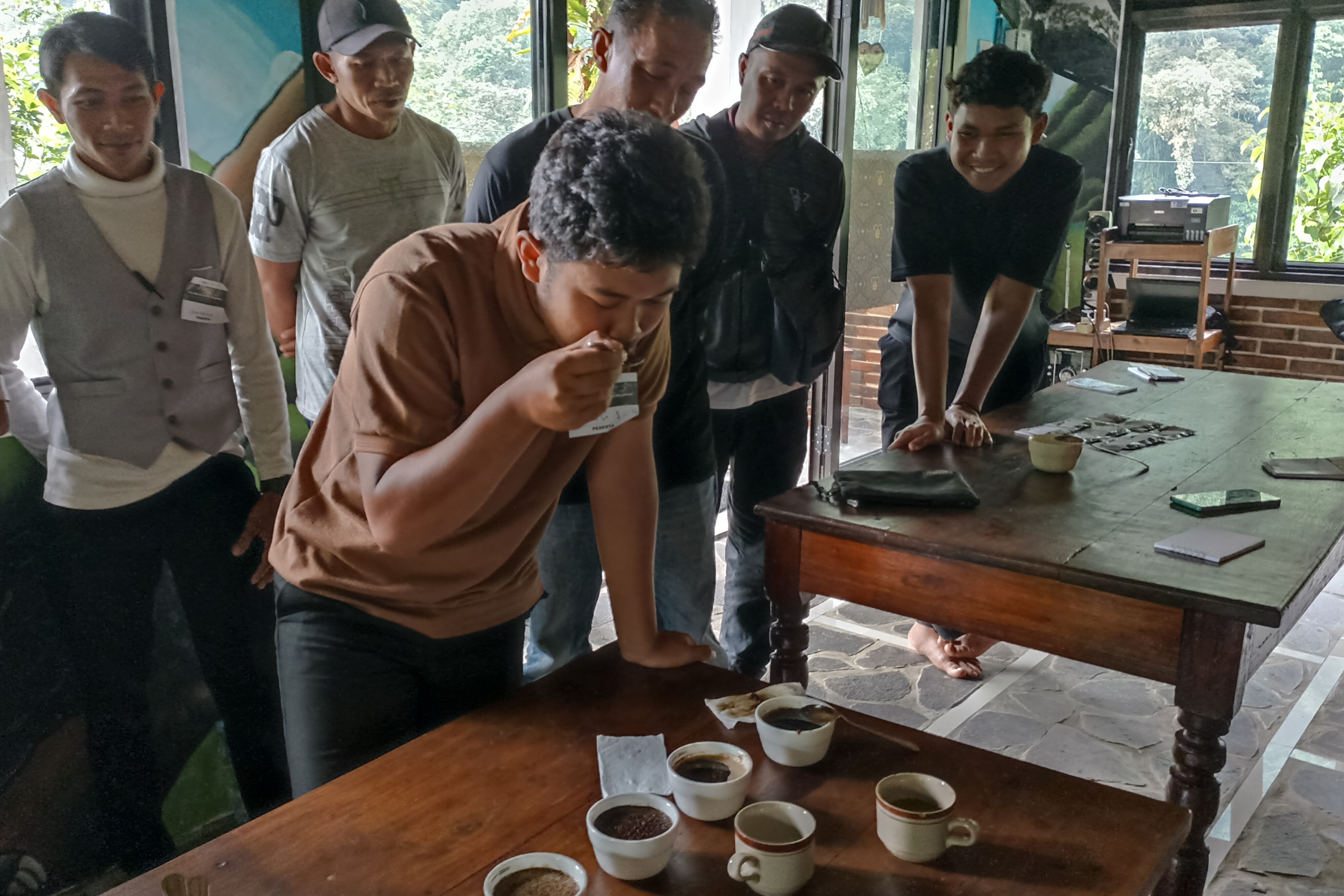
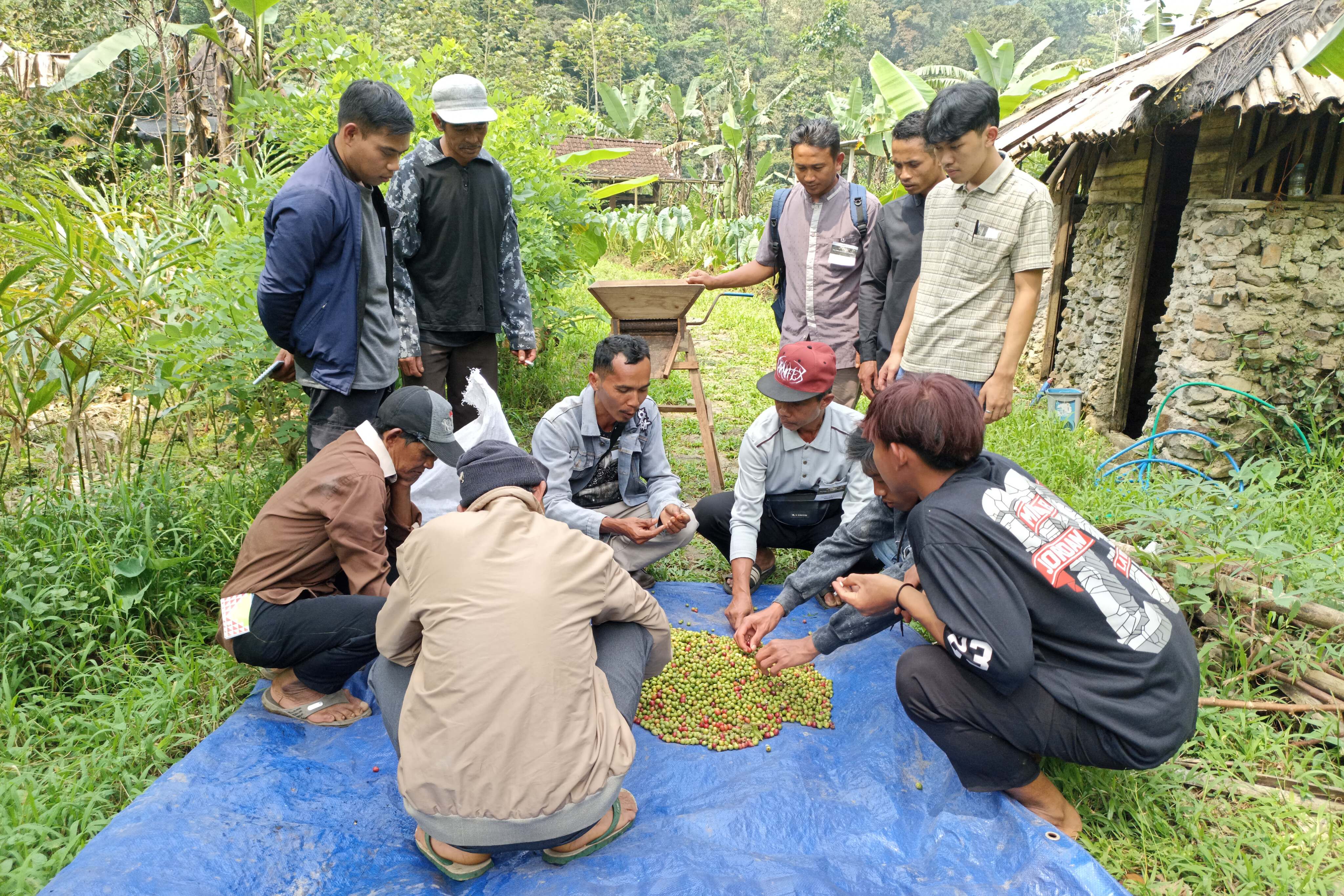
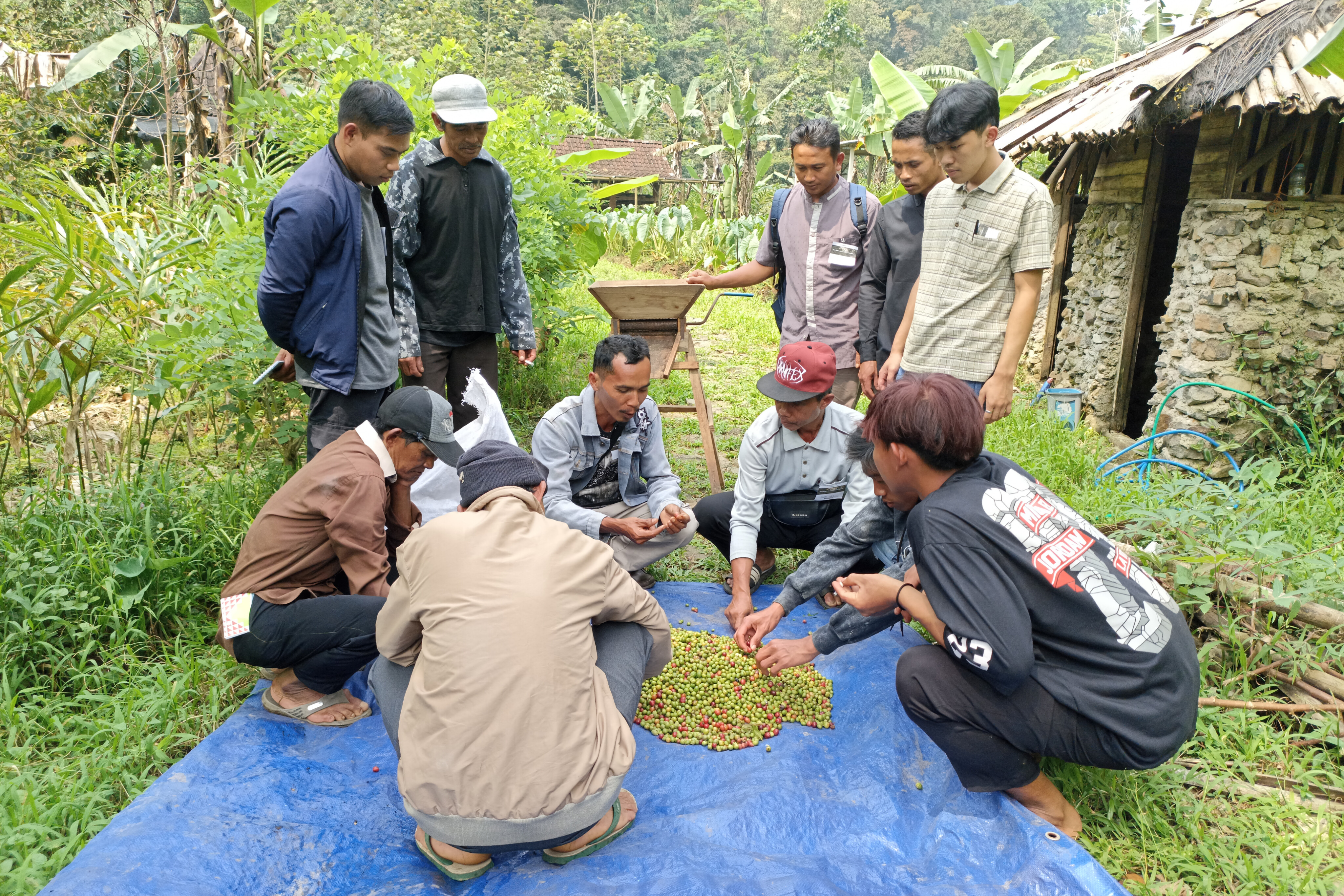
This data collection not only captures aspects of coffee cultivation but also attempts to delve into the diverse characteristics of these communities, from their social interaction patterns to their relationships with forest resources in general. Data collection methods included interviews to examine several aspects: the coffee plantation management model used, the potential for commodities other than coffee, and other activities carried out in the forest. To gain a firsthand understanding of coffee cultivation practices, we conducted direct visits to community-managed coffee plantations.

mixed garden-Coffee shade

Coffee Agroforestry Spectrum

We summarized several interesting points. In terms of coffee production, due to the extreme variations in altitude, coffee-producing locations have specific profiles. Seven locations produce Robusta coffee, while the other three locations predominantly produce Arabica coffee. Excelsa and Liberica coffee varieties were also found, but in relatively small quantities.

We found three main spectrums of coffee cultivation patterns around the Javan gibbon habitat, which we have termed as: mixed gardens, simple agroforests, and shade forests. Essentially, all types are forms of agroforestry, but differ in their structure and complexity. First, mixed gardens refer to relatively intensive coffee cultivation (with grafting, pruning, and sometimes fertilization) combined with commodity crops such as cloves,albizia, durian, avocado, and bananas. This practice is generally carried out on private gardens or in easily accessible forest land.
Second, simple agroforests involve coffee cultivation combined with food crops such as vegetables or corn. This practice is common in highland areas where Arabica coffee is the main commodity. Coffee is planted as a border crop or intercrop in vegetable or corn fields. Occasionally, shade trees, both wild and commercial species, are also found, creating a similar pattern to mixed gardens. However, intensive coffee management is rare in this type.
Third, the rustic shade type, which cultivates coffee within forest areas and grows under the shade of forest trees. In this practice, the coffee plants receive minimal care and maintenance; they generally grow taller by competing with the forest trees for sunlight. In this type, the coffee is part of the forest strata itself. This type is most conducive to wildlife, including the Javan gibbon. We observed several good practices in shaded coffee management, for example: the conservation of certain tree species for shade, such as the bento tree (Artocarpus elasticus).

rustic shade grown coffee in Sawanganronggo forest

Extractive Activities in Coffee-Producing Villages

In addition to exploring coffee potential from village to village, we also sought information on community activities related to forests. We found that extractive activities persist, including wildlife poaching. This poaching issue involves various interconnected factors.

We identified three main typologies of poaching activities based on motivation. First, economic motives: some residents engage in poaching as a survival strategy to cover income gaps from the primary sector, particularly agriculture, which is not yet optimal. They generally target songbird species that have economic value. Second, recreational motives: some others see this activity as a hobby, a way to fill free time, or a way to satisfy a passion that has become ingrained in their daily lives. Third, pest control motives: some communities view hunting as an effort to control the population of animals considered agricultural pests, such as wild boar and longtailed macaques.

We strive to understand these three dimensions neutrally so that we can offer interventions that are not confrontational, but rather more sustainable value substitutions. This data collection is the initiative for a program to increase farmers’ capacity in coffee processing and conservation efforts, especially for those whose side activities involve wildlife hunting. This scheme aims to expand the impact of the Coffee and Primates Project, which launched Owa Coffee more than a decade ago.

New ground zero for owa-guarding coffee

As a follow-up, we will collaborate with 25 farmers who will become pioneers in a capacity building program over the next year. Our primary focus is building a long-term commitment to shift their energy and resources from hunting to shade-grown coffee management. This effort is aimed at improving the economic well-being of farming families through agroforestry-based coffee, while simultaneously reducing hunting activities in the Petungkriyono Forest.

Of course, there is no single recipe for resolving these problems, but there are several proposals. Economic Resilience Strategy: Increase product added value through post-harvest improvements and crop diversification within coffee plantations (multi-commodity). The goal is to ensure income from shade-grown coffee is more stable and profitable than extractive activities in the forest. Farmers are encouraged not to rely solely on coffee as a single commodity, but to combine it with various other commodities.

Prestige and Skills Strategy: Shift the “challenge” and “enjoyment” aspects from challenging hunting activities to other competitive, productive environments, such as specialty coffee. The enjoyment of exploring the forest also presents opportunities to engage farmers in participatory biodiversity data collection and monitoring through citizen science. The contributions of young farmers in Mendolo Village to this scheme have proven this.

It is undeniable that wildlife conflicts are often the tip of the iceberg of larger and more complex problems. The emergence of disturbances to cultivated crops by wildlife can be caused by disruptions to the ecosystem balance, for example, due to the loss of predators. Ecological Literacy Strategy (ecoliteracy): Implemented to increase the understanding of farming communities regarding the importance of maintaining ecosystem balance for the sustainability of our agriculture.

It could be said that this data collection marks a new milestone for the long journey ahead, where our collaborative efforts for farmer welfare and Javan gibbon habitat preservation will grow side by side within a single, inclusive, productive landscape. Mainstreaming shade-grown coffee not only maintains the economic resilience of farming communities but also maintains habitat connectivity—an absolute prerequisite for wildlife conservation. This means that the principle of inclusivity applies not only to fellow humans but also extends to providing space for wildlife.

16Mar/26

Learning English, Protecting Gibbons: SwaraOwa Scholarship for Village Youth

from left to right : Iyan, Lukni, Alek

by : Imam Taufiqurrahman

Nowadays, foreign languages—especially English—have become essential to learn. Mastery of this language is essential for interacting with the global community. English proficiency is a prerequisite in many fields, particularly in tourism.
The tourism sector, in the form of wildlife ecotourism, developed by Swaraowa in Kayupuring and Mendolo villages, is also meeting this need. As villages with abundant wildlife potential and attracting numerous international tourists, developing the English language skills of the villagers is crucial and essential.

That’s what motivated Swaraowa to facilitate three young men, Lukni Al Khabib and Feri Fitriyanto from Kayupuring Village, Petungkriyono District, and Alek Ripa’i from Mendolo Village, Lebakbarang District, to learn English. The three have been involved in the development of special interest tourism, gibbon watching, in Kayupuring and Mendolo, which has attracted international tourists for at least the past three years. They are also members of the biodiversity monitoring team, which conducts participatory wildlife observation activities, particularly of the Javan gibbon, in their villages every two months.

They became the first recipients of English language scholarships from Swaraowa in 2026. For one month, from January 12 to February 8, 2026, the three had the opportunity to study at Kampung Inggris Pare, Kediri, East Java. They received intensive learning, not only in the classroom but also in their daily lives while living in the dormitory.

Practically, these young people take part in a conversation class program which aims to prepare participants to be able to actively speak English. This program forges confidence in communicating so that you are able to converse fluently and master various types of vocabulary, including grammar.
English language course activities in an environment like the English village also foster self-confidence in Lukni, Alek and Iyan, who live in the forest every day, meet with course friends from various regions in Indonesia, exchange experiences and of course help promote the Javan gibbon among their friends.

The three truly took advantage of the learning opportunity in Kampung Pare as a means of self-development. During their stay, they interacted and gained experience with other participants from various regions in Indonesia.
Each weekend, they were each assigned to write a weekly story and experience. The content included both classroom learning and their daily activities in Kampung Inggris Pare. They undoubtedly experienced many stories, both joys and sorrows (notes are available in the link at the end of this article). At the end of their notes, each shared their impressions and reflections on the various experiences they had experienced.

We’ve excerpted them here:

Lukni Al Khabib:
After one month of studying at Brilliant Kampung England, I felt a significant improvement in my English skills, especially in speaking and vocabulary mastery. Daily practice, supportive tutors, and a friendly environment make the learning process effective and enjoyable. This program provided valuable experience and motivation for me to continue improving my English skills in the future. I would like to express my deepest gratitude to SwaraOwa and my colleagues at Swaraowa. Thank you for providing a scholarship to study English in Pare.

Ferry Fitriyanto (Iyan):
I say a big thank you to Swaraowa, with this scholarship from Swaraowa I can learn English because this opportunity is not available to everyone. And I have a desire to continue my English lessons in Kampung England for maximum results.

Alek Ripa’i:
It’s really fun and exciting to study here. Thanks to Swaraowa for giving me this opportunity! And last but not least! Thanks to all my tutors, my classmates, campmates, and everyone in Kampung England. Thank you, for all the good memories, and I will see you when I see you!

They, the young generation from the villages that are home to the Javan gibbon, have raised hopes for the future. They will represent their communities, showcasing the potential of their respective villages. Going forward, their role as ambassadors will be to welcome, interact, and communicate with the global community that visits their villages.

Translated from original article : https://swaraowa.blogspot.com/2026/03/beasiswa-swaraowa-bahasa-inggris.html

24Dec/25

Life Corridor at Risk: The Shrinking Habitat of Javan Gibbons in Mendolo

By : Kurnia Ahmaddin

The monitoring of Javan gibbons in Sawahan Hamlet, Mendolo Village began with the concern of the youth from PPM Mendolo, who suspected that the gibbons in the western hills of their village were becoming isolated. Since 2010, much of the forest area has been converted into durian orchards and non-shade coffee plantations. Through the Corridor of Life program, which started in 2022, we encouraged their concern to grow into a tree-planting initiative so that gibbons separated from their original groups could regain forest corridors for their own range. For this reason, we guided the PPM Mendolo youth to follow the movements of the Javan gibbons in the western hills of their village to address their concerns.

Forest Fragmentation in Kupel Hill

The fragmentation of forests in Kupel Hill (west of Sawahan Hamlet, Mendolo Village) cannot be easily detected from satellite imagery, as most of the hill is covered by rubber plantations owned by PTPN. A small portion (marked yellow on the map) has been left unmanaged since the last logging in 2017, which has since grown into secondary forest. The rest consists of durian and coffee plantations. Ground checks revealed that only 70 hectares of forest trees remain out of the original 200 hectares of Kupel Hill.


From January to October 2025, 74 encounter reports were recorded by the monitoring team, including research data from Nur Azizah (research intern from Biologi UIN Syarif Hidayatullah Jakarta) between April and June. Only one record noted gibbons crossing through a durian orchard; the rest were observed exclusively in forest trees. The target gibbon group consists of a breeding pair, two juveniles, and one infant. During the monitoring period, their range covered approximately 32.9 hectares. However, in August 2025, 7.29 hectares of secondary forest (yellow on the map), owned by PTPN, was logged again for timber harvest. As a result, the gibbon group’s range shrank to 25.61 hectares. Within this area, there is a natural overlap of 4.72 hectares (red on the map) with another gibbon group of four individuals.
Monitoring results show that areas without encounter points (green on the map) are durian and non-shade coffee plantations, visible as empty circles without encounter marks. Given that only one crossing was recorded in durian orchards, the target group’s range is at risk of further shrinking unless sustainable farming practices are introduced.

Behavior of the Gibbons in Sawahan

We acknowledge that our field data collection has not yet been consistent. We only recorded brief behavioral notes during monitoring, as the gibbon group in Sawahan is not yet habituated. Monitoring was conducted for half days, not from waking to sleeping. Rain and other field challenges also shortened observation hours. Behavior was recorded only once per encounter, ad-libitum, without systematic time intervals.
Behaviors noted included feeding, resting or sleeping, moving, playing, mating, grooming, and vocalizing, which we categorized as social behavior. Average encounter distance was 95.1 meters from observers. The gibbons remained cautious, often leaving when humans approached within 100 meters. Although the closest tree (Tengger tree) was about 30 meters away, the monitoring team always hid to avoid frightening the gibbons. We also wore consistent uniforms during observations to reduce disturbance. The group was active in the canopy, averaging 25.7 meters above ground.
The most frequently recorded activity was moving, likely because the group is not yet habituated. The least observed were social activities. Among social behaviors, we noted play among the juveniles, grooming, and vocalizations (great calls or alarm calls). No reproductive activity was recorded. The group was often observed resting—sitting, lying down, or napping—and frequently feeding. Due to distance, we could not yet identify the insects consumed. However, in Mendolo we have documented 27 tree species used as gibbon food sources.

Translated from original article in bahasa here :https://swaraowa.blogspot.com/2025/12/menyempitnya-wilayah-jelajah-owa-jawa.html


06Dec/25

Titian Lestari: A Corridor of Life for the Javan Gibbon

by : Sidiq Harjanto

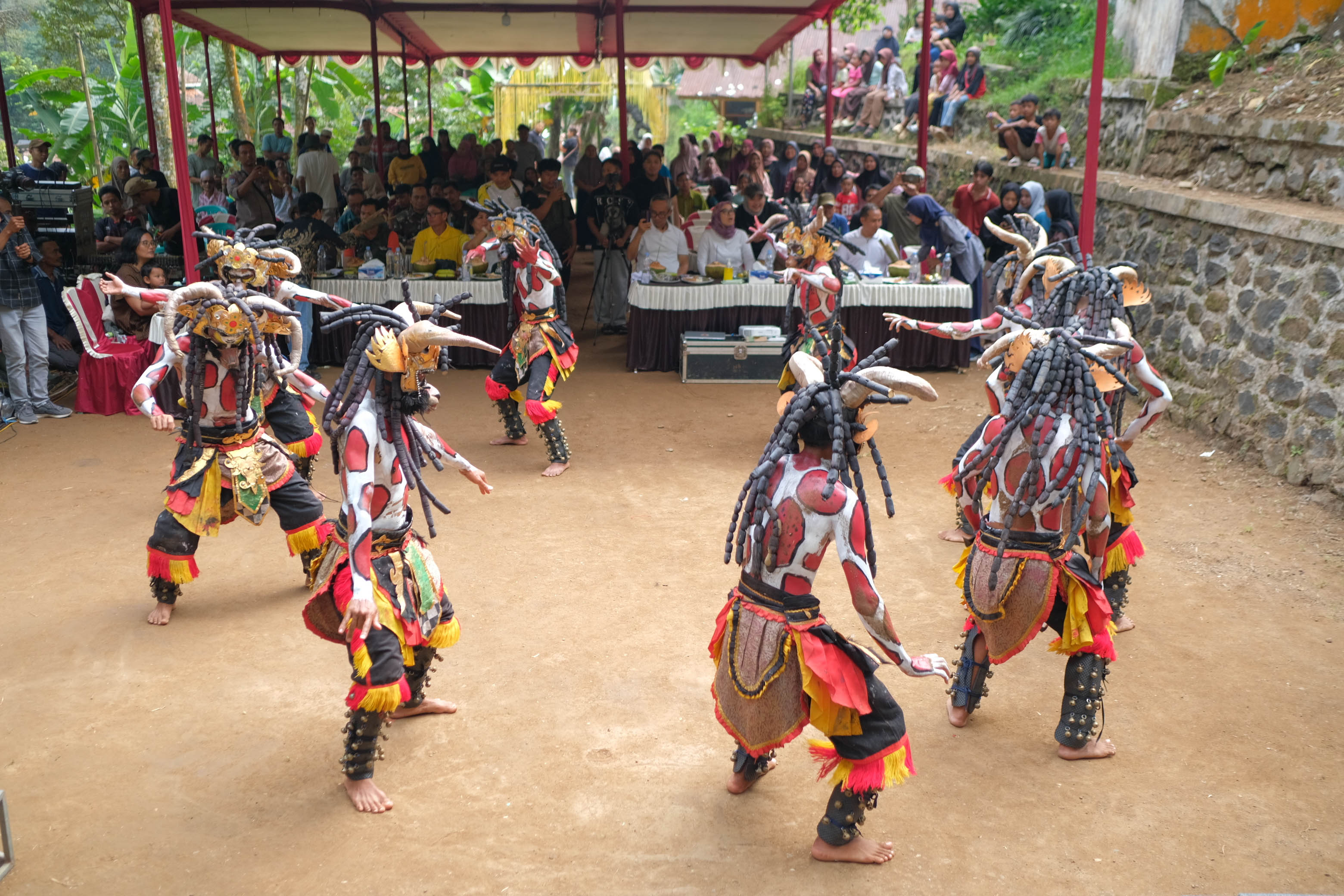
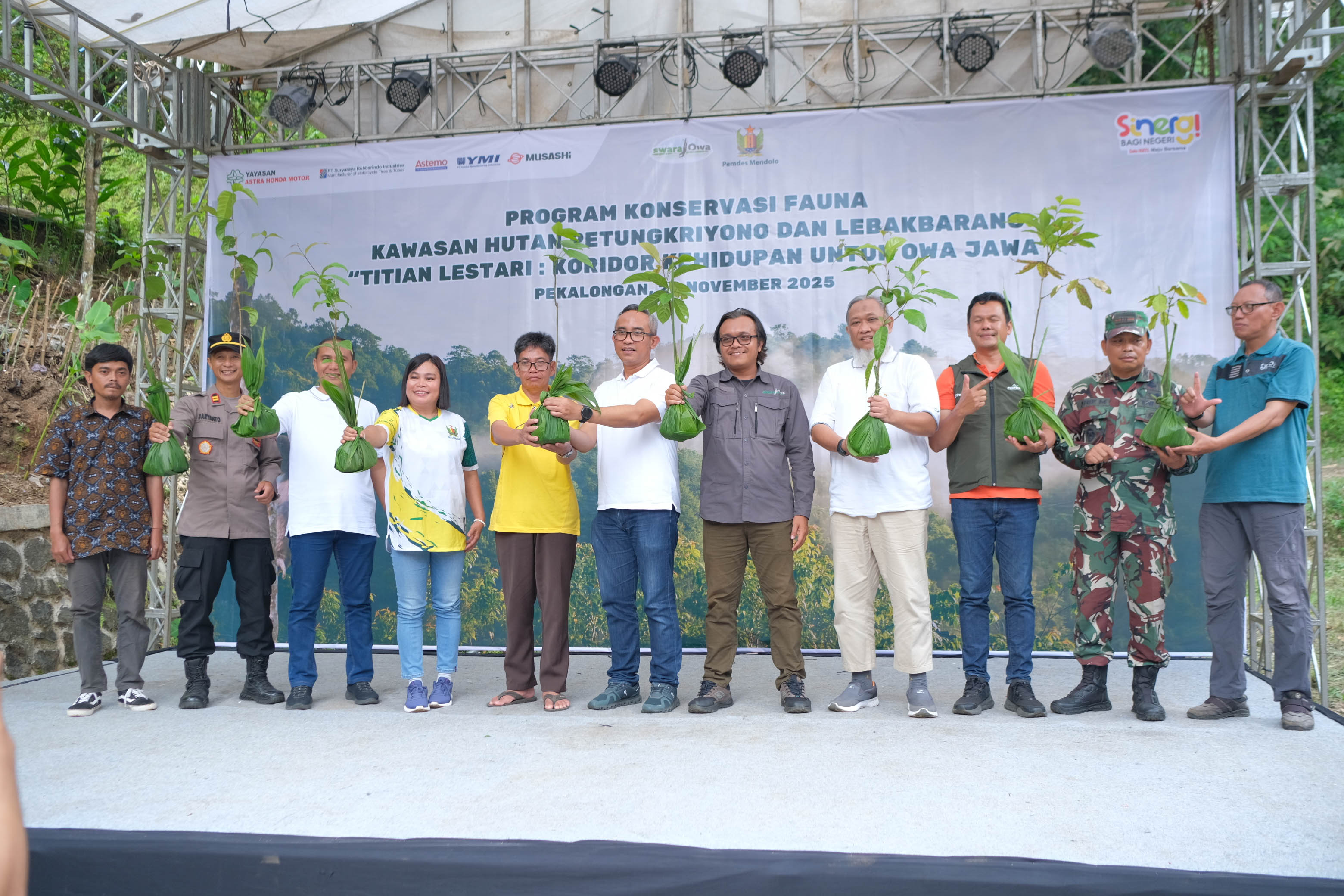
fostering creative education, conservation campaigns, and cultural arts (such as the Jingkrak Sundang dance) to raise awareness during ceremony kick off event.

On November 29, 2025, SwaraOwa together with the Astra Honda Motor Foundation (AHM) and affiliated companies officially launched the conservation program Titian Lestari in Dusun Sawahan, Mendolo Village, Lebakbarang District. The event was marked by a symbolic handover of tree seedlings and ceremonial planting of various species that serve as food sources for gibbons, support water conservation, and provide economic value for local communities.

Main Objective The program seeks to preserve the Javan gibbon in the Petungkriyono–Lebakbarang forest area through a holistic approach that reconnects forests, communities, and cultural values.

The Three Bridges Concept

  1. Titian Alam (Bridge of Nature) – restoring forest connectivity by planting trees along riverbanks and agroforestry lands.
  2. Titian Pengetahuan (Bridge of Knowledge) – fostering creative education, conservation campaigns, and cultural arts (such as the Jingkrak Sundang dance) to raise awareness, especially among youth.
  3. Titian Peran (Bridge of Participation) – encouraging women’s involvement in conservation, from eco-friendly daily practices to developing non-timber forest products.

ceremony for lauching program ” Titian Lestari”  in Mendolo village, Lebakbarang

Expected Impacts

  • Maintaining habitat corridors for the Javan gibbon to prevent fragmentation.
  • Increasing public awareness of the ecological and social significance of the species.
  • Opening inclusive spaces for women’s participation in conservation and sustainable economic initiatives.

Collaboration & Support,  within next coming years , will fostering Javan gibbon conservation in the region, the program is supported by multiple stakeholders, : the Astra Honda Motor Foundation, affiliated companies, Perum Perhutani, the Central Java Environmental and Forestry Agency, the Pekalongan District Agriculture Office, youth farmer groups-PPM Mendolo, women farmer groups_KWT Brayan Urip, and the Mendolo Village community.

29May/25

The urgency of the habitat corridor for the Javan gibbon: two years of a participatory planting program

by : Sidiq Harjanto ( SwaraOwa) dan Alex Rifa’i (PPM Mendolo)

a group of gibbons in Sawahan forest ( doc. PPM Mendolo)

Javan gibbon (Hylobates moloch) is one of the nine species  of gibbon in Indonesia. The distribution of this grey ape is endemic to the island of Java and is limited to the western part of the island. Owa Jawa (in Javanese)  is found in lowland tropical forest habitats with certain specifications. They live arboreally (on the forest canopy) so they need good forest canopy connectivity. Currently, the Javan gibbon is listed as an endangered species in the IUCN red list.

Habitat fragmentation is a threat that accelerates the extinction of this charismatic species. The habitat fragmentation condition referred to is when the forest area no longer provides good canopy or canopy connectivity. Simply put, an expanse of forest is broken up into smaller blocks. Because of the need for a connected forest canopy, the slightest disturbance in the gibbon’s habitat, such as the opening of a road, can fragment the habitat for the gibbon.

When a group or family of gibbons is separated from the population, it increases the chance of inbreeding which leads to genetic drift. Intermarriage between closely related family members dramatically reduces gene diversity. This results in health problems and adaptability and increases the risk of extinction. The more massive the isolation of the population, then the rate of extinction of a species is also increasing.

map of fragmented gibbon habitat in Mendolo

Monitoring gibbon groups in fragmented habitats

It takes care to ensure habitat fragmentation for the Javan gibbon. At first glance, the land cover often looks relatively good. However, if we refer to the specific needs of the ape species from the Hylobatidae family that require heterogeneous forests, it turns out that not all areas match the needs of the gibbon population. There are several pockets of Javan gibbon habitat forest surrounded by garden areas, such as durian and coffee, or other homogeneous vegetation cover that is not compatible with the needs of the habitat.

participatory gibbon monitoring in Mendolo village ( Doc. PPM Mendolo)

Paguyuban Petani Muda (PPM) Mendolo, in collaboration with Swaraowa, has been monitoring groups of Javan gibbons that are in small forest blocks that are separated from the main forest block. Groups of gibbons generally share space in forested areas that are far below the ideal territory. From this monitoring data, future conservation efforts can be formulated.

The monitoring team consists of two or three people every day, leaving in the morning around 05:30 WIB or sometimes the departure schedule can be even earlier. Upon arrival at the monitoring location, the team began to observe the daily activities of the group of Javan gibbons, such as eating, playing, resting, and sleeping. In addition, we also recorded the types of fodder trees, and the average height of the canopy they used for activities. These data are important considering that their habitat area overlaps with community arable land.

Several times groups of gibbons were observed crossing into the coffee plantation area where the average height of the trees was no more than five meters. In fact, there were some residents who reported that they had seen a Javan gibbon walking on the ground. The phenomenon of gibbons walking on the ground seems funny at first glance, but this finding is worrying because it deviates from its natural behavior. Owa Jawa is a completely arboreal animal, if it comes down to the ground to cross from one tree to another, this indicates that its habitat is not ideal.

Forest corridors for habitat connection

Right now we are racing against time. Data on habitat fragmentation for the Javan gibbon in this landscape is still very limited. However, there are beginning to be findings that indicate that condition. This requires a prompt response to avoid the risk of accelerating extinction. Starting from the data that is still very limited, efforts, albeit on a small scale, have been made. One of the efforts made is through the creation of habitat corridors and the enrichment of fodder trees.

planting trees by Mendolo community ( Doc. PPM Mendolo)

This year, it is the second year for the residents of Sawahan Village, Mendolo Village to carry out a corridor planting program and the enrichment of forest tree species. The seeds planted this year include Babi wood (Crypteronia sp.), Sapi wood (Pometia pinnata), Rau, sentul , Nangkan. A total of about 700 seedlings. Some seeds are planted on the borders of small rivers, or grooves according to local terms. Planting in these grooves is expected to be a forest corridor in the future, as well as for water and soil conservation.

In addition to river border areas, various forest fruit seeds are also planted in arable land to increase the population of fodder trees for Javan gibbons. Types of fodder trees that gibbons like are rau (Drancontomelon dao), bendo (Artocarpus elasticus), nangkan (Artocarpus rigidus), and sentul (Sandoricum koetjape). With the enriched agroforestry model, it is hoped that groups of Javan gibbons will still be able to survive, at least from the side of the title connection and feed availability.

The concept of the habitat corridor in Mendolo is similar to the community baboon sanctuary program that has succeeded in maintaining the population of howler monkeys in Belize, Central America. It is long-term in nature and requires the collaboration of various parties. In principle, this program seeks to find an equilibrium between the ideal habitat needs of the Javan gibbon and the economic interests of the community from land management.

Community-based conservation

It cannot be denied that many environmental problems are global in nature, such as climate change, mass extinction, and deforestation – including habitat fragmentation. However, the ways of handling it can start from a small scale. Conservation actions need to be adapted to the local context. The scale can be based on ecoregions, bioregions, landscapes, or even on a small administrative scope, such as a village. In the rural context, community-based conservation has become a paradigm as well as a promising strategy.

In Sawahan Hamlet there has been the initiation of the Hamlet Regulation (Perduk) which regulates the protection of wildlife. This rule applies to several groups of animals, namely: fish, birds, and primates. The development of this citizen’s agreement brings a breath of fresh air to efforts to preserve biodiversity in Mendolo Village. The preservation of wildlife certainly cannot stop at the ban on hunting, but needs to be deepened towards habitat preservation. This forest corridor program is one of the long-term efforts to get there.

This habitat corridor and fodder tree enrichment program is community-based. Citizen participation is the key to sustainability. The willingness of tilling the land (areas bordering the river), the consistency of seed procurement, planting, and the commitment to tree care are highly dependent on the active role of community members. Currently, the role is played by the farmers who cultivate the land, the group of farm women who help prepare the seeds, as well as the members of the PPM Mendolo who alternately monitor groups of gibbons in the Mendolo region. We thank them for their very meaningful contribution.

translated from orginal article in bahasa here : https://swaraowa.blogspot.com/2025/05/urgensi-koridor-habitat-bagi-owa-jawa.html


19Mar/25

“Protection of fish, birds, and primates in Sawahan Hamlet: A new milestone in wildlife conservation efforts in Mendolo Village.”

by Imam Taufiqurrahman, translated from blogpost.

local fishes Tombo, family caprinidae in wisnu river, Sawahan

A significant breakthrough in wildlife conservation efforts in Sawahan Hamlet, Mendolo Village, Indonesia. On March 15, 2025, a community meeting led to new agreements for the protection of fish, birds, and primates in the region. This initiative originated from the concerns of the youth group Paguyuban Petani Muda (PPM), supported by the SwaraOwa Foundation, aiming to address the disappearance of local wildlife due to overexploitation and hunting.

The conservation efforts include long-standing practices like prohibiting fishing in certain river areas and expanding them to include the protection of bird and primate species. The community has also agreed to protect natural primate food sources by banning tree cutting and discouraging direct feeding to prevent behavioral changes in wildlife.

Dukuh Sawahan residents’ meeting attended by all residents, March 15, 2025

These measures align with the conservation of the critically endangered  Javan blue-banded kingfisher, whose survival depends on maintaining forested river habitats and Javan gibbon conservation program in the landscape.  Overall, this initiative demonstrates the power of community-driven conservation to protect biodiversity for future generations.

Several notable conservation practices initiated by the community in Sawahan Hamlet:

  1. Fish Conservation:
    • Prohibition of fishing or any form of fish harvesting in specific river sections, particularly Kedung Kali Bengang in Kali Wisnu, which serves as a fish breeding ground.
    • Introduction of local fish species through community efforts since 2012 to restore the fish population.
    • Prohibition on harmful practices like electrocution (nyentér) and poisoning for fish capture.
    • New agreements to prevent the release of non-native fish species into the ecosystem.
  2. Bird and Primate Protection:
    • Community-wide ban on hunting or capturing birds and primates, extending the protection to all individuals, both locals and outsiders.
    • A tailored approach to problematic species like long-tailed macaques and sparrows, focusing on humane deterrent methods rather than harm.
  3. Forest and Habitat Preservation:
    • Ban on cutting or damaging natural primate food source trees to sustain their habitat.
    • Avoidance of direct feeding of primates to prevent dependency or behavioral shifts.

These efforts reflect a grassroots, community-led approach to biodiversity conservation, combining traditional practices with modern ecological awareness. Implementing this agreement should be assisted, to implement co-existence between wildlife and humans, moreover they can be beneficial relationships.

10Aug/23

“A Decade of Javan Gibbon in the landscape of the Dieng Mountains, Central Java, Indonesia”


Javan gibbon ( Hylobates moloch)

Press release

“A Decade of Javan Gibbon in the landscape of the Dieng Mountains, Central Java, Indonesia”

Yogyakarta, August 10 2023. The Javan gibbon (Hylobates moloch) as the only ape on the island of Java, can be said to be a global identity, because our country Indonesia is also known for the existence of endemic species such as gibbons which cannot be found naturally in other countries. Its population size and natural habitat remain important for Indonesia.

The population and distribution of gibbons on the island of Java are only found in West Java and Central Java. In Central Java, there are currently two large populations, namely on Mount Slamet and forest complex  areas that span across several regions (Kendal, Batang, Wonosobo, Banjarnegara and Pekalongan), which is hereinafter referred to as the Dieng mountain landscape.

In 2012 Setiawan, et al, (https://smujo.id/biodiv/article/view/208) conducted research on the population and distribution of gibbons in Central Java. The line transect observation method was used in this study, and the current estimation results are approximately 881 individuals in the Dieng mountain landscape and 175 individuals in Mt. Slamet . The results of this study later became the basis for a series of activities for the SWARAOWA in Central Java. After this research, SWARAOWA focused on conservation activities in one of the locations mentioned in the study which had the highest density and threat in the Sokokembang forest, Petungkriyono District, Pekalongan Regency. It is from the Sokokembang forest that gibbon conservation activities in the Dieng Landscape are currently being developed, through the Coffee and Primate Conservation Project.

In 2023, after a decade, how’s the gibbon population in Central Java, especially in this Dieng landscape?

Salmah Widyastuti, with colleagues then led research in 2021-2022 to update information regarding the population and distribution of the Javan gibbon in the Dieng landscape and has been published at https://bdj.pensoft.net/article/100805/. By using survey techniques based on gibbon vocalization(vocal counting triangulation) as well as habitat suitability analysis, the results of the study estimate the population after a decade there are 1092 individuals in the Dieng mountain landscape. This means that there is a population increase of 23% compared to 10 years ago. This population increase may indicate the success of conservation efforts from many parties in the Dieng landscape. However, more efforts and collaboration must be put in place to ensure the long term future of the gibbons in the central part of Java Island.

SWARAOWA

Arif Setiawan – Project Director for Coffee and Primate Conservation, email : [email protected]

16Apr/23

The Ecosystem Services behind Mendolo’s Coffee

By Sidiq Harjanto, translated by T.T.Chan

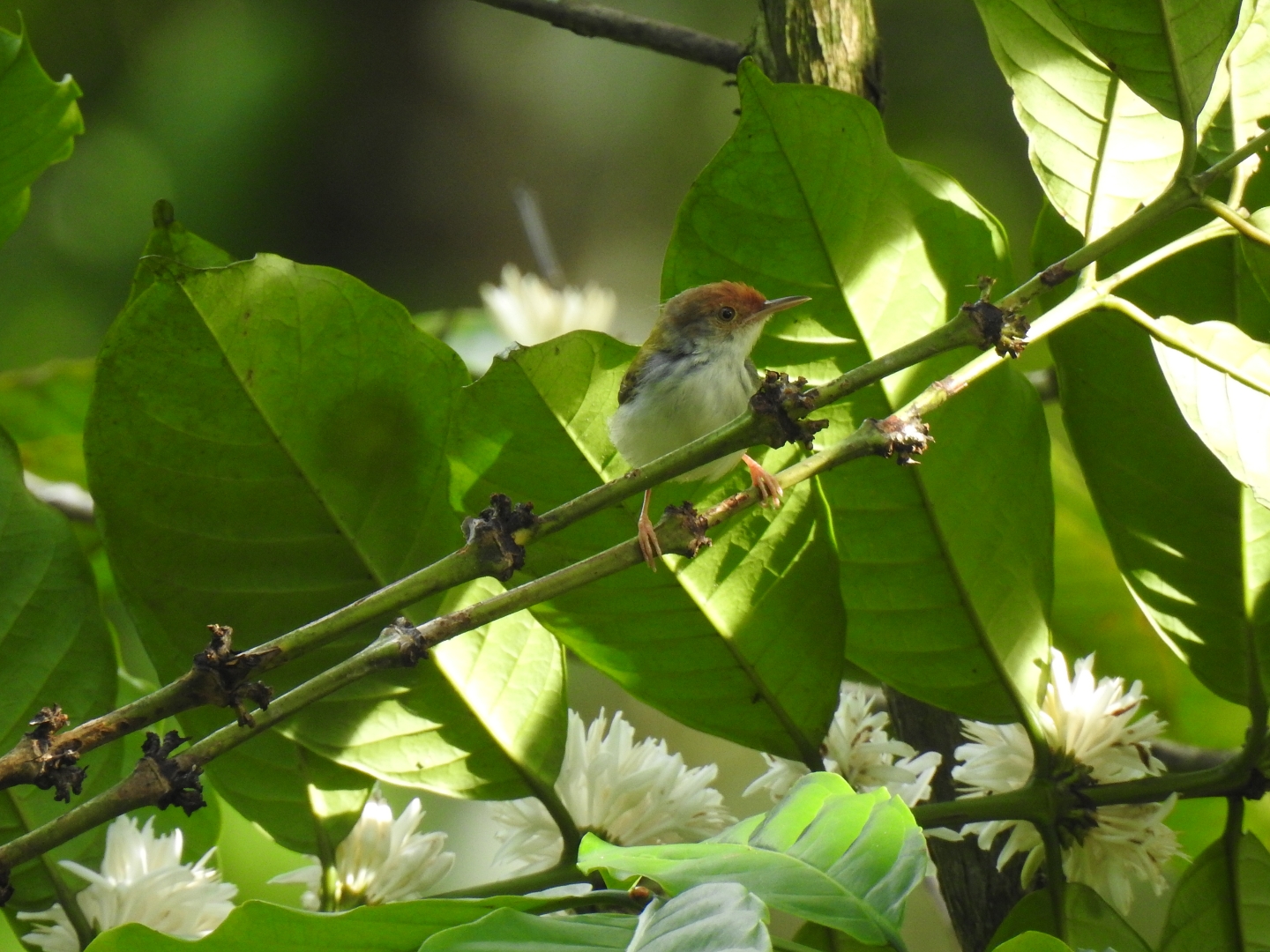
The rufous piculet, perched on in Mendolo agro-forest coffee

Pekalongan Regency is one of the regions in Central Java Province known for coffee production. According to the Indonesian Plantation Statistics 2020-2022 data released by the Indonesian Ministry of Agriculture’s Directorate General of Plantations, the output of robusta coffee from smallholders in Pekalongan was at 372 tonnes, involving a total of 1,650 farmers on 483 ha of land. That of arabica coffee, on the other hand, was at 100 tonnes from 857 farmers on 198 ha.

In terms of total volume, Pekalongan produces far less robusta beans than the neighbouring regencies of Temanggung (9,761 tonnes), Kudus (1,594 tonnes), and Banjarnegara (1,570 tonnes). This significant difference in figures is due in part to the area of land and number of farmers involved in growing coffee. However, Pekalongan performs quite well on productivity per hectare at 823 kg/ha, which is above the national average of 817 kg/ha. That said, these figures are still a far cry from Vietnam’s 2,300 kg/ha.

Mendolo is a village in Pekalongan where livelihoods largely depend on coffee produced through the agroforestry system. In order to enhance the value of coffee beans grown by local farmers, the Mendolo Young Farmers’ Association (PPM Mendolo) now grind these, which they market under the brand ‘Kopi Batir’. The Kopi Batir brand also offers roasting services to locals who want to enjoy coffee from their village’s plantations without having to do the roasting themselves.

Last year, this coffee business produced around 700 kgs of premium quality coffee, sold in the form of ground coffee or green beans. While this amount still pales in comparison to the volume of coffee beans from this village sold as cherries or sent out without sorting, the production capacity of this business continues to increase year by year.

In fact, Kopi Batir roasted more than one tonne of coffee beans in 2022. M. Ridholah is the man behind this remarkable initiative that has revived his fellow villagers’ interest in drinking their own coffee. Only equipped with a simple self-assembled roaster machine, he has helped to place Kopi Batir at the forefront of steering consumption trends away from factory coffee and towards locally grown coffee.

A Small Step in a Promising Direction

Creating the optimal coffee plantation requires knowledge of and experience in land preparation, fertilisation, pruning, pest control and a well-thought-out harvesting process. In addition, coffee growers need to understand the ways in which their crop interacts with the natural environment – how their productivity could be influenced by ecosystem services, for example.

On 18 March 2023, as part of our ‘Mendolo Coffee Meet’ event, SwaraOwa/Owa Coffee invited PPM Mendolo and representatives of coffee growers to work out how coffee cultivation in Mendolo could be done in a way that reflects greater ecological awareness. Our hope was to come up with a set of improved practices that would allow the natural environment to thrive and provide farmers with ecosystem services in order to boost their income.

a tailor foraging for food on a flowering coffee tree

Biodiversity is an integral part of agroforestry plantations and has the potential to be a positive influence on the crops grown there. Chain-Guadarrama et al., in a 2019 article ‘Ecosystem services by birds and bees to coffee in a changing climate: A review of coffee berry borer control and pollination‘, state that birds and bees are two types of fauna that play a key role in coffee cultivation. Many bird species prey on insects and are therefore indispensable as ecological pest-control agents. Remove these birds and the insect population could explode, resulting in direct losses for farmers.

To ensure that birds can fulfil their role in the ecosystem, they must first be protected and allowed to live freely in the wild. Next, birds also need suitable habitat. Agroforestry or intercropping could provide this as they ensure that a variety of vegetation layers and types are present, thereby increasing opportunities for birds to find food and places to nest.

beekeeping in the agro-forest coffee is perfect combination in Mendolo

wildlife photography, as a medium to increase appreciation of biodiversity in Mendolo Agro-forest

Bees, on the other hand, help to pollinate coffee plants. Robusta coffee requires cross pollination, which is done by the wind and insects. Arabica coffee differs in being able to self-pollinate, but insect-mediated pollination has been proven to increase the quality and quantity of the crop. Therefore, bees have the potential to boost Arabica coffee yields.

There are numerous species of bee worldwide, including dozens of types of honey bee, hundreds of stingless bees (klancèng), and thousands of solitary bees. Each type has its own distribution and occupies different habitats. Which species of bees are beneficial for coffee and what type of habitat they need are issues that still require a lot of research.

Fully leveraging various bee species as pollinating agents necessitates the protection of their habitat, avoiding the use of pesticides and integrating beekeeping into spaces used for agriculture. In Mendolo, stingless bee husbandry has been practised since 2017. Aside from producing honey that could generate more income for locals, beekeeping in Mendolo also allows farmers to reap the benefits of the ecosystem services provided by bees, which both increase agricultural productivity and improve the sustainability of the forest.

Although the benefits agriculture stands to gain from ecosystem services are undeniable, our focus group discussions have revealed that much hard work is still needed to convince farmers to adopt bird and bee-friendly practices. More research needs to be done on the role of birds in keeping agricultural pest populations under control, and how these ecological services can best be harnessed. Likewise with bee pollination services, the ideal way of integrating beekeeping with agroforestry still remains to be found.

PPM Mendolo will spearhead participatory research to explore the roles of biodiversity and ecosystem services in the Mendolo agroforestry system. They will also continue spreading awareness about the ecological roles of birds and bees. Given the community’s reliance on agriculture, Mendolo needs to be encouraged to become a village that cares about biodiversity. For this to be achieved, Mendolo and villages like it need to first have comprehensive data on their biodiversity.

We sincerely applaud PPM Mendolo for their pioneering work in pushing for innovation in agroforestry and raising awareness of how important biodiversity is to the local community. At our ‘Mendolo Coffee Meet’ event, SwaraOwa presented a roasting machine with a capacity of 1 kg to Batir Coffee. It was our token of appreciation to them for their hard work in developing coffee delights in Mendolo, as well as to PPM Mendolo for their efforts to encourage conservation in the village, including of the Javan gibbon and Javan slow loris.


10Feb/23

The richness of Mendolo Village – Durians and biodiversity

By Sidiq Harjanto & Kurnia Ahmadin

Durian cultivars in Mendolo ( Foto Ikmal Biolaska)

We believe that a sustainable economy is key to safeguarding the forest habitat of the Javan gibbon. This is why SwaraOwa have made shade coffee (coffee that grows under the natural shade of forest trees), palm sugar and beekeeping ‘core businesses’ of ours. In this, our primary aim is to promote sustainable economic growth for the communities living around the forests inhabited by the Javan gibbon. If we manage to develop these businesses in line with forest conservation efforts, we will demonstrate that it is possible to improve the welfare of local communities without over-exploiting our forests.

In Mendolo Village, we are close partners with the Mendolo Young Farmers Association (PPM Mendolo), who are the driving force for nature conservation in their village. As the younger generation there mostly still practice farming, PPM Mendolo functions as an incubator for them to launch innovative projects at a local level.

Tasting the richness of Mendolo’s durians

Durian has long been a sought-after commodity in Mendolo Village. With its superior taste, Mendolo’s durians also form one of the main pillars of the local economy. However, because this village is quite hard to reach, its durians are not well known among lovers of this tropical fruit.

And so the PPM youth had the idea of transforming their village into an attraction where visitors can enjoy local durian directly at its source. Developing tourism will also boost Mendolo’s reputation as the home of quality durian.

On 15 January 2023, PPM Mendolo invited Biolaska (Students of Biology at UIN Sunan Kalijaga Yogyakarta, IDS (Indonesia Dragonfly Society), and SwaraOwa to research the potential of durians from Mendolo Village. We inventoried and did taste profiling on durians grown by local farmers. Our aim is to produce a catalogue of durian varieties in Mendolo that will most certainly be of use to durian enthusiasts seeking to explore the richness of these durians that are Mendolo’s very own.

From a sample of 24 local durian varieties, we identified different physical and taste characteristics. Fruit shape ranges from perfectly round, to ovoid, to wavy, all the way to pear-shaped. Husk colours include green, yellow and brown. The fruit itself also varies in colour, from white to yellowish white  yellow. In terms of fruit taste, the profiles include sweet, creamy, alcoholic, slightly bitter, and sticky rice. The thickness of the fruit flesh is another variable characteristic.

During our time there, everybody was given a chance to experience ngramban, an activity where food plants growing wild in the forest are collected and then cooked for dinner. That night, we served up no less than 18 dishes. This is a valuable tradition, as preparing food from locally sourced natural ingredients instils in the village community an appreciation for the various wild plants and animals in their surroundings.

The wildlife found in the forests nearby also offers the potential for ecotourism. Wildlife watching has in fact vastly gained in popularity in recent years. In this connection, PPM Mendolo have actively collected data on the avifauna in and around the village, and monitored primates such as the Javan gibbon, Javan langur and Javan slow loris.

Sustainable growth for Mendolo

Our projects in Mendolo were not solely conceptualised as an alternative livelihood for the community, but also as a catalyst for village development. Law No. 6/2014 on Villages has brought about a paradigm shift, with the focus moving away from growing villages to villages growing. This puts villagers in the driver’s seat where village development is concerned. They are irreplaceable with their intimate knowledge of local conditions and history, and are our greatest hope in realising a development trajectory in line with sustainable principles.

Each village is unique in its potential for development. Getting villagers, especially the younger generation, acquainted with their biodiversity and various types of produce, will help spread awareness of how humans can enjoy tangible benefits from working in harmony with nature.

As a simple example, durian plantations do not automatically yield abundant fruit. In order to produce a good crop, farmers need wild birds to provide pest control services, as well as bats to do pollination. If they are made aware of this, the community will naturally want to protect the ecosystem to consistently reap a good durian harvest.

Biodiversity is Indonesia’s greatest asset and certainly also its future, but we need to preserve and manage it properly. For this to work, we must take care of diversity at the species, genetic and ecosystem level. The diversity of durian varieties in Mendolo is an example of diversity management at the genetic level. This diversity can be transformed into capital to develop Indonesia if more people come to appreciate the value of having such a broad range of durian flavours.

04Apr/22

Stingless Bee Honey Farming for Javan Gibbon Conservation Livelihood Program

a stinglessbee hive box, among agro-forest habitat of Mendolo

Beekeeping has been named by the UN’s Food and Agriculture Organization (FAO) as one of the best sources of livelihood for communities in forested areas. Beekeeping provides two types of benefits that complement each other, the first economic, via the sale of the products thus generated, and the second ecological, by bees helping with pollination. For this reason, SwaraOwa have made promoting beekeeping one of our priorities for those communities living around the habitat of the Javan gibbon in Petungkriyono and Lebakbarang Districts, Pekalongan Regency, Central Java.

In Mendolo Village (Lebakbarang District), stingless bee honey farming – otherwise known as meliponiculture – has had a presence for a few years now. It all started with efforts to catalogue local bee species, which formed the basis for work on demonstration plots and on local outreach to explore the feasibility of keeping stingless bees in the area. Over the past year, several villagers have started rearing these bees, especially the species Heterotrigona itama.

stingless bee Heterotrigona itama

On March 25, 2022, SwaraOwa was assisted by the Young Farmers’ Association (Paguyuban Petani Muda, PPM) Mendolo in conducting a training session on stingless bee honey farming for the residents of Mendolo. It had originally been scheduled for the previous year, but the pandemic caused delays. A total of 21 villagers took part in the event, which comprised interactive discussions about the techniques used in keeping stingless bees and the residents’ progress with their bee colonies.

Rohim, one of the locals who took part, said that the main problems he faced was bee colonies losing their vitality and not yielding honey that could be harvested immediately. “I’d tried moving the bee colony several times but ended up failing. The bees seem to have all flown off,” he said, opening the discussion. Several other villagers faced the same problem.

Mendolo Beekeepers meet up

When the time came for the successful breeders to share their experiences, a lively discussion revealed that the culprit behind weakened colonies proved, in most cases, to be mistakes made when relocating the bees. “It is not that the whole colony had flown off, they were just short of winih (worker bees, ed.). This means that the bees hadn’t been relocated properly,” said Tarjuki, who, in the meantime, has succeeded in raising about 25 stingless bee colonies. Moving colonies inappropriately causes many worker bees to be unable to find their way home.

Aside from how colonies are moved around, the location of hives is also crucial. The ideal location is shady, but not densely packed with vegetation. Sunlight must still be able to reach the hive and there has to be enough air circulation so as not to trigger the growth of fungi that can harm the bees. On the other hand, if the vegetation is too sparse, the bees will be prone to attack by swallows and other birds.

Beekeepers should check on their bee colonies at least once a week. This is important, because nuisance species such as beetles, spiders and black ants have to be promptly removed to prevent them from attacking the colony and disrupting the supply of honey. Also, several kinds of parasite can destroy bee colonies and cause beekeeper huge losses.

Tarsono, another beekeeper, talks about his experiences from the previous season. He emphasises that only reasonable amounts of honey should be harvested to still leave the colony with a sufficient supply of food. This is especially relevant in the lead-up to the rainy season, when the flowers that the bees feed on become scarce. The attendees were encouraged to plant a variety of plants that bloom throughout the year. These flowers can help the bees tide over their ‘famine’ months.

The participants then looked at how to design the ideal beehive. The brood box for laying eggs is 15x15x15 cm. On top of it, a topping is installed as the honey compartment. By separating the brood and honey boxes, honey can be harvested without disturbing the bee colony too much. Harvesting should be done with an electric suction device to maintain cleanliness. This will also speed up honey production because honeycombs are not taken away and the bees can reuse the material.

At this event, SwaraOwa distributed practical manuals on stingless beekeeping. This book summarises the knowledge we had gained by doing research on demonstration plots over the past few years, supported by data from various sources. We hope for this book to serve as an additional reference for the community, so that they can continue developing the beekeeping industry they have pioneered.

Ultimately, this training session has equipped the Mendolo beekeepers with essential knowledge on how to prepare themselves for the dry season this year. It is then that the forest flowers bloom. If the villagers succeed in this year’s harvest, honey season will soon be upon us.

Written by : Sidiq Harjanto, Translated by T.T Chan