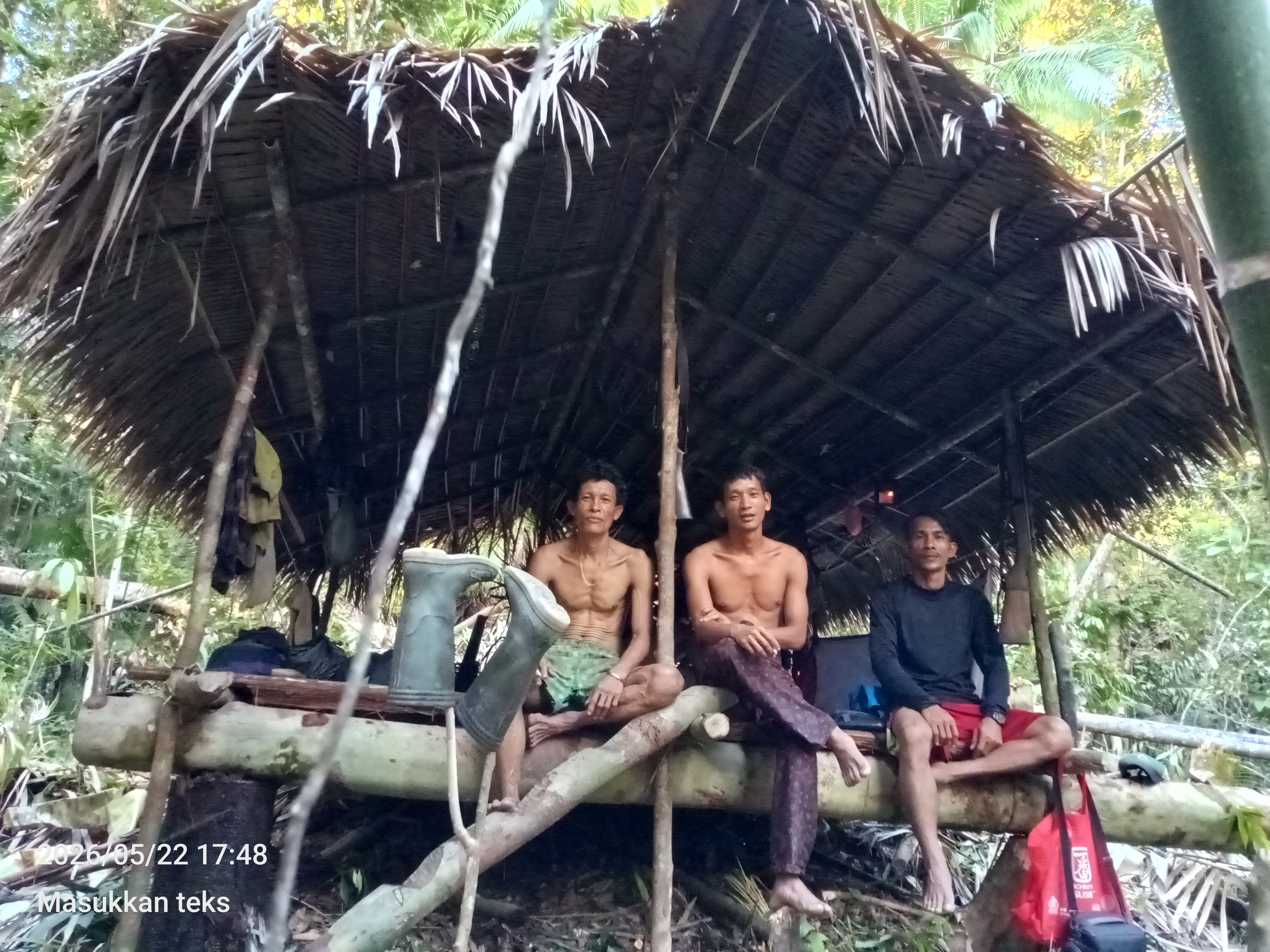
a hut made of leaves and wood for staying overnight in the forest
By : Aloysius Yoyok
In May 2026 continuing previous fieldwork in north of siberut inside national park , the Siripokbilou team conducted a multi‑day survey in Matotonan, deep within the central forests of southern Siberut. This region, often described as the “heart of Siberut,” is both ecologically vital and culturally rich, with communities maintaining traditional practices such as uma houses, tattooing, and forest‑based livelihoods. It is also a key habitat for the bilou (Hylobates klossii), Siberut’s endemic gibbon.
Journey and Methodology
The expedition began from Sabirut on the eastern coast, navigating broken bridges, muddy roads, and rivers by small boats before reaching Matotonan. Three survey teams were formed, each assigned to different observation points (LPS 1–3) in the Teitei Bake hills and surrounding valleys. Coordination with the Matotonan village leadership and Siberut National Park ensured local participation and guidance. Fieldwork involved dawn observations, vocalization recording, and direct sightings, supported by community knowledge of forest terrain and history.
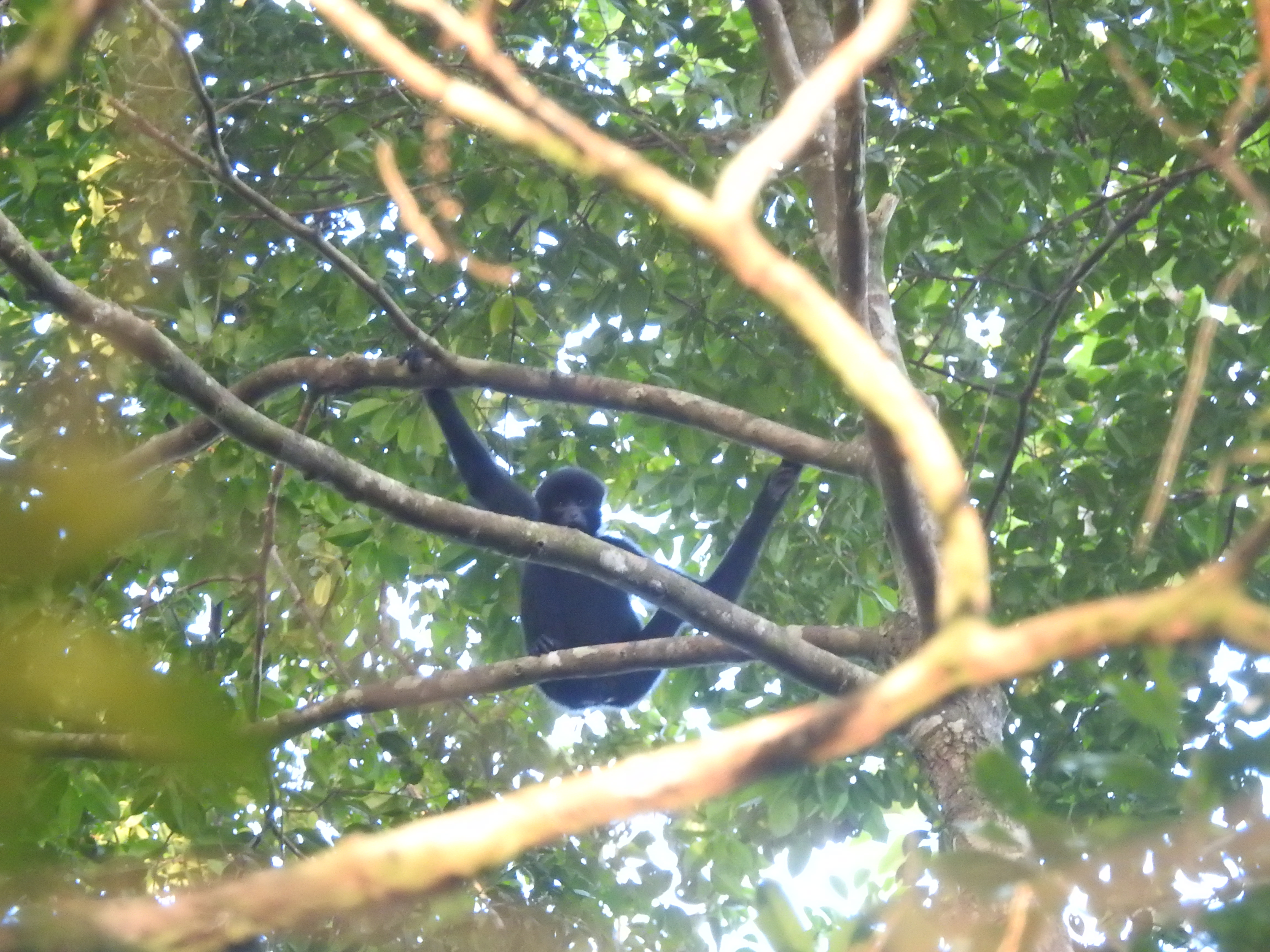
the bilou ( Hylobates klossii) spoted from LPS 1
Challenges in the Field
The survey demanded resilience: steep climbs, dense vegetation, leeches, heavy rains, and encounters with wildlife such as the brown‑eyed viper (Trimeresurus brongersmai). Temporary shelters were built along riversides, and daily routines included subsistence fishing and adapting to unpredictable weather. Despite these obstacles, the teams maintained systematic observation schedules.
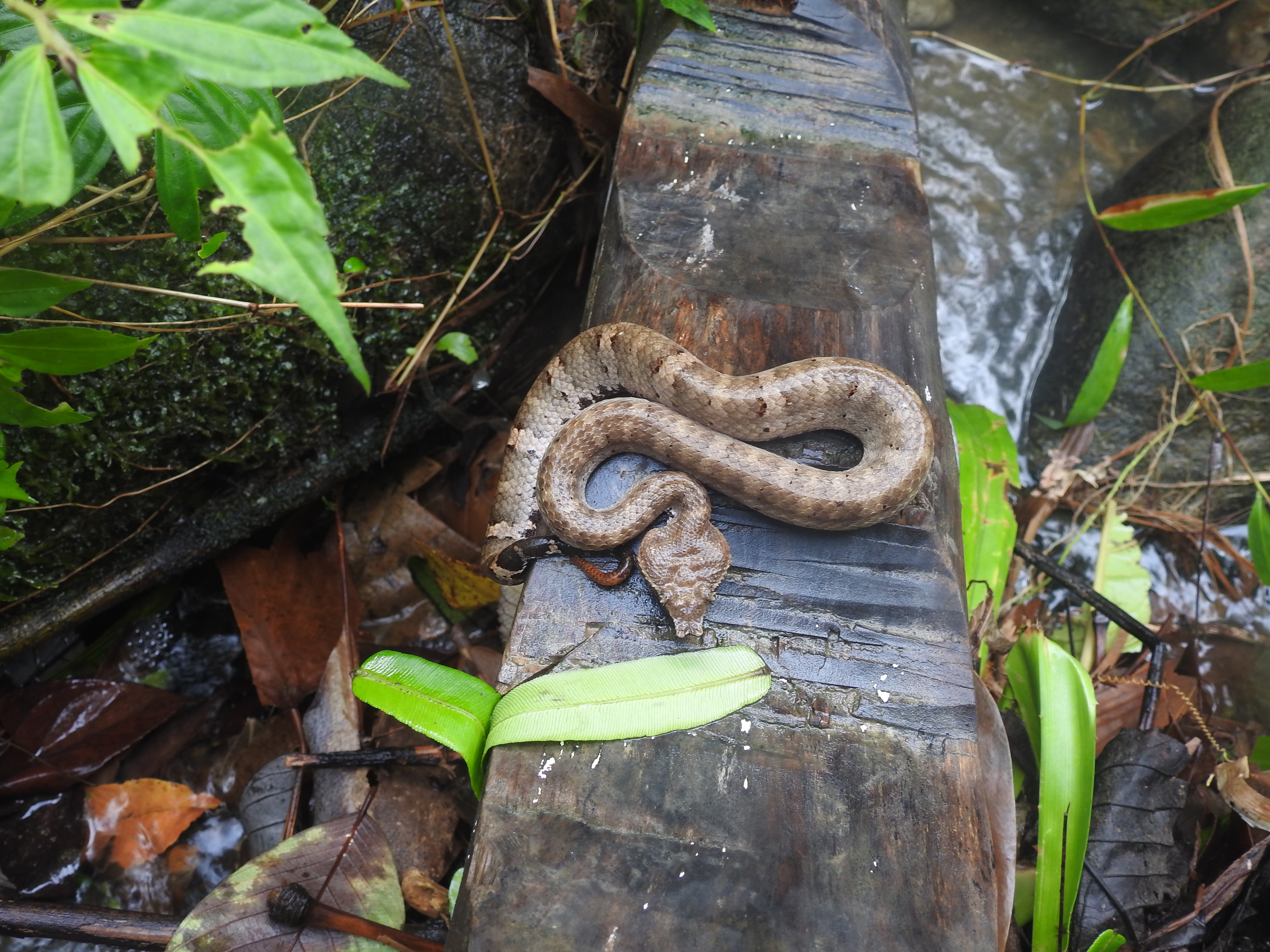
brown eyed viper (Trimeresurus brongersmai).
Results: Bilou Detection by LPS (during 4 consecutive days)
| Listening Post (LPS) | Location & Context | Vocalizations Detected | Direct Sightings | Estimated Groups |
| LPS 1 | Teitei Bake – Marepet River | 5 groups heard | Male bilou at ~20 m, with mate & juvenile | ≥ 5 groups |
| LPS 2 | Teitei Kuddei – Rereiket Valley | 4 groups heard | None | 4 groups |
| LPS 3 | Teitei Simakeru – Border of Matotonan, Silaoinan, Saibi Hulu | 3 groups heard | None | 3 groups |
Other Primates Observed
- Simakobu (Simias concolor): Group of six individuals, including a dominant male, near LPS 1.
- Joja (Presbytis siberu): Vocalizations and sightings recorded near survey paths.
Community Encounters
Interactions with villagers underscored the resilience of Siberut’s people. Notably, women fishing at night in remote rivers illustrated the strength of traditional subsistence practices. Guides shared oral histories that linked cultural heritage with forest stewardship.
Conclusion
The survey confirmed bilou presence across three sites, with at least five groups at LPS 1, four groups at LPS 2, and three groups at LPS 3. These findings provide valuable data for conservation planning, reinforcing the ecological importance of Matotonan’s forests. Beyond scientific outcomes, the journey reaffirmed the inseparable bond between Siberut’s biodiversity and its cultural heritage. Protecting bilou populations means safeguarding the living traditions and landscapes of Siberut’s heart.
This trip report translated from original article published at blog https://swaraowa.blogspot.com/2026/06/laporan-perjalanan-survei-bilou-di.html