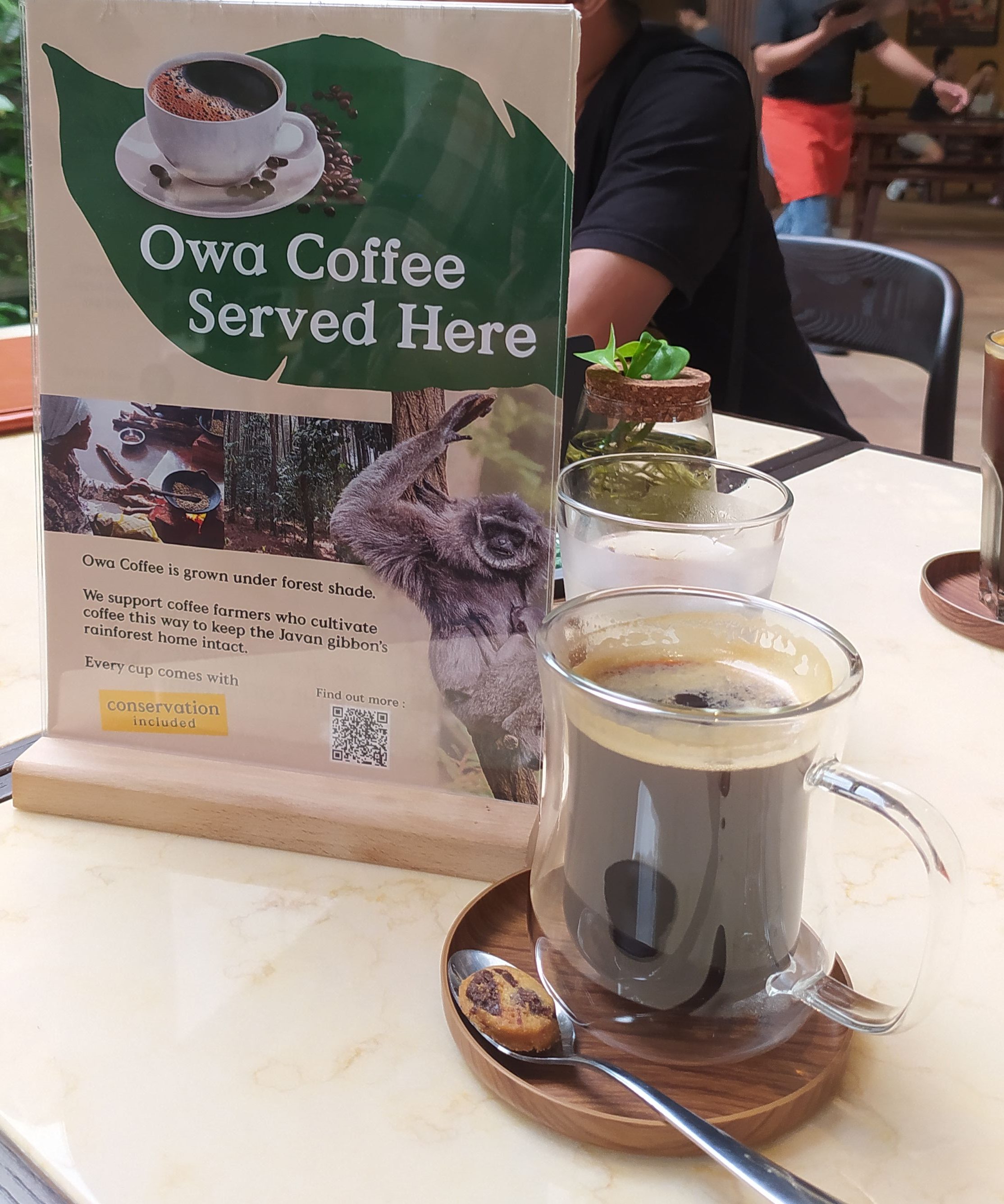
Owa Coffee served at Owa Bistro, Singapore Zoo
by: Sidiq Harjanto & Vika Bayu Iriyanto Putro
Four days of Singapore Coffee Week 2026 left us with much to learn and new homework. However, after the event officially concluded on Sunday night, we didn’t immediately return home. We were invited to the Singapore Zoo to see firsthand how Pekalongan’s Owa Coffee is served and sold here, in the heart of an international wildlife conservation area.
There’s a common thread between the coffee exhibition we recently attended and our collaboration with the Singapore Zoo, which began in 2017. Owa Coffee isn’t just an agricultural commodity, but a manifestation of the conservation economy. A cup of coffee enjoyed in a corner of a major global city is directly connected to forest conservation efforts and the protection of wildlife in their natural habitat.
On Monday (November 9th) at 10:00 a.m. local time, our journey to Singapore Zoo began. Although the route was quite long, Singapore’s connectivity and transportation options were excellent. We departed by MRT from Bugis Station, then transferred at Newton Interchange to the red North-South Line (NSL) train to Khattib Station.
Unlike the Downtown Line (DTL), which runs entirely underground, the NSL has a different characteristic. After passing several stations from Newton, the train slowly rises to the surface, offering views of Singapore’s urban landscape not visible from the underground. Interestingly, the trains on this line are still manually operated by drivers, providing a classic travel experience amidst the city’s modern transportation.
Upon arrival at Khattib Station, we transferred to a shuttle bus that took us directly to the Mandai area. Like the MRT, this bus also uses an EZ-link card to pay. The bus has two main stops, and we got off at the second (Mandai Wildlife East), which is directly adjacent to the zoo’s main entrance. A light rain shower greeted our arrival, providing a cool atmosphere before we began our exploration.
At the zoo entrance, we were greeted by Siti, a zoo staff member who had previously visited us in Petungkriyono. From that moment on, Siti continued to accompany us throughout our entire visit.
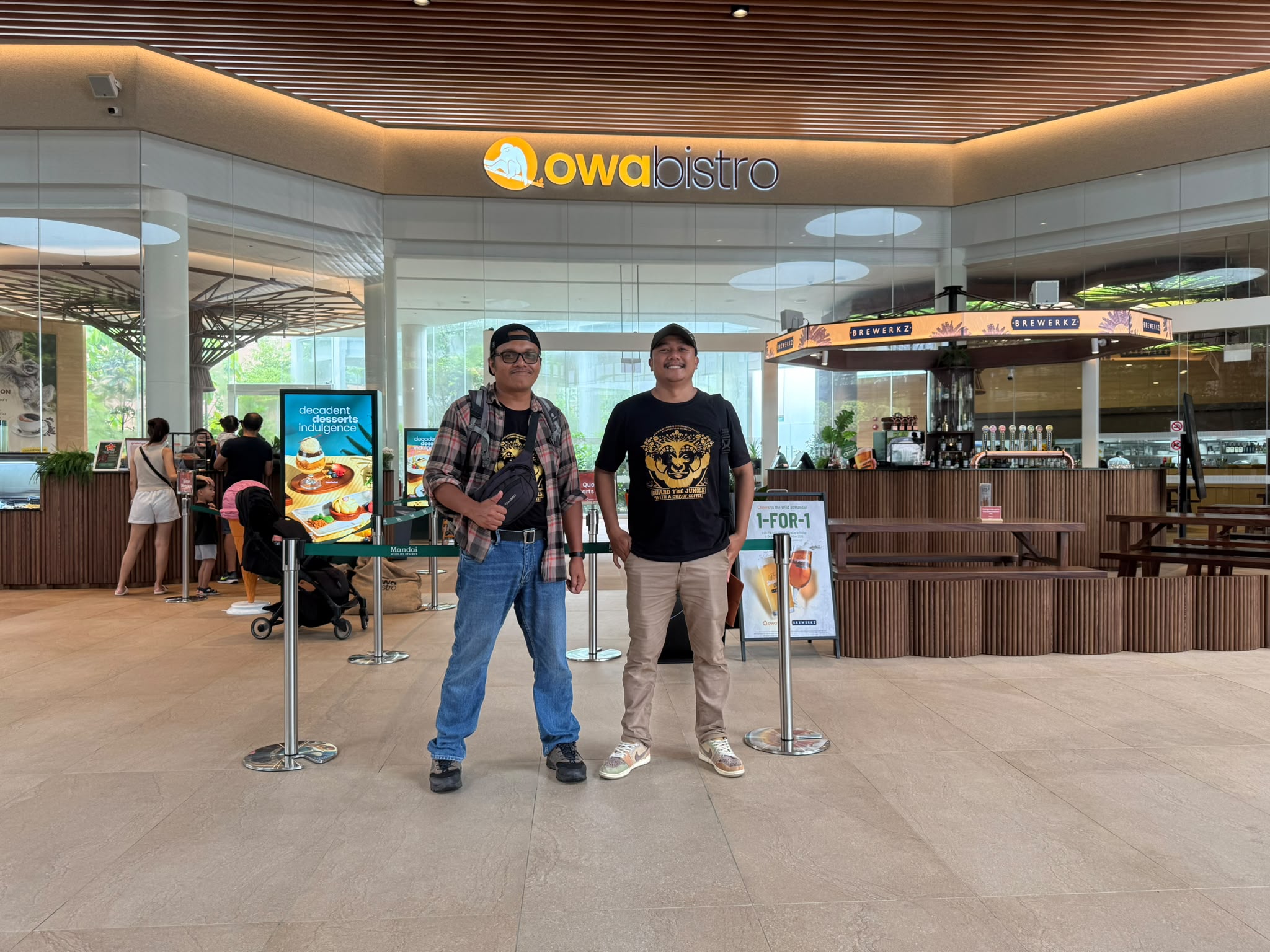
at Owa Bistro front view
With this guidance, we were taken on a tour of every corner of the zoo. Our exploration began with the Asian tropical wildlife zone. Early on, we greeted a variety of iconic animals, including the tapir—one of whose parents, it turns out, is named Bayu! Then there were the Malayan tiger, the babirusa, and even primates like the orangutan and gibbon.
The journey continued through the African wildlife area, home to rhinos, zebras, and giraffes. We had a special experience in this zone when we were given the opportunity to feed these animals. Our tour concluded with a trip through the Australasian area, home to tree kangaroos and cassowaries, although this time we chose not to get out of the vehicle due to the renewed rain.
As you explore this area, you’ll notice that the Singapore Zoo is a modern, open-air zoo. Instead of being confined to cramped metal cages, the animals live in landscaped environments designed to mimic their natural habitat. The boundaries between visitors and the animals are created using natural moats (both water and dry moats) and specially engineered barriers that ensure visitor safety while prioritizing the animals’ space and comfort.
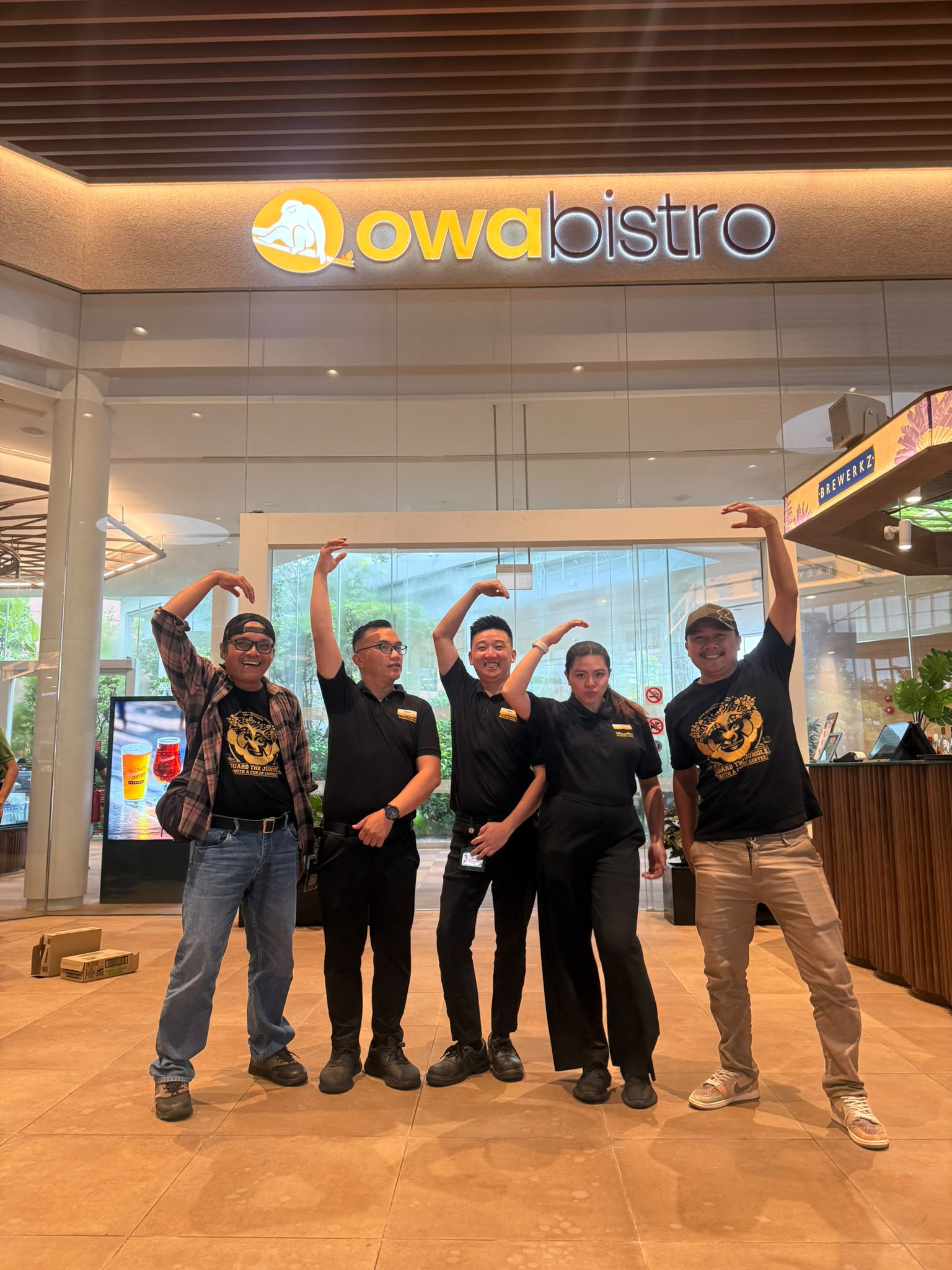
with Owa Bistro staff at Singapore Zoo
The highlight of the day’s journey was a visit to Owa Bistro. This place held both emotional significance and pride for us, as it was here that coffee beans harvested directly from the Javan gibbon habitat in Pekalongan were served to international visitors. With a full-service concept, the bistro offered a sophisticated dining atmosphere. We ordered a long black and a latte, along with side dishes, to enjoy on the spot.
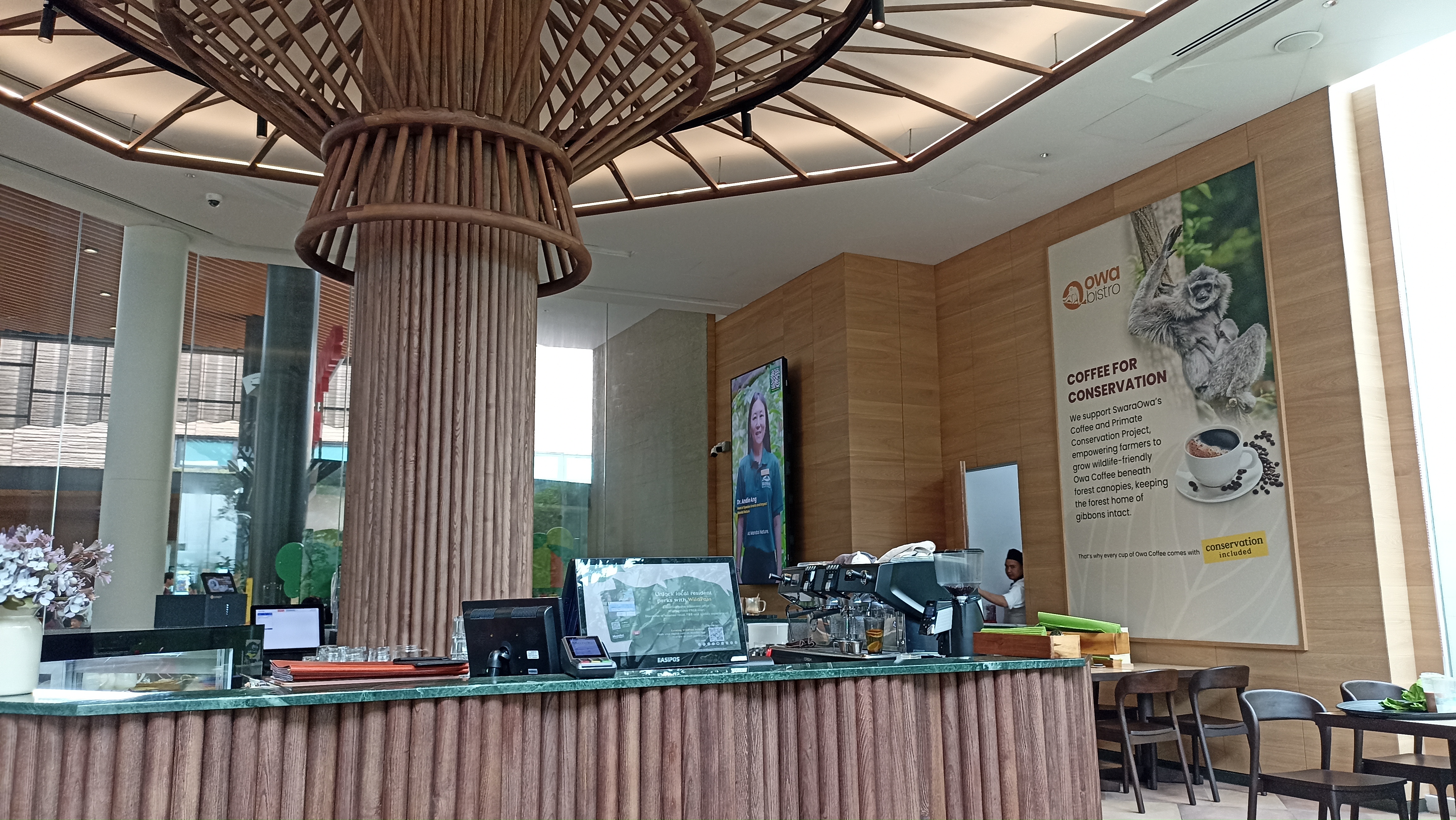
Owa Bistro interior
During our relaxing time, we took the time to chat warmly with the manager and some of the bistro staff, including the barista who prepares our coffee beans daily. We heard both reassuring and encouraging news directly from them: so far, there have been no complaints regarding the quality of the Pekalongan coffee beans. On the contrary, appreciation has poured in as many customers have left positive testimonials, praising the coffee’s unique and strong flavor.
We extend our utmost respect and appreciation to the entire management and crew of Owa Bistro, who have treated each of our coffee beans with such excellence. We also extend our deepest gratitude to Mandai, who has supported us since the beginning of this program.
this article translated from original blogpsot published here : https://swaraowa.blogspot.com/2026/11/secangkir-kopi-owa-di-jantung.html