by Arif Setiawan
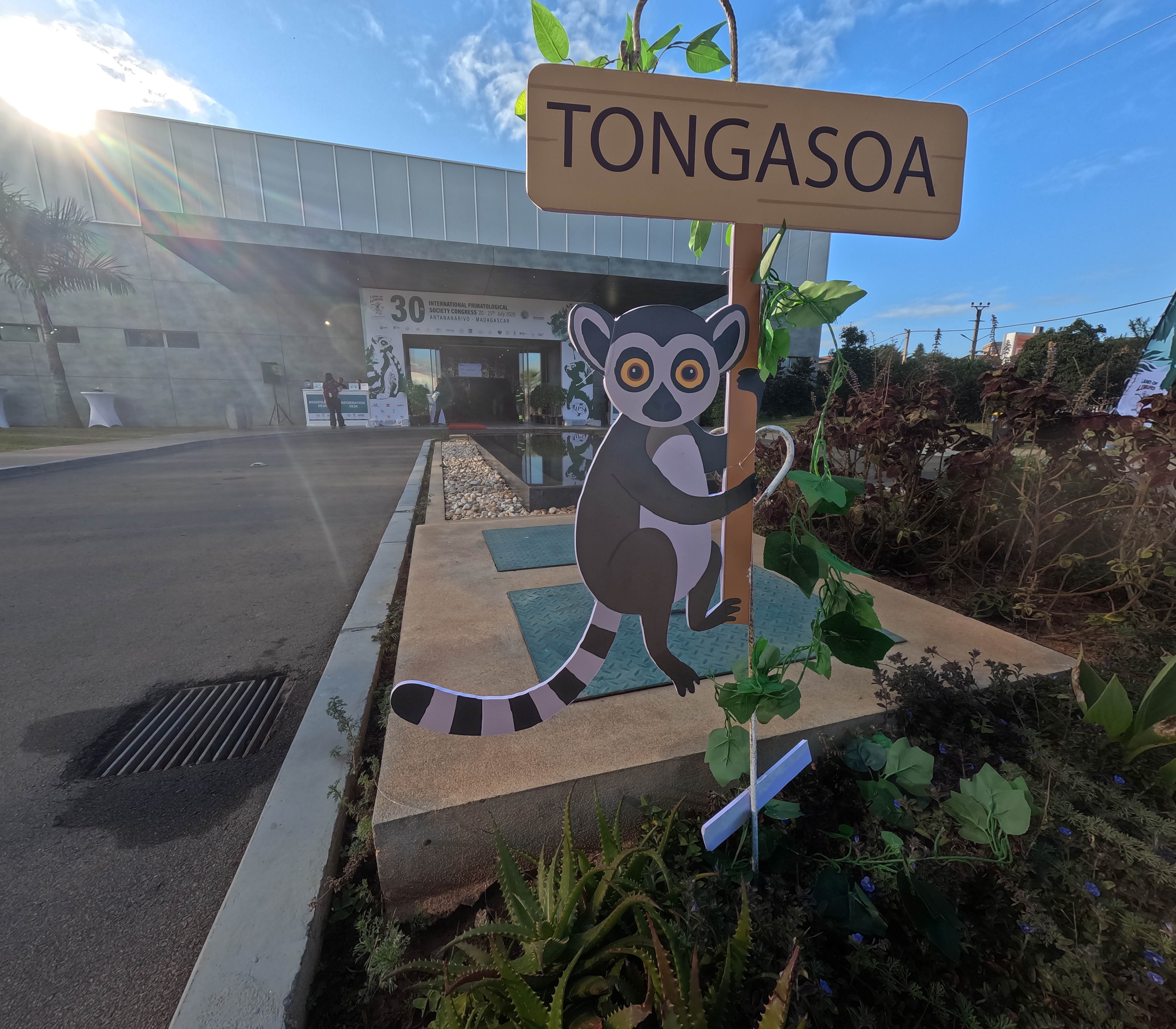
tongasoa, Welcome in Malagasy at IPS confrence venue
The International Primate Congress and Symposium, held in Antananarivo, Madagascar, from July 20–25, 2025, created a warm and festive atmosphere. The opening ceremony on the afternoon of July 20th featured Malagasy percussion music, traditional dances, and a welcome greeting, “tonga soa,” meaning “welcome.” In the corners of the park stood iconic ring-tailed lemurs and sifakas, as well as a life-size replica of a giant lemur—a reminder of the giant lemur, an orangutan-sized species that once lived in Madagascar until 700 years ago before becoming extinct. The gathering served as a biennial reunion, a gathering for researchers, conservationists, and new participants joining for the first time.
The official opening ceremony on July 21st was held by the Mayor of Antananarivo, who emphasized the importance of the congress for the city and the country, particularly in strengthening lemur conservation efforts. The organizing committee chairman, Prof. Jonah Ratsimbazafy, noted that the event attracted more than 700 participants from 53 countries. Over the course of five days, each morning begins with a keynote session, followed by symposia and workshops taking place in parallel at eight different locations, giving participants room to choose according to their interests.
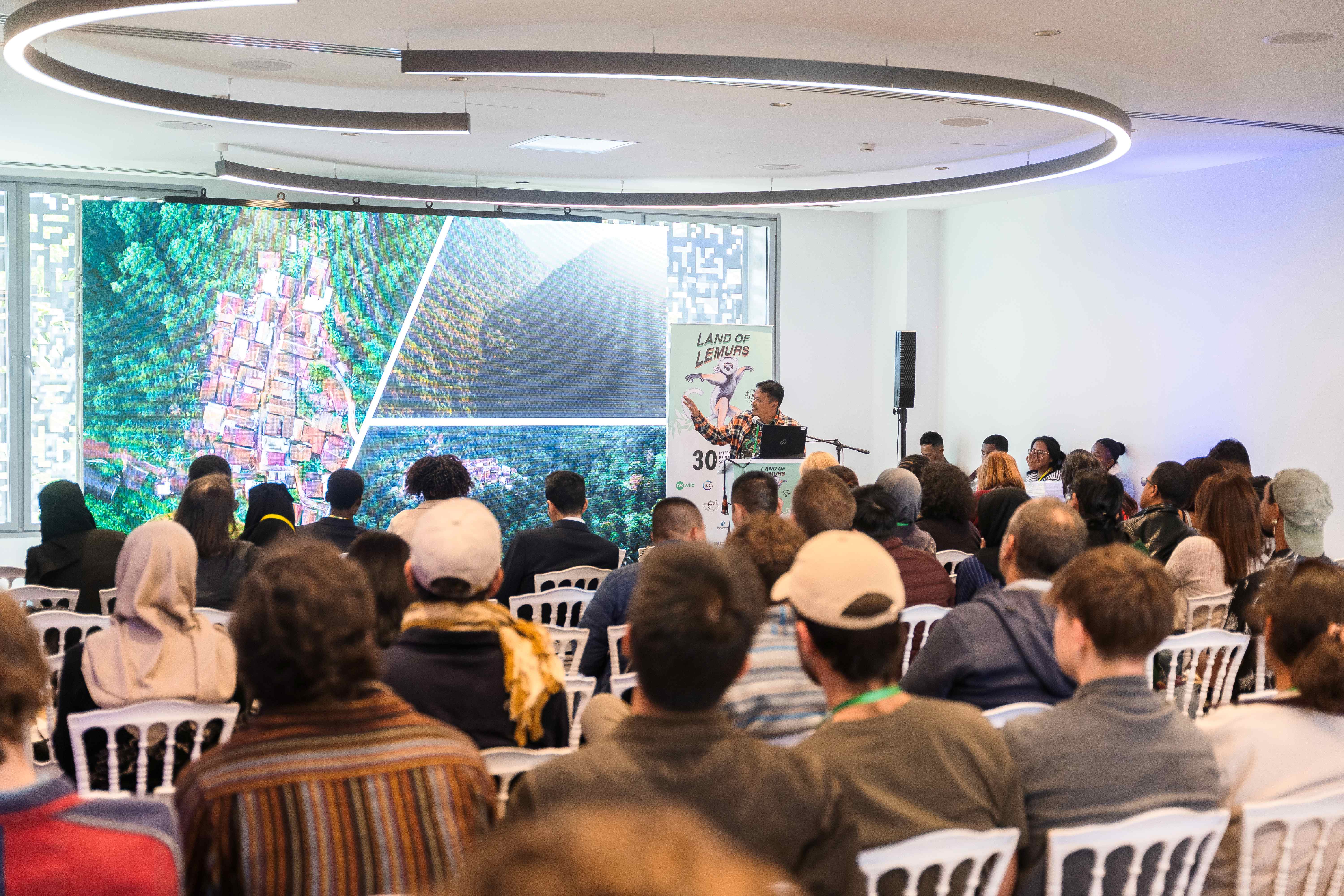
swaraowa present a talk at IPS Madagascar
One of the key symposiums that I joined was “Flagship Primates: Building National Identity for Biodiversity Conservation,” which discussed the role of iconic primates as cultural symbols and umbrella species for conservation. This session shared a variety of global experiences: from the gibbons of Java and Mentawai, presented by SwaraOwa Indonesia, mountain gorillas from Uganda, to the indri, ring-tailed lemur, and golden bamboo lemur from Madagascar. From South America came the stories of the titi monkey and the yellow-tailed woolly monkey, icons of pride for the people of Peru. The symposium concluded with a review by Russ Mittermeier, who emphasized that flagship species can be a gateway for research, education, and conservation policy—such as the birth of World Lemur Day and the Ranomafana conservation area.
Beyond sharing conservation experiences, technology was also a key highlight. A presentation from Brazil introduced the use of drones equipped with thermal sensors capable of detecting animals quickly and accurately. Although relatively expensive, this technology is considered more efficient than traditional transect surveys, which can take months. Innovative financing approaches were also discussed at the symposium “Direct Cash Transfers for Improved Nature Outcomes.” This strategy examined how cash incentives—both conditional and unconditional—can be provided to local communities as compensation for pro-conservation behavior. Examples include payments for ecosystem services, REDD+, and the TAHANU digital platform used for gorilla conservation in Rwanda.
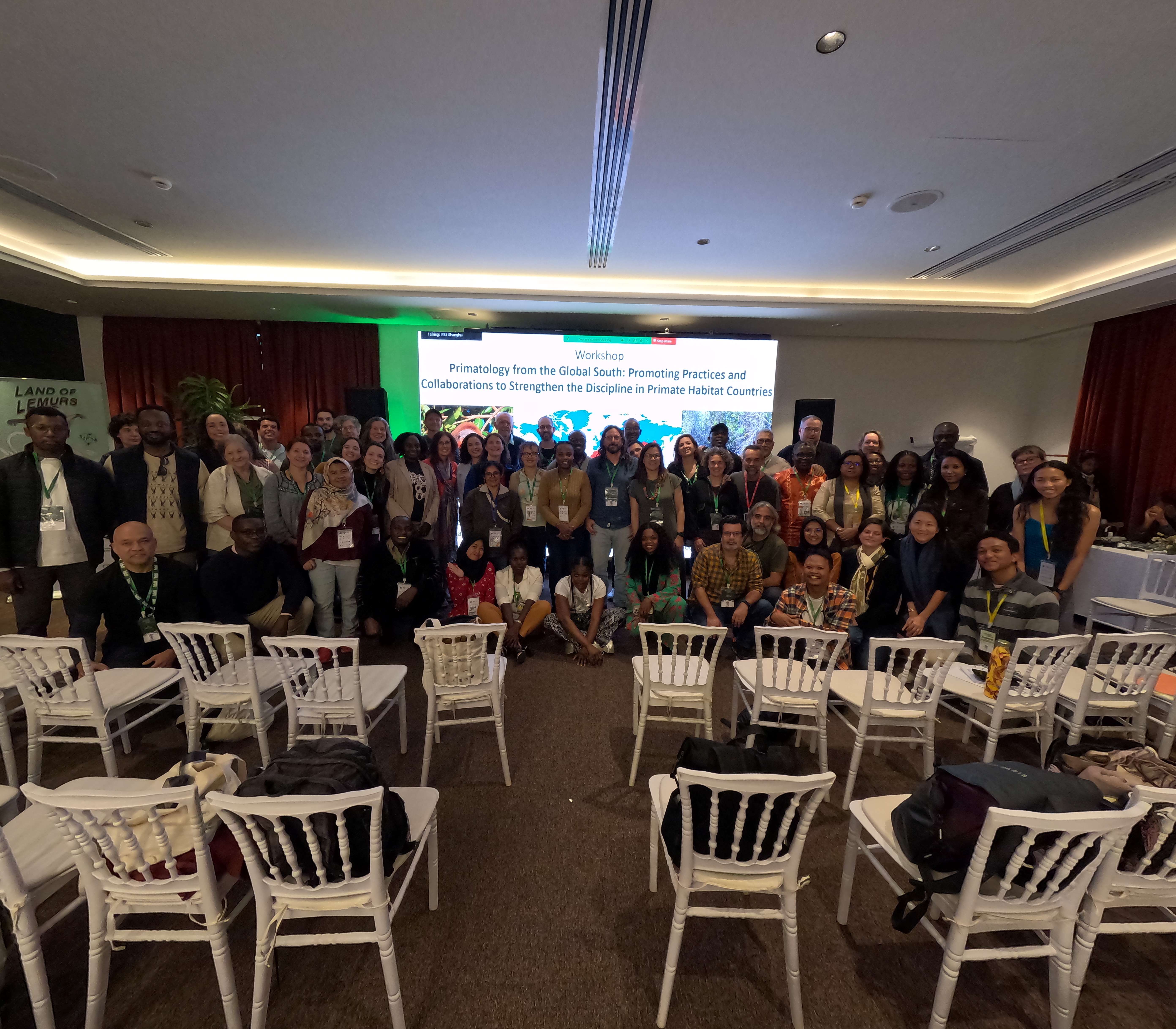
Participants of Primatology from Global South- workshop
One of the most moving sessions took place on July 24th, the workshop “Primatology from the Global South.” This workshop highlighted the gap between developed countries in the northern hemisphere, which have traditionally dominated primatology research, and the southern countries that are the primates’ natural habitat. Through interactive discussions, participants identified the strengths, weaknesses, opportunities, and challenges of primatology in the Global South, and devised strategies for more equitable and just collaboration.
Overall, the congress was not just an academic forum, but a meeting of cultures, technologies, and global solidarity. From the spirited opening dance to the serious discussions about conservation strategies and financing, all conveyed the same message: primates are not just wildlife to be preserved, but symbols of identity, pride, and a shared future for humanity.
Swaraowa attendance at IPS Madagascar was supported by Primate Conservation Inc, Re-wild, Margoth Marsh Biodiversity Foundation and Fortwayne Children’s Zoo.
read another stories from IPS Madagascar in bahasa at blog swaraowa.